Evaluation of Astringent Compounds Using Electronic Tongue Technology
Meng‐Yao Wang, Zhao‐Lin Sun, Juan Lü, Hao Zhu, Zeng‐Hui Zhang, Xi Zhang, Zhi‐Gang Guo, Yao Wang, Jing Yang

TL;DR
The study shows that an electronic tongue can reliably assess the astringency of various compounds, matching human taste evaluations with high accuracy.
Contribution
The paper introduces an integrated predictive model combining electronic tongue data and sensory evaluation for accurate astringency quantification.
Findings
EGCG and EGC showed positive correlations between E-tongue responses and concentration.
Procyanidin and EGCG exhibited the best linearity in correlation with sensory scores.
Predictive models achieved high accuracy (R² > 0.9) in validating astringency assessments.
Abstract
The electronic tongue (E‐tongue) is an emerging technology that enables the rapid and objective evaluation of various astringent compounds. This study investigated E‐tongue measurements and human sensory evaluation to analyze the concentration‐dependent astringency responses of seven compounds. Difference analysis, principal component analysis (PCA), and cluster analysis were applied to differentiate the compounds based on their taste profiles. The results revealed distinct relationships between E‐tongue response values and concentration. Specifically, epigallocatechin gallate (EGCG) and epigallocatechin (EGC) exhibited positive correlations with concentration, whereas tea polyphenols, tannic acid, and procyanidin showed negative correlations. In contrast, gallic acid and chlorogenic acid produced weak astringency responses. Difference analysis demonstrated significant taste variations…
Genes, proteins, chemicals, diseases, species, mutations and cell lines named across the full text — each resolved to its canonical identifier and authoritative record.
Click any figure to enlarge with its caption.
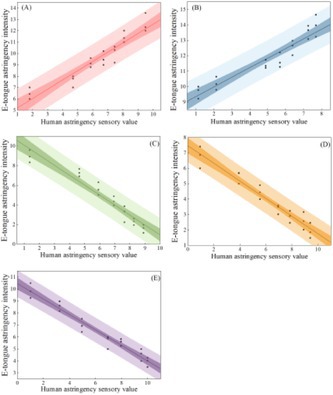 Figure 1
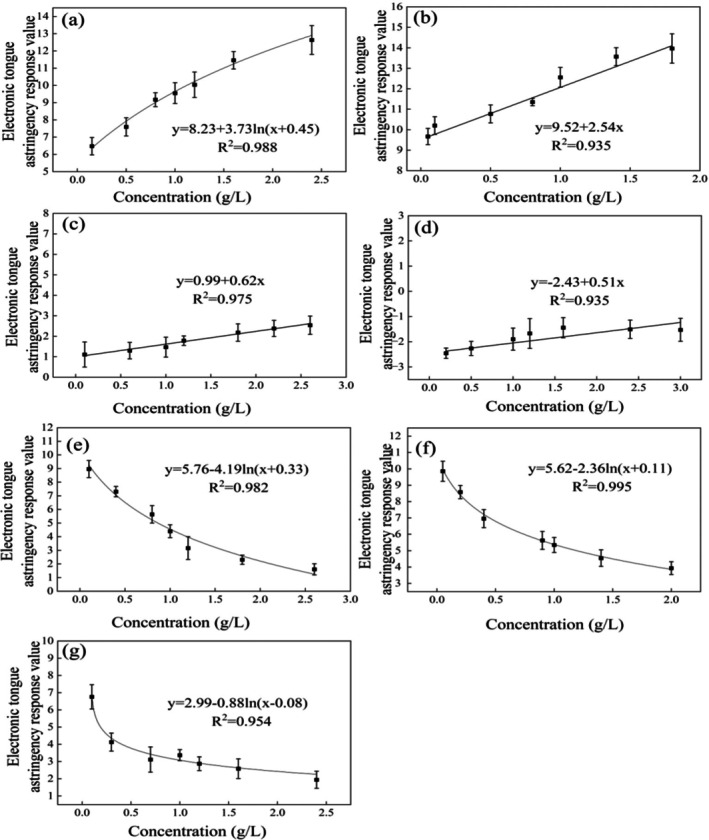 Figure 2
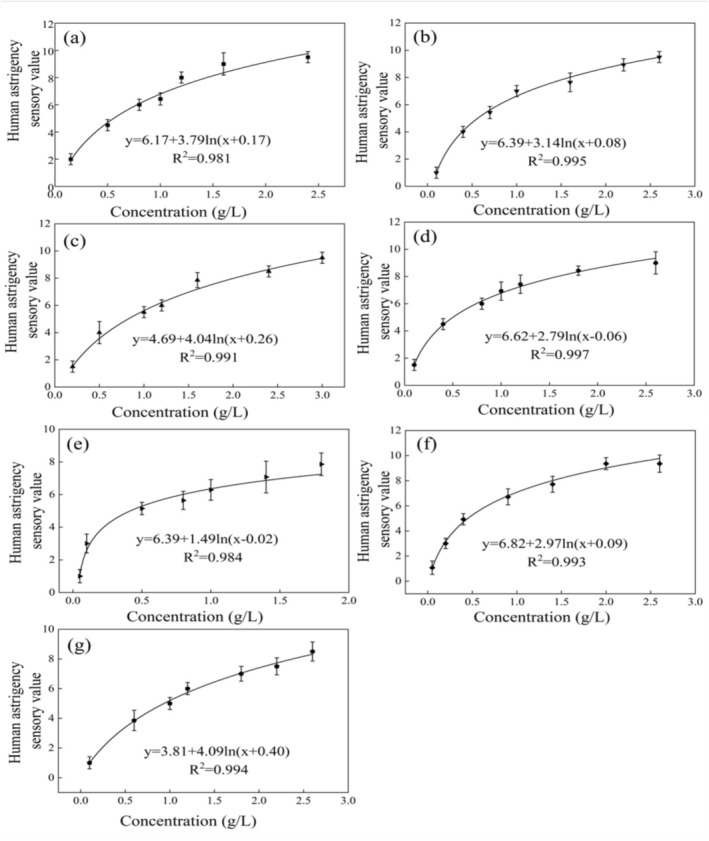 Figure 3
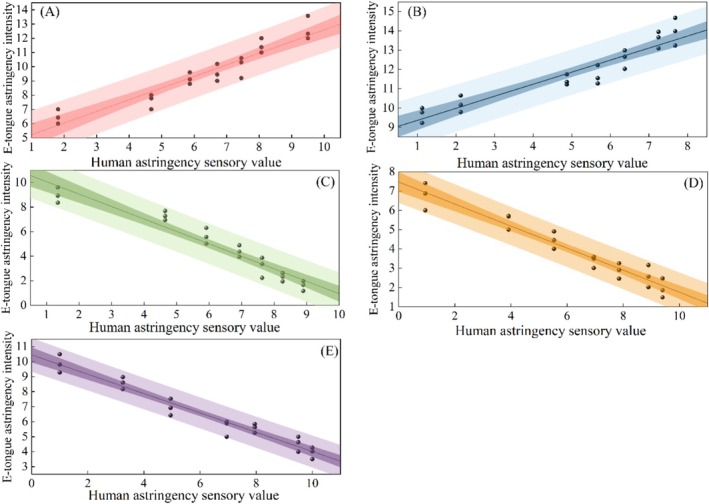 Figure 4
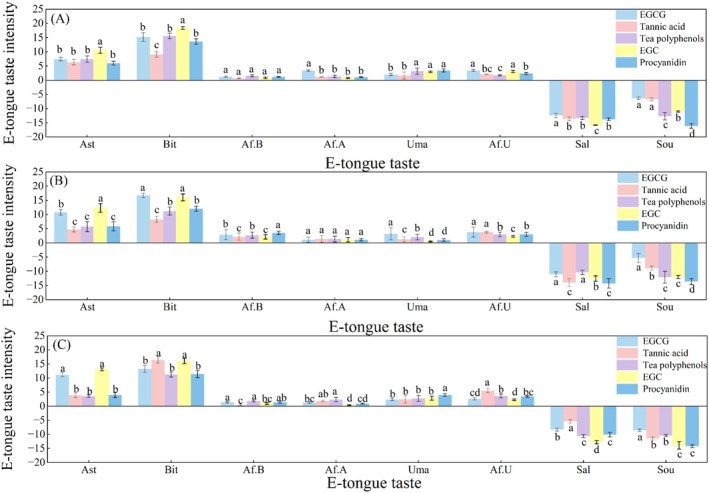 Figure 5
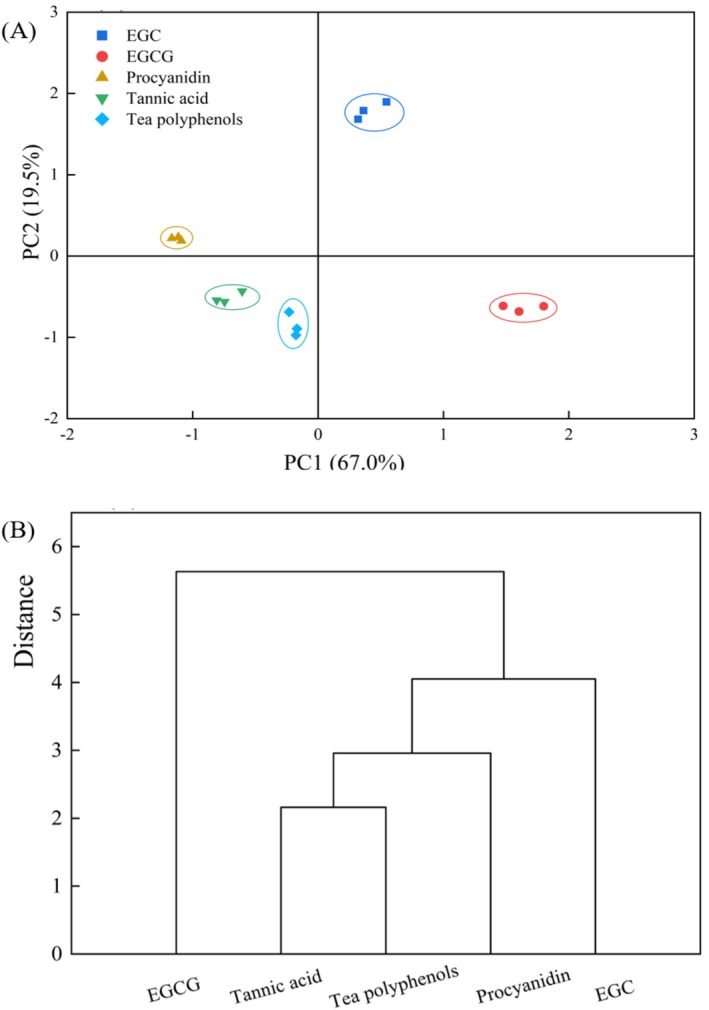 Figure 6
Peer Reviews
No public reviews on file for this paper yet. If you reviewed it on a platform where reviews are public (OpenReview, ICLR, NeurIPS, ICML), you can paste yours below so the community can read it here.
Videos
No videos yet. Explain this paper in a talk, walkthrough, or lecture? Add one.
Taxonomy
TopicsAdvanced Chemical Sensor Technologies · Tea Polyphenols and Effects · Biochemical Analysis and Sensing Techniques