Guanine nucleotide directed co-assembly with Pt-complexes for tailoring chiroptical properties and multimodal molecular recognition
Jiannan Xiao, Fang Zeng, Zhi-Wang Luo, Bo Yang, Jun Song, Pengfei Duan, Xue Jin, Yong Chen, Zhen-Qiang Yu

TL;DR
This paper shows how different guanine nucleotides control the co-assembly of Pt-complexes, leading to unique optical properties and molecular recognition.
Contribution
The study reveals how phosphate number in guanine nucleotides modulates co-assembly and optical responses for molecular recognition.
Findings
GMP enables efficient ground-state chiral induction and enhanced circular dichroism (CD).
GDP increases photoluminescence (PL) efficiency through metallophilic interactions and restricted rotation.
GTP leads to enhanced circularly polarized luminescence (CPL) with asymmetric assembly.
Abstract
Modulating co-assembly behavior via a subtle structural difference in biomolecular partners holds great potential, yet remains underexplored. Herein, we report an in-depth photophysical investigation, revealing that guanine nucleotides (GMP, GDP, and GTP) direct the co-assembly of organoplatinum complex (A), where the phosphate number controls the ribose–Pt(ii) distance and yields distinct supramolecular structures with unique chiroptical properties. For the monophosphate guanine nucleotide (GMP), the close distance between the chiral unit and the Pt(ii) center enables efficient ground-state chiral induction and leads to enhanced circular dichroism (CD). While the diphosphate guanine nucleotide (GDP) adopts partially intercalated edge-associated geometry and enhanced photoluminescence (PL) efficiency by minimizing non-radiative transition through facilitating metallophilic interactions…
Genes, proteins, chemicals, diseases, species, mutations and cell lines named across the full text — each resolved to its canonical identifier and authoritative record.
Click any figure to enlarge with its caption.
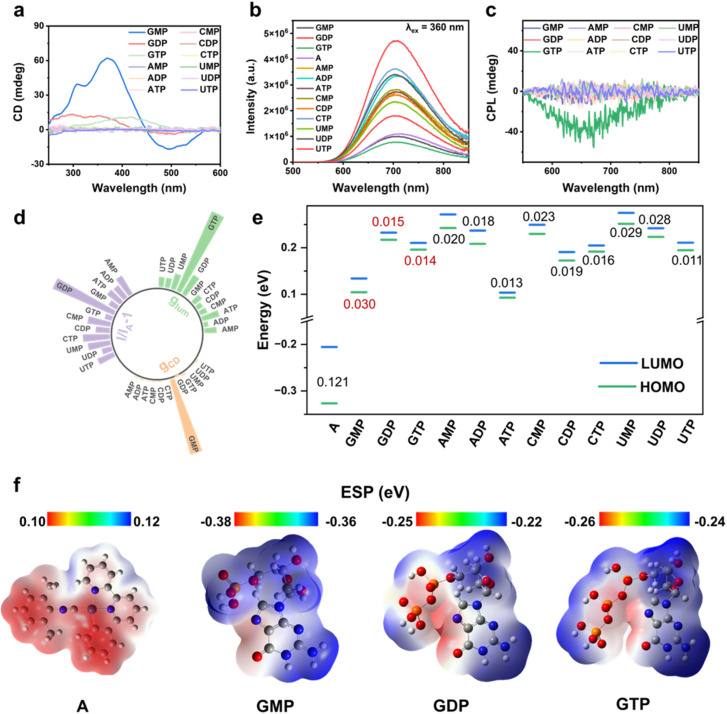 Figure 1
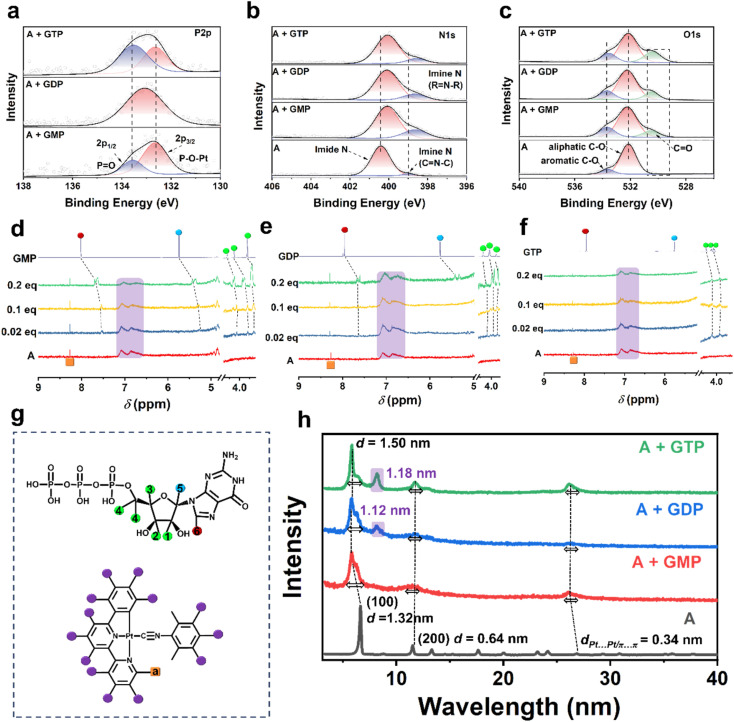 Figure 2
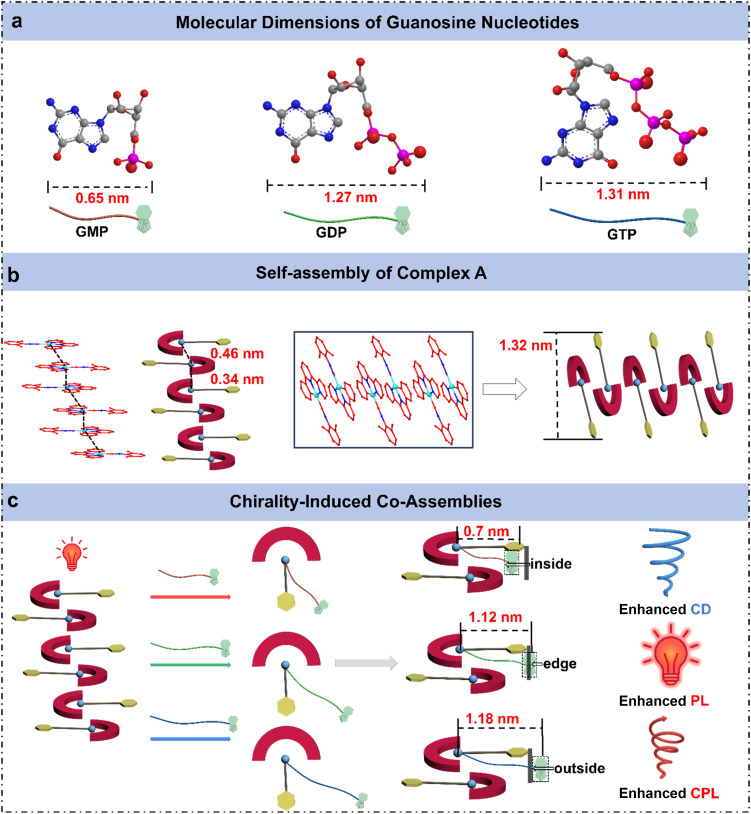 Figure 3
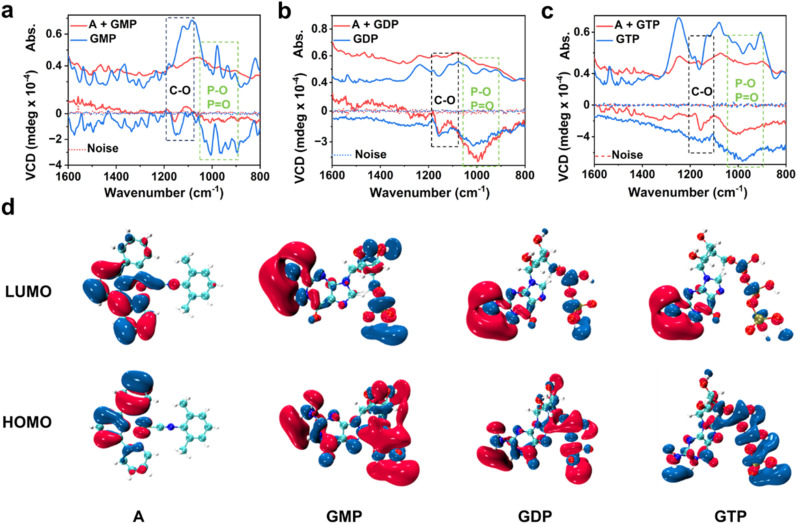 Figure 4
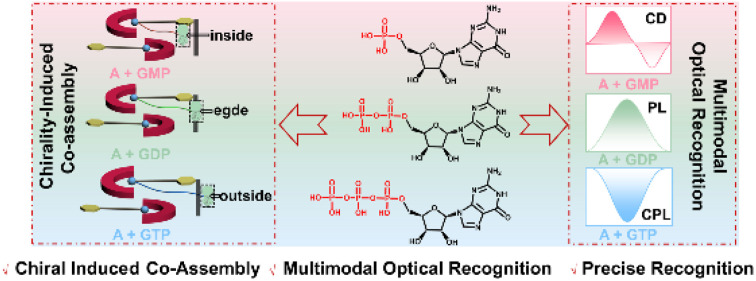 Figure 5
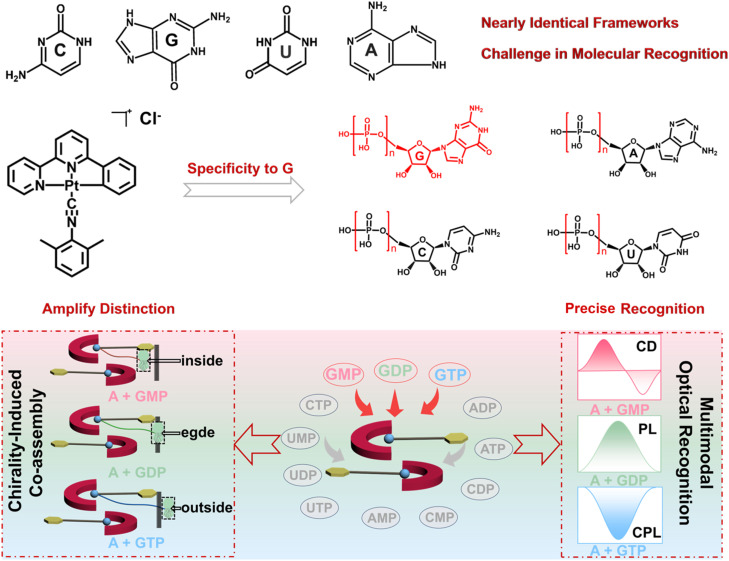 Figure 6
Peer Reviews
No public reviews on file for this paper yet. If you reviewed it on a platform where reviews are public (OpenReview, ICLR, NeurIPS, ICML), you can paste yours below so the community can read it here.
Videos
No videos yet. Explain this paper in a talk, walkthrough, or lecture? Add one.
Taxonomy
TopicsSynthesis and Properties of Aromatic Compounds · Supramolecular Chemistry and Complexes · Magnetism in coordination complexes