QTFPred: robust high-performance quantum machine learning modeling that predicts main and cooperative transcription factor bindings with base resolution
Taichi Matsubara, Shuto Machida, Samuel Papa Kwesi Owusu, Akihiro Asakura, Hiroki Hashimoto, Masanori Matsuoka, Masao Nagasaki

TL;DR
QTFPred is a quantum machine learning model that accurately predicts transcription factor bindings at base resolution, even with limited data.
Contribution
Introduces QTFPred, a quantum-classical hybrid framework for robust TF binding prediction with superior performance in data-sparse scenarios.
Findings
QTFPred achieved state-of-the-art accuracy in 92% of binary and 96% of signal prediction tasks on 49 ChIP-seq datasets.
The model outperformed conventional models in precision and stability, especially in data-sparse conditions.
QTFPred reveals TF motif representations and provides insights into cooperative binding mechanisms.
Abstract
Deep learning has become an essential tool for identifying transcription factor (TF) binding sites, yet conventional approaches often struggle with limited training data for specific TFs. Here, we introduce QTFPred (Quantum-based TF Predictor), a quantum-classical hybrid framework that integrates quantum convolutional layers within neural networks to predict TF binding at base resolution. By leveraging the exponential feature space offered by quantum circuits and training from scratch via GPU simulation, QTFPred achieves robust performance even in data-sparse scenarios. In benchmarks on 49 Encyclopedia of DNA elements ChIP-seq datasets, QTFPred delivered state-of-the-art accuracy in 92% of binary prediction and 96% of signal prediction tasks, outperforming conventional models in precision and stability. Moreover, the method reveals underlying TF motif representations, offering insights…
Genes, proteins, chemicals, diseases, species, mutations and cell lines named across the full text — each resolved to its canonical identifier and authoritative record.
Click any figure to enlarge with its caption.
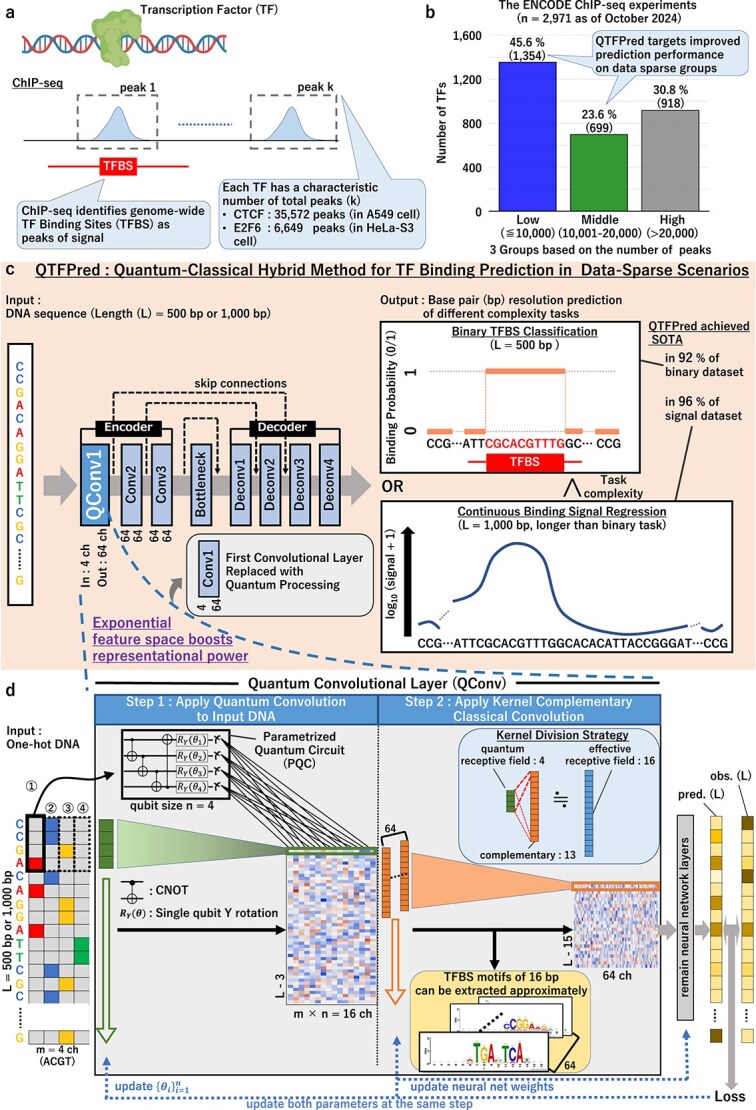 Figure 1
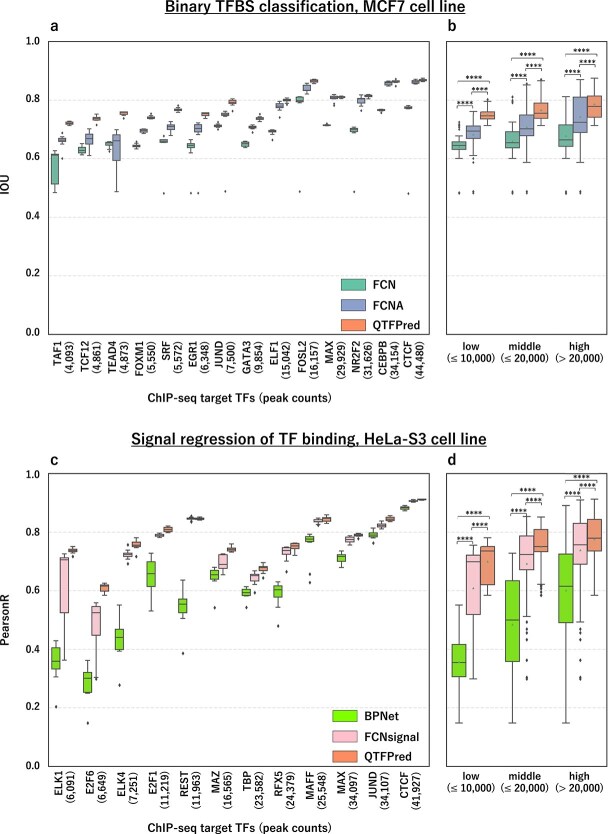 Figure 2
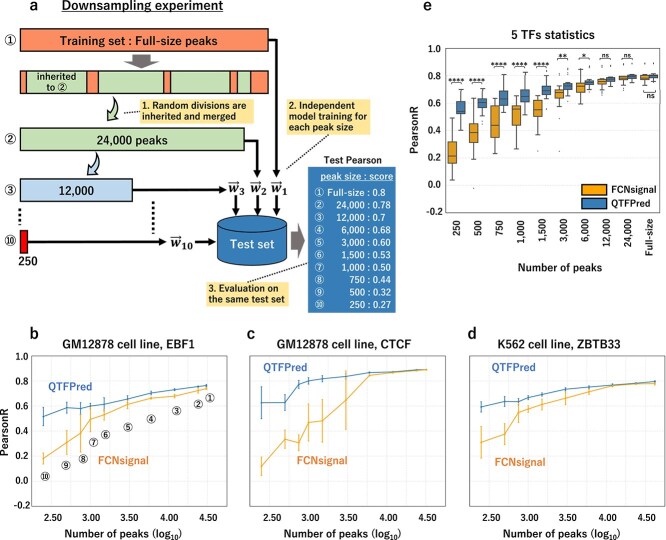 Figure 3
 Figure 4
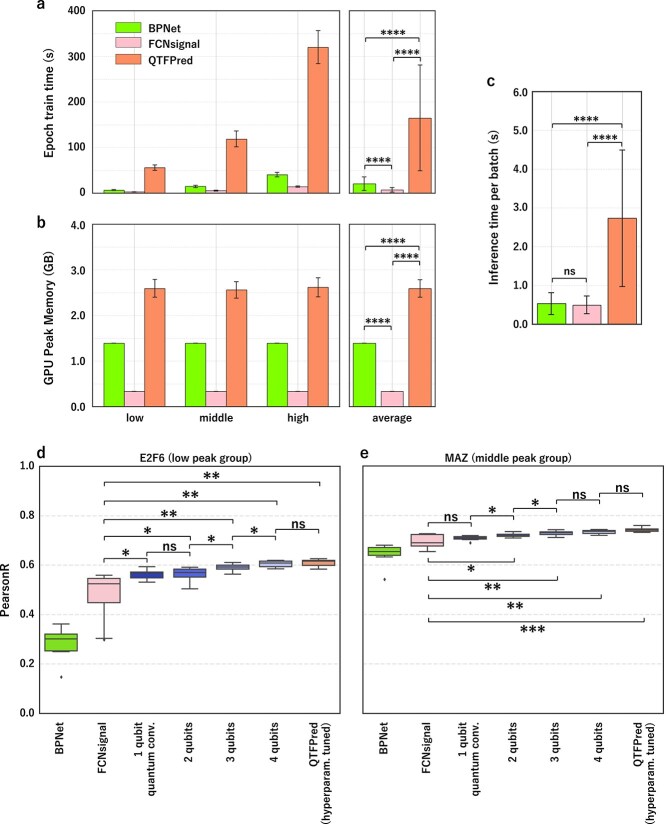 Figure 5
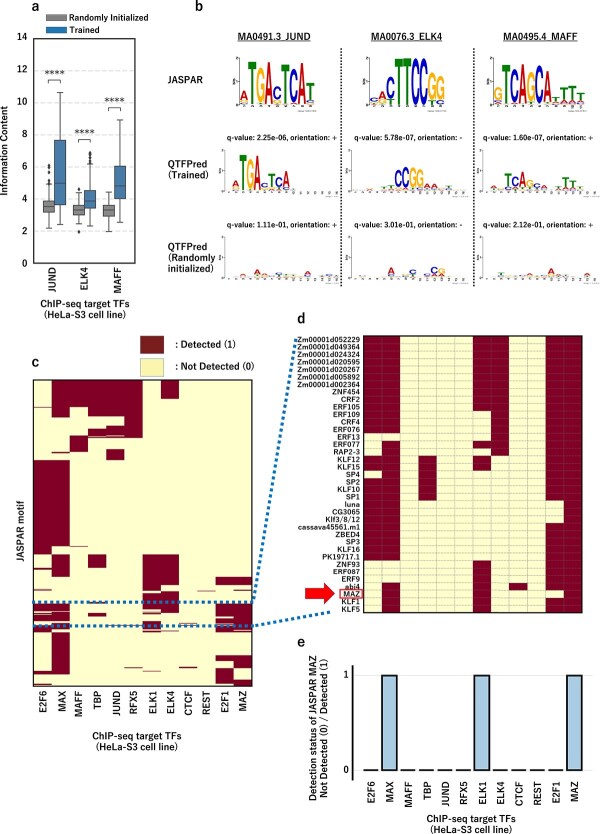 Figure 6
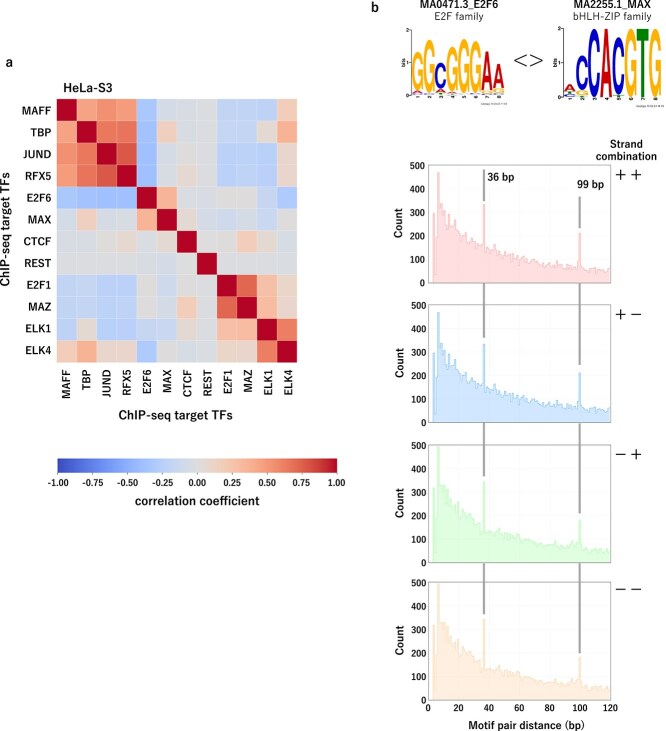 Figure 7
Peer Reviews
No public reviews on file for this paper yet. If you reviewed it on a platform where reviews are public (OpenReview, ICLR, NeurIPS, ICML), you can paste yours below so the community can read it here.
Videos
No videos yet. Explain this paper in a talk, walkthrough, or lecture? Add one.
Taxonomy
TopicsQuantum Computing Algorithms and Architecture · Genomics and Chromatin Dynamics · Machine Learning in Bioinformatics