Evidence of spontaneous mentalizing in children with Cornelia de Lange and fragile X syndromes, but not autistic children
Katherine Ellis, Jo Moss, Malwina Dziwisz, Beth Jones, Christina Griva, Sophie Pendered, Roisin C Perry, Sarah J White

TL;DR
Children with Cornelia de Lange and fragile X syndromes show implicit mentalizing abilities similar to neurotypical children, but autistic children do not, suggesting traditional tests may not capture true mentalizing in these groups.
Contribution
The study introduces an implicit mentalizing task to reveal mentalizing abilities in children with genetic syndromes and autism, bypassing language barriers.
Findings
Neurotypical children outperformed others in explicit mentalizing tasks.
Children with CdLS, FXS, and neurotypical children showed better implicit mentalizing than autistic children.
Implicit mentalizing performance was not linked to age or language ability in any group.
Abstract
It has been suggested that mentalizing abilities underlie the distinct profiles of autism characteristics observed between Cornelia de Lange (CdLS) and fragile X syndromes (FXS) and autistic people without a genetic syndrome. However, traditional explicit mentalizing tasks have high language demands that may mask true mentalizing abilities in these populations. We compared performance on traditional explicit tasks and an implicit anticipatory looking mentalizing task in children with CdLS (N = 9), boys with FXS (N = 9), autistic (N = 22) and neurotypical (N = 34) children. The groups showed divergent patterns of performance. Neurotypical children had higher explicit mentalizing scores than all other groups. However, neurotypical, FXS and CdLS groups showed better implicit mentalizing performance than autistic children. Both chronological age and receptive language ability correlated…
Genes, proteins, chemicals, diseases, species, mutations and cell lines named across the full text — each resolved to its canonical identifier and authoritative record.
Click any figure to enlarge with its caption.
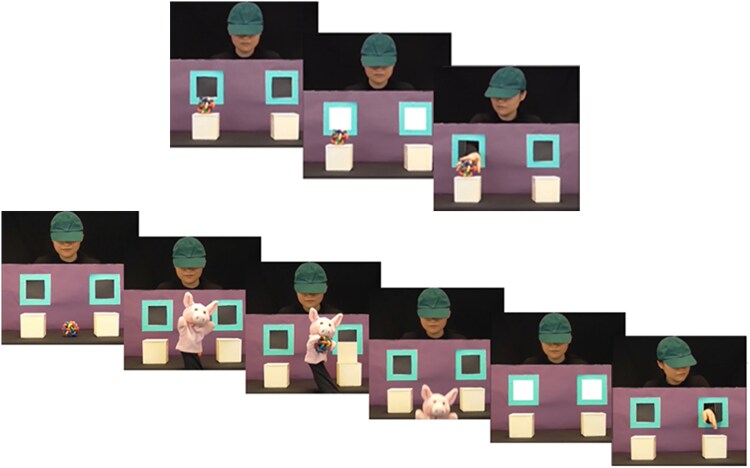 Figure 1
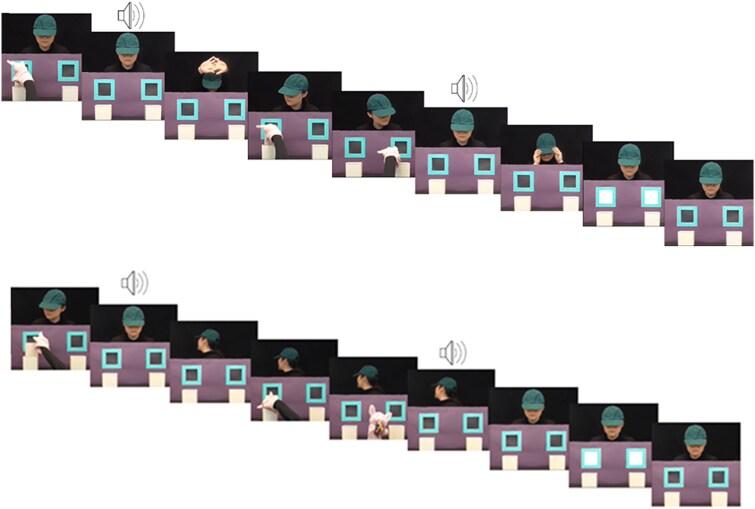 Figure 2
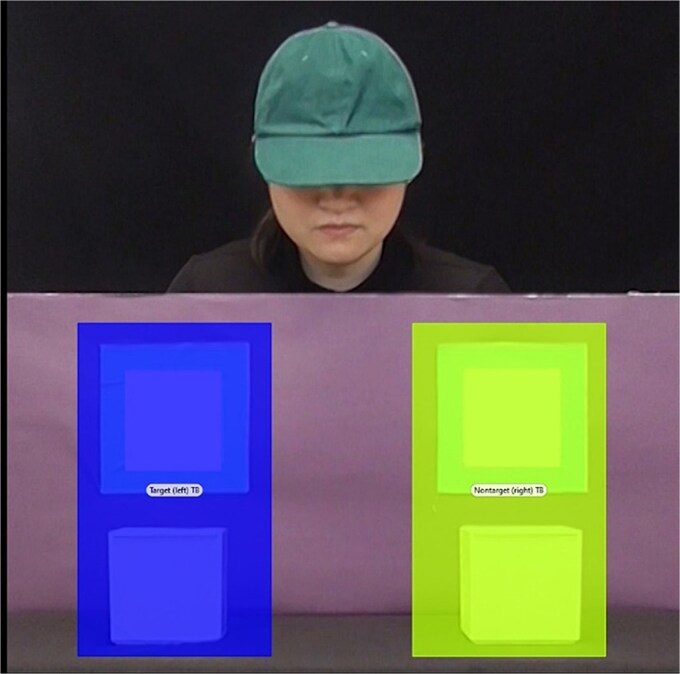 Figure 3
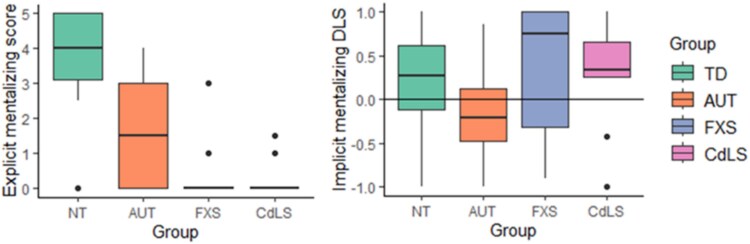 Figure 4
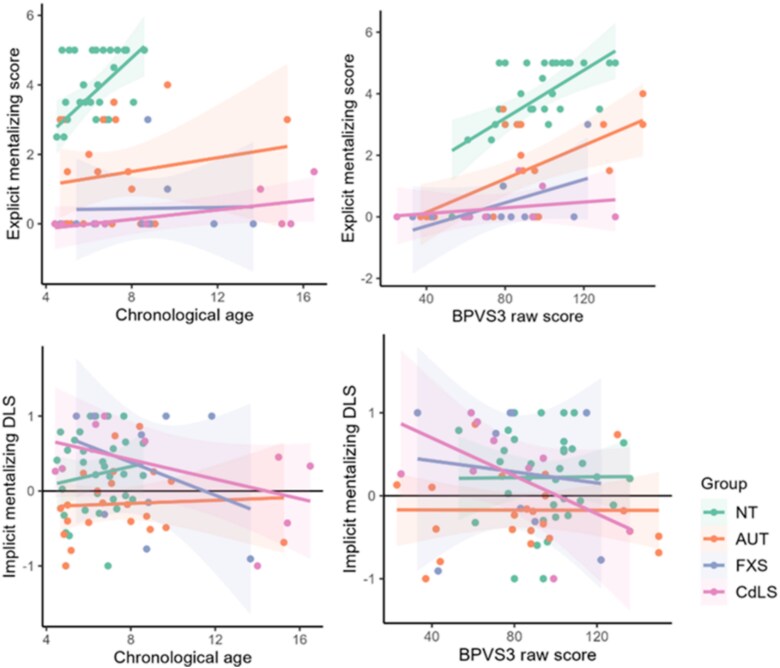 Figure 5
Peer Reviews
No public reviews on file for this paper yet. If you reviewed it on a platform where reviews are public (OpenReview, ICLR, NeurIPS, ICML), you can paste yours below so the community can read it here.
Videos
No videos yet. Explain this paper in a talk, walkthrough, or lecture? Add one.
Taxonomy
TopicsAutism Spectrum Disorder Research · Genetics and Neurodevelopmental Disorders · Genetic and Clinical Aspects of Sex Determination and Chromosomal Abnormalities