MoPSeq-DB: a user-friendly web application for genomic data management and analysis of marine mollusc pathogens
Clémentine Battistel, Jean-Christophe Mouren, Benjamin Morga, Camille Pelletier, Lydie Canier, Céline Garcia, Isabelle Arzul, Yaelle Pihan, Laura Leroi, Germain Chevignon, Patrick Guido Durand, Maude Jacquot

TL;DR
MoPSeq-DB is a user-friendly web tool for managing and analyzing genomic data of marine mollusc pathogens, making bioinformatics more accessible.
Contribution
The novel contribution is an open-source, accessible web application specifically designed for mollusc pathogen genomic data management.
Findings
MoPSeq-DB automates bioinformatics workflows and provides interactive data visualization for non-experts.
The platform supports systematic storage and flexible management of genomic data and metadata.
It is adaptable for use beyond mollusc pathogens, offering a versatile tool for pathogen research.
Abstract
Sequencing technologies continue to evolve, providing novel opportunities for disease surveillance and control. These advancements are crucial for diagnosing diseases and identifying genetically distinct variants with diverse host reservoir species and geographical distributions. Recent progress in sequencing-based analyses of marine mollusc diseases has been significant, yet challenges remain in data management due to a lack of dedicated tools and databases. To address this, we present MoPSeq-DB (Mollusc Pathogen Sequences DataBase), an open-source web application for managing curated genomic data on mollusc pathogens. Designed for accessibility to non-bioinformaticians, MoPSeq-DB features interactive data visualization and integrated analysis tools. Built with the Python Django framework, it automates common bioinformatics workflows, enabling rapid exploration of sequencing data. The…
Genes, proteins, chemicals, diseases, species, mutations and cell lines named across the full text — each resolved to its canonical identifier and authoritative record.
Click any figure to enlarge with its caption.
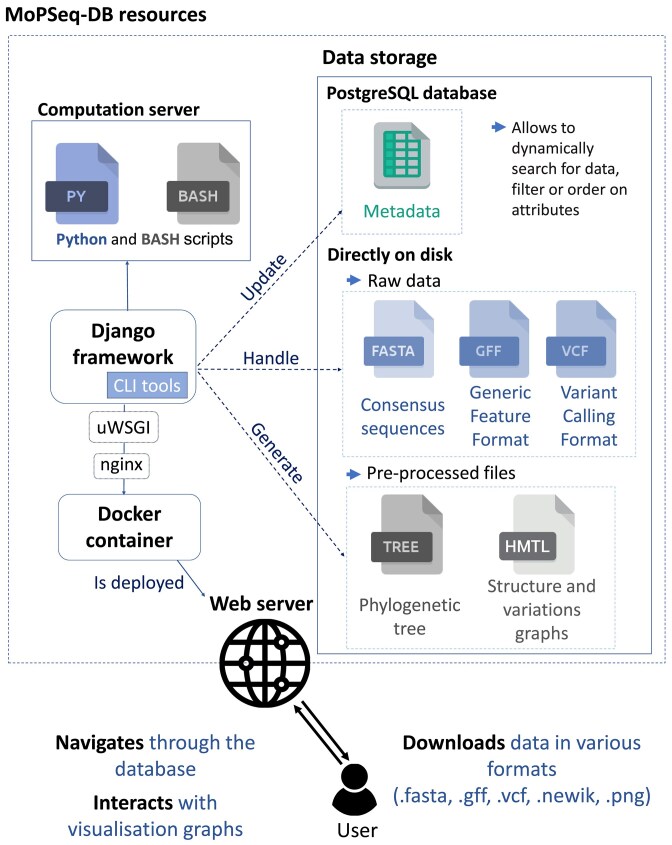 Figure 1
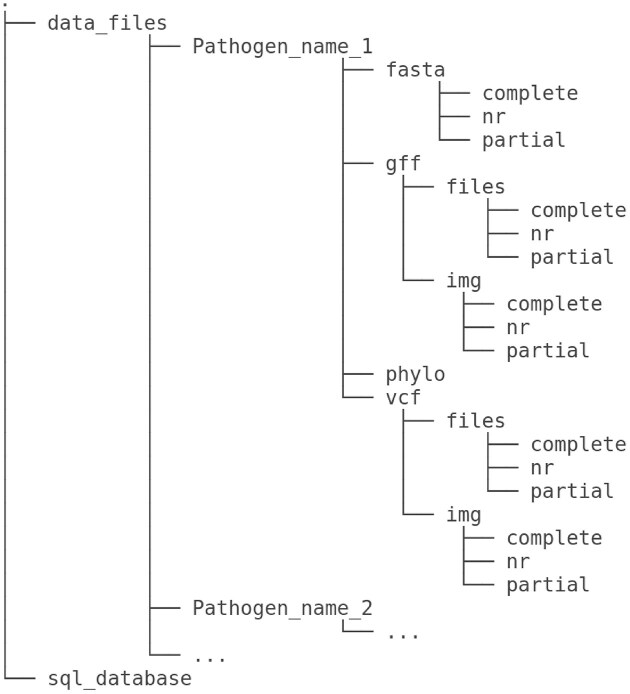 Figure 2
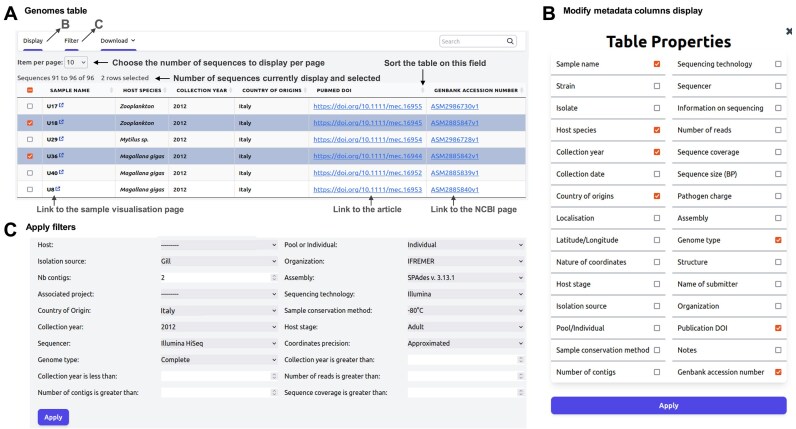 Figure 3
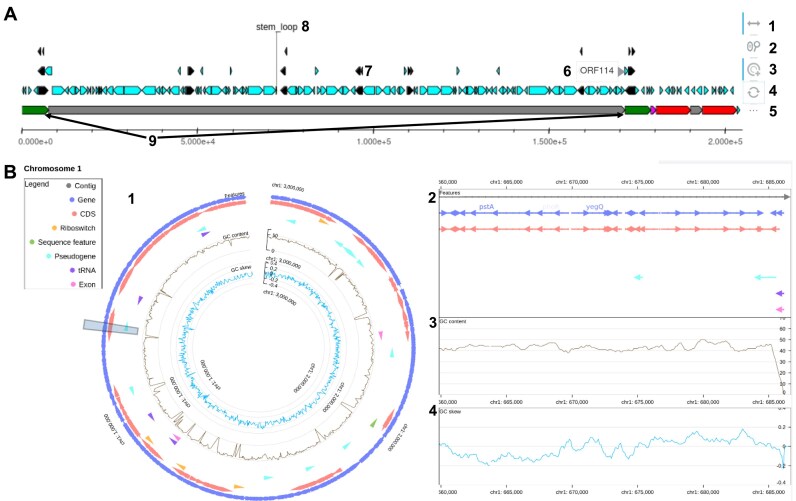 Figure 4
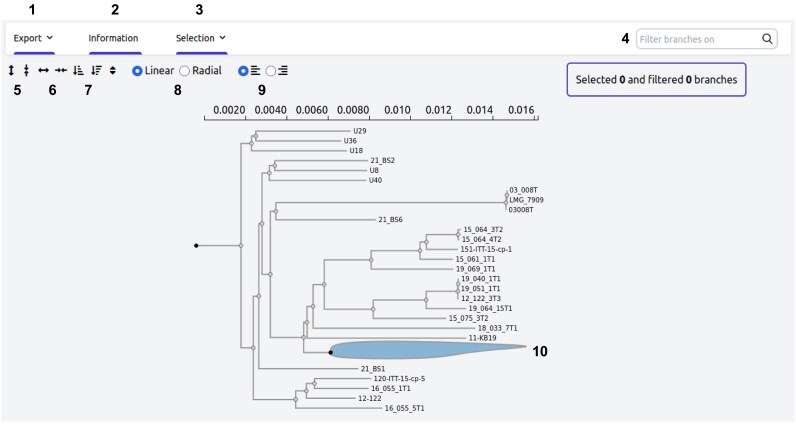 Figure 5
Peer Reviews
No public reviews on file for this paper yet. If you reviewed it on a platform where reviews are public (OpenReview, ICLR, NeurIPS, ICML), you can paste yours below so the community can read it here.
Videos
No videos yet. Explain this paper in a talk, walkthrough, or lecture? Add one.
Taxonomy
TopicsGenomics and Phylogenetic Studies · Marine Toxins and Detection Methods · Marine Bivalve and Aquaculture Studies