Model‐based evaluation of the interaction between ritonavir‐boosted atazanavir and rifampicin in Ugandan adults with HIV
Allan Kengo, Juan Eduardo Resendiz‐Galvan, Letisha Najjemba, Henry Mugerwa, Amedeo De Nicolò, Antonio D'Avolio, Shakir Atoyebi, Lubbe Wiesner, Elin M. Svensson, Catriona Waitt, Paolo Denti

TL;DR
This study examines how the HIV drug atazanavir interacts with the TB drug rifampicin in Ugandan adults, finding that doubling the dose frequency helps maintain effective drug levels.
Contribution
The study introduces a dosing adjustment strategy to mitigate the drug interaction between ATV/r and rifampicin in HIV patients.
Findings
Rifampicin increases atazanavir clearance and reduces its bioavailability and absorption rate.
Doubling ATV/r dosing frequency to BID largely restores effective trough concentrations in most participants.
The ratio of atazanavir concentration between PBMCs and plasma remains unaffected by rifampicin.
Abstract
Concomitant treatment of tuberculosis (TB) and human immunodeficiency virus (HIV) is complicated by drug‐drug interactions (DDI). This analysis aimed to characterize the DDI between ritonavir‐boosted atazanavir (ATV/r) and rifampicin in plasma and peripheral blood mononuclear cells (PBMC). The DERIVE study (NCT04121195) recruited Ugandan adults with HIV (not TB) on ATV/r‐based second‐line antiretroviral therapy, and collected intensive plasma and PBMC pharmacokinetic samples during four visits: (i) standard‐dose ATV/r 300/100 mg QD, (ii) same ATV/r regimen adding rifampicin 600 mg QD, (iii) doubling ATV/r to BID with rifampicin 600 mg QD and (iv) ATV/r 300/100 mg BID with rifampicin increased to 1200 mg QD. ATV/r plasma and PBMC concentrations were analysed with population pharmacokinetic modelling in NONMEM. Twenty‐six participants (23 female) were enrolled, with median age and…
Genes, proteins, chemicals, diseases, species, mutations and cell lines named across the full text — each resolved to its canonical identifier and authoritative record.
Click any figure to enlarge with its caption.
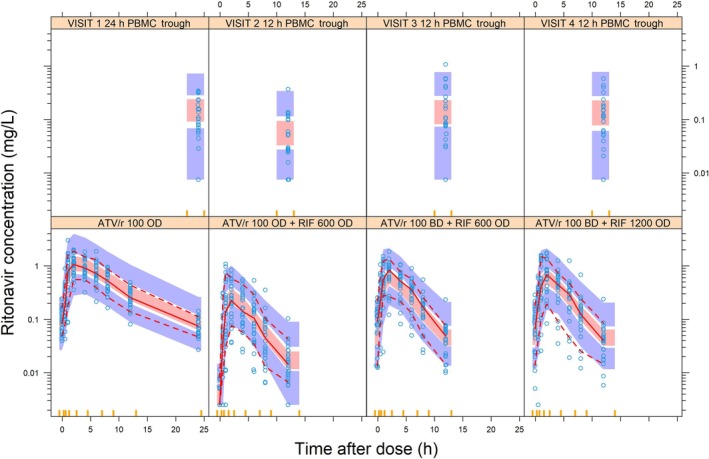 Figure 1
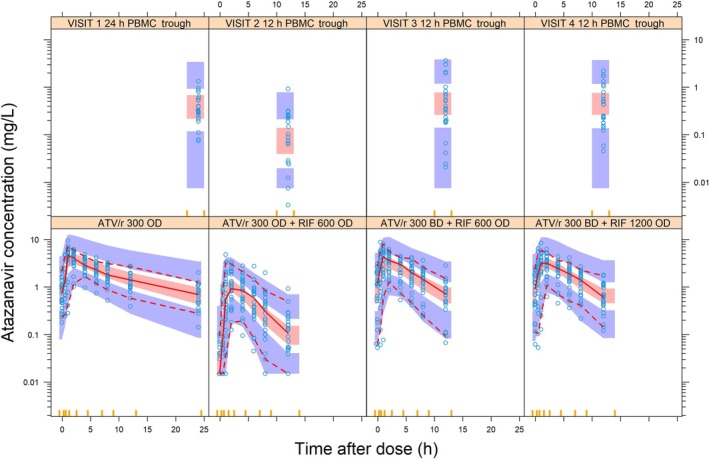 Figure 2
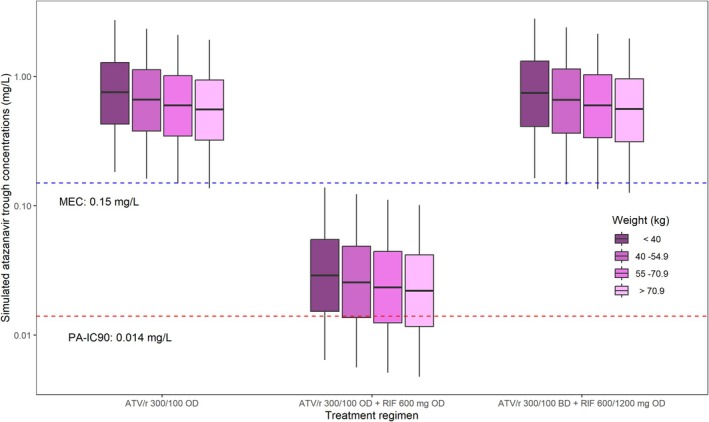 Figure 3
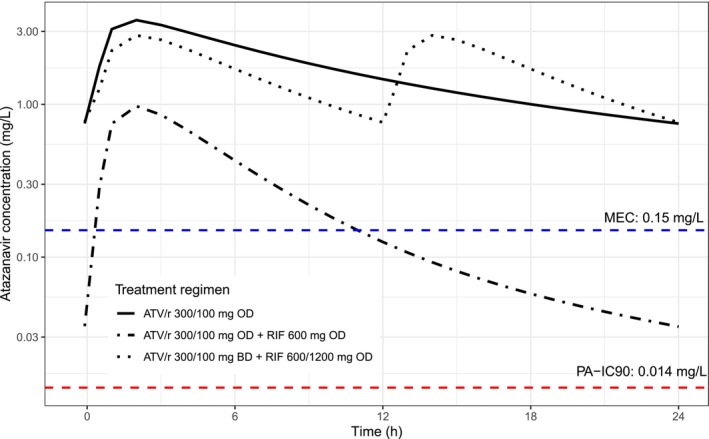 Figure 4
Peer Reviews
No public reviews on file for this paper yet. If you reviewed it on a platform where reviews are public (OpenReview, ICLR, NeurIPS, ICML), you can paste yours below so the community can read it here.
Videos
No videos yet. Explain this paper in a talk, walkthrough, or lecture? Add one.
Taxonomy
TopicsHIV/AIDS drug development and treatment · HIV Research and Treatment · Hepatitis C virus research