Development and Validation of a Hybrid Machine Learning Model to Predict Lung Transplant Outcomes
Gaurav Sharma, Vineet Kumar Kamal, Srinivas Bollineni, Irina Timofte, Jonathan D. Plasencia, Srdjan Lesaja, Vaidehi Kaza, Suresh Keshavamurthy, John Murala, Matthias Peltz, Michael E. Jessen

TL;DR
A new interpretable machine learning model predicts lung transplant outcomes at 1, 5, and 10 years with moderate accuracy and supports clinical decision-making.
Contribution
An interpretable hybrid machine learning model for predicting lung transplant outcomes with validated performance across multiple time horizons.
Findings
The model showed moderate discrimination with an integrated AUC of 0.61 and a C-index of 0.64.
The model was well calibrated and demonstrated net clinical benefit across all time horizons.
Nine clinical variables were selected as predictors, including recipient age, creatinine level, and donor age.
Abstract
Can an interpretable hybrid machine learning model predict 1-, 5-, and 10-year risk of death or retransplant after a lung transplant? In this prognostic study using a UNOS-OPTN cohort of 51 933 adults undergoing a first lung transplant, a 9-variable AutoScore-Survival model showed moderate discrimination (integrated area under the curve, 0.61; C-index, 0.64), good calibration, and net clinical benefit on decision-curve analysis in the testing cohort across time horizons. These findings suggest that this interpretable, web-accessible risk calculator may support individualized posttransplant risk stratification, patient counseling, and shared decision-making in clinical practice. Long-term survival after a lung transplant remains highly variable, and existing risk stratification tools have limited accuracy, clinical utility, and interpretability. To develop, validate, and assess the…
Genes, proteins, chemicals, diseases, species, mutations and cell lines named across the full text — each resolved to its canonical identifier and authoritative record.
Click any figure to enlarge with its caption.
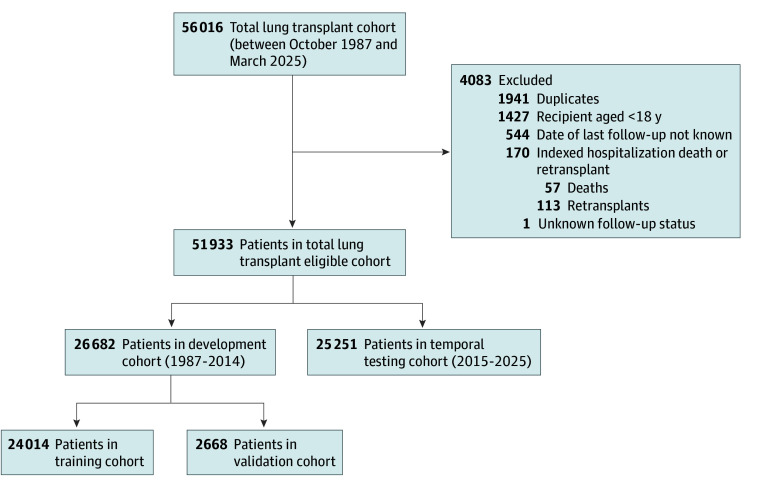 Figure 1
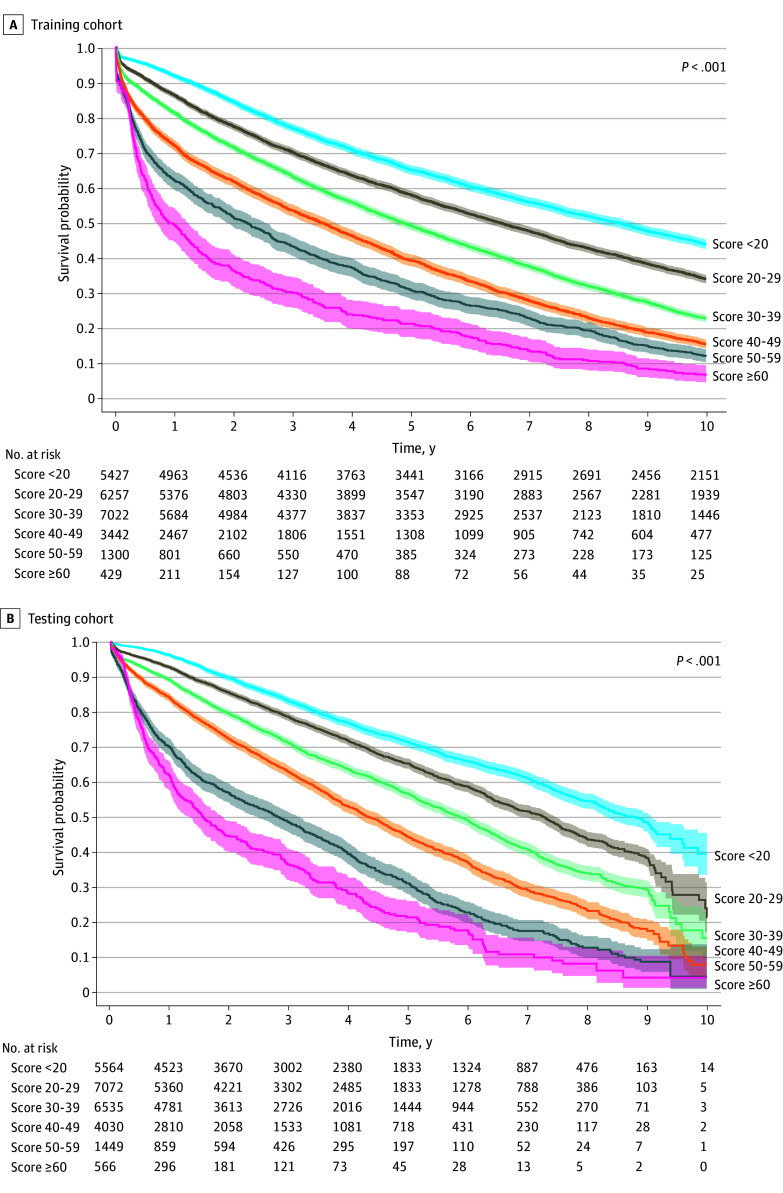 Figure 2
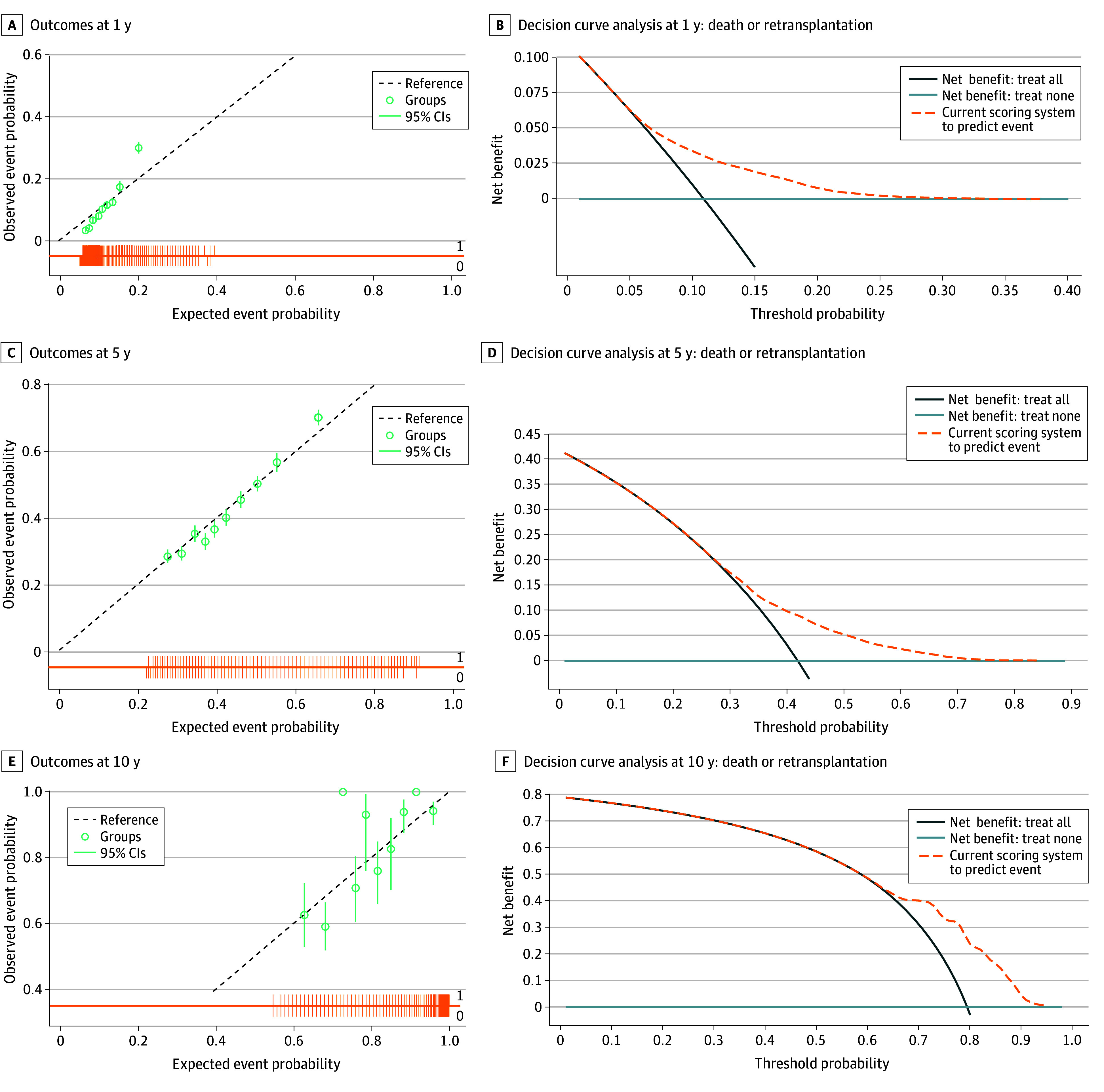 Figure 3
Peer Reviews
No public reviews on file for this paper yet. If you reviewed it on a platform where reviews are public (OpenReview, ICLR, NeurIPS, ICML), you can paste yours below so the community can read it here.
Videos
No videos yet. Explain this paper in a talk, walkthrough, or lecture? Add one.
Taxonomy
TopicsTransplantation: Methods and Outcomes · Renal Transplantation Outcomes and Treatments · Phonocardiography and Auscultation Techniques