Physician Preferences for Universal Routine Depression Screening for Adolescents in Primary Care
Tran T. Doan, Davene R. Wright, Melissa DeJonckheere, David W. Hutton, Kristin N. Ray, Lisa A. Prosser

TL;DR
Primary care physicians prefer depression screening strategies that accurately identify cases and save time during patient visits.
Contribution
This study quantifies physician preferences for attributes of adolescent depression screening using a discrete choice experiment.
Findings
Physicians most value accurate identification of depression cases and shorter clinical appointment times.
They are willing to spend 37 minutes per patient to reduce missed diagnoses from 10% to 5%.
Three physician subgroups were identified based on their prioritization of screening attributes.
Abstract
What are the quantitative preferences of primary care physicians for different attributes of a routine universal adolescent depression screening strategy? In this survey study containing a discrete choice experiment among 181 physician respondents, top preferences were (1) accurately identifying depression cases and (2) shortening clinical appointment times. Physicians also preferred brief electronic administration and provision of a private screening area, and they reported willingness to spend 37 minutes per patient to reduce missed diagnoses (false negatives) from 10% to 5%. These findings suggest that health systems and payers should consider physicians’ preferences for accuracy and efficiency when determining strategies to implement national guidelines on universal depression screening during annual well-child care visits. This survey study assesses primary care physicians’…
Genes, proteins, chemicals, diseases, species, mutations and cell lines named across the full text — each resolved to its canonical identifier and authoritative record.
Click any figure to enlarge with its caption.
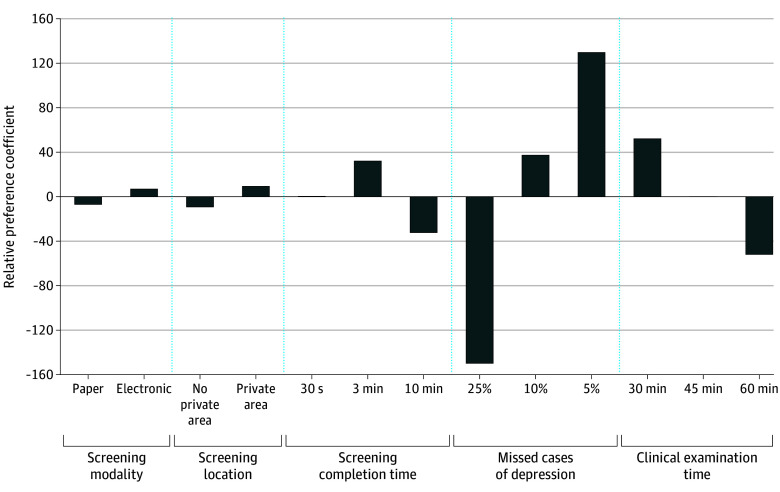 Figure 1
Peer Reviews
No public reviews on file for this paper yet. If you reviewed it on a platform where reviews are public (OpenReview, ICLR, NeurIPS, ICML), you can paste yours below so the community can read it here.
Videos
No videos yet. Explain this paper in a talk, walkthrough, or lecture? Add one.
Taxonomy
TopicsChild and Adolescent Psychosocial and Emotional Development · Mental Health Treatment and Access · Adolescent Sexual and Reproductive Health