Designing Peptide Fossils That Model the Evolution of the Bacterial Ferredoxin Fold
Bhanu P. Jagilinki, Ian Campbell, Alexei M. Tyryshkin, Andrew C. Mutter, Jan Siess, Juliana DiGiacomo, Dylan Klein, Saroj Poudel, Paul G. Falkowski, Jonathan J. Silberg, Vikas Nanda

TL;DR
Scientists designed ancient-like proteins called semidoxins to model early evolutionary stages of bacterial ferredoxins, revealing insights into how these electron-carrying proteins may have evolved.
Contribution
The study introduces semidoxins and symdoxins as designed peptide fossils to model the evolutionary history of ferredoxins.
Findings
Semidoxins homodimerize and behave similarly to symdoxins in structural and electrochemical properties.
Semidoxins show greater oxygen sensitivity in bacterial growth compared to symdoxins.
A naturally occurring semidoxin was found to be folded and redox active, suggesting evolutionary links to simpler peptides.
Abstract
Electron transfer coupled to redox chemistry is at the heart of metabolism. The proteins responsible for moving electrons (protein electron carriers) must have emerged at the origin of life. The small iron–sulfur-binding bacterial ferredoxins were likely among these first proteins. Embedded within the ferredoxin sequence and structure is a symmetry that points to an ancient gene duplication event. Little is understood about the nature of ferredoxins prior to this duplication event or what environmental factors may have driven the selection for more complex forms. The deep-time molecular history of ferredoxins goes back billions of years and cannot be reconstructed by phylogenetic analyses based on amino acid sequences. Here, we use structure-guided protein design to model a fossil half-ferredoxin stage in the evolution of this fold, the semidoxins, and their symmetric full-length…
Genes, proteins, chemicals, diseases, species, mutations and cell lines named across the full text — each resolved to its canonical identifier and authoritative record.
Click any figure to enlarge with its caption.
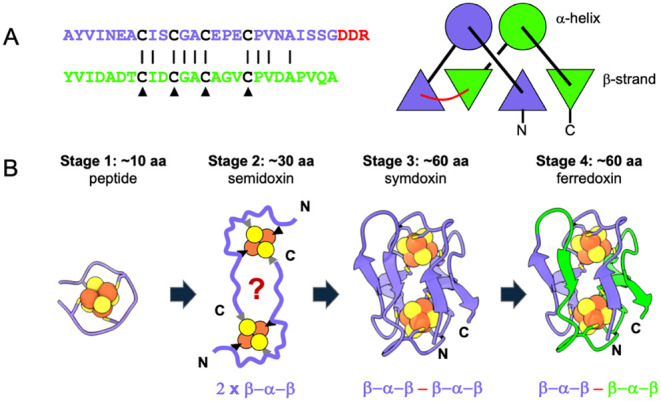 Figure 1
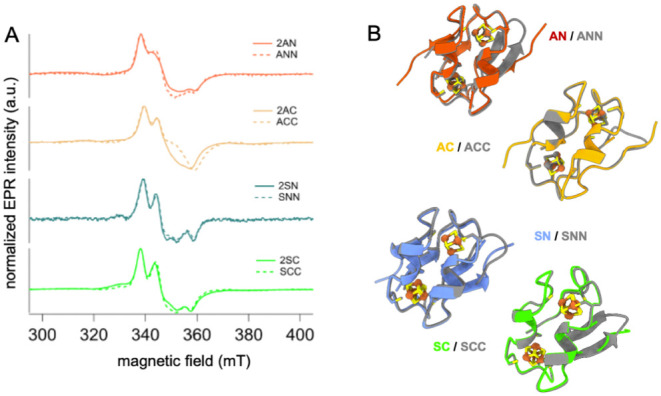 Figure 2
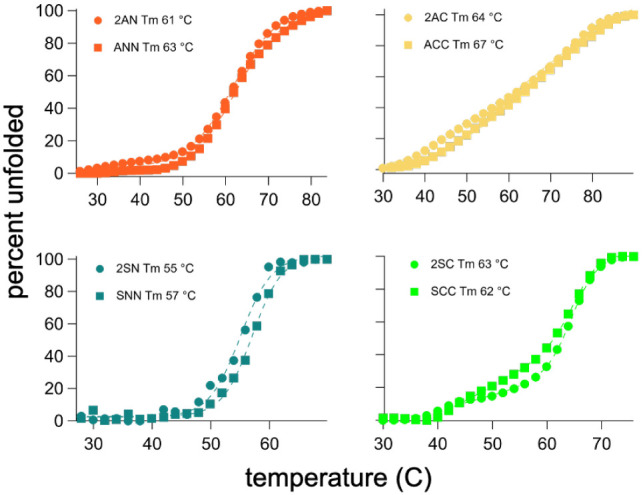 Figure 3
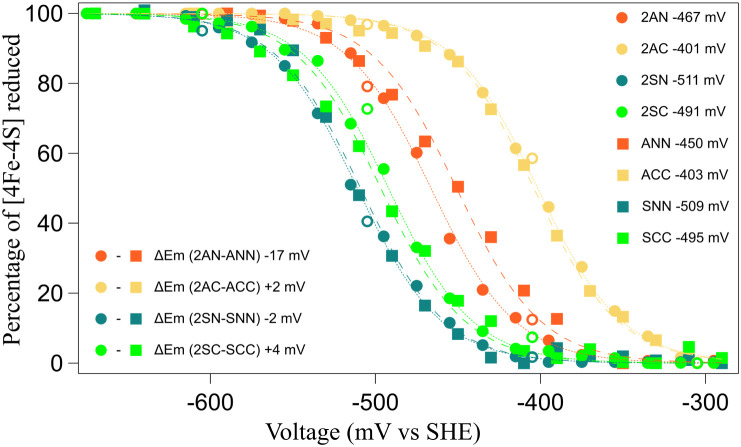 Figure 4
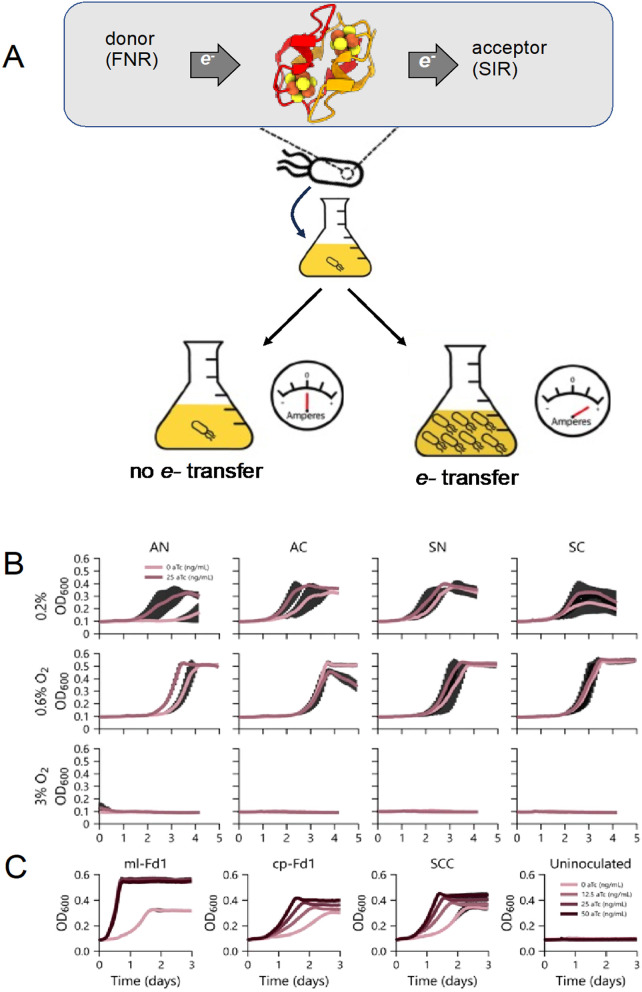 Figure 5
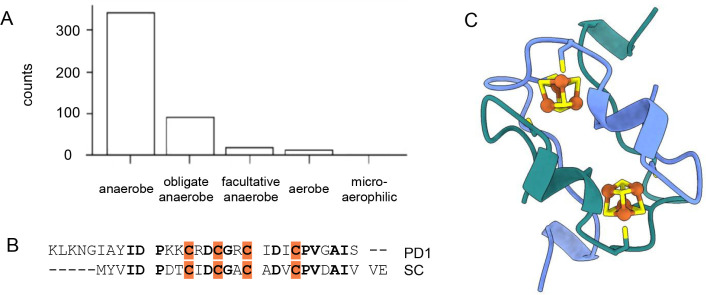 Figure 6
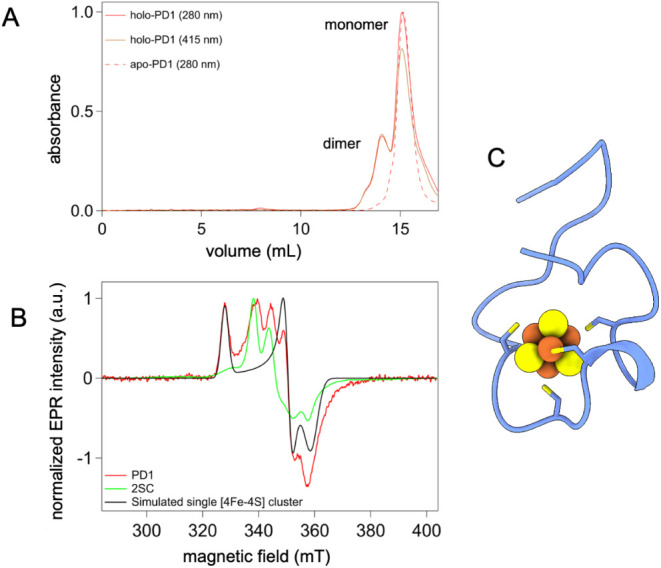 Figure 7
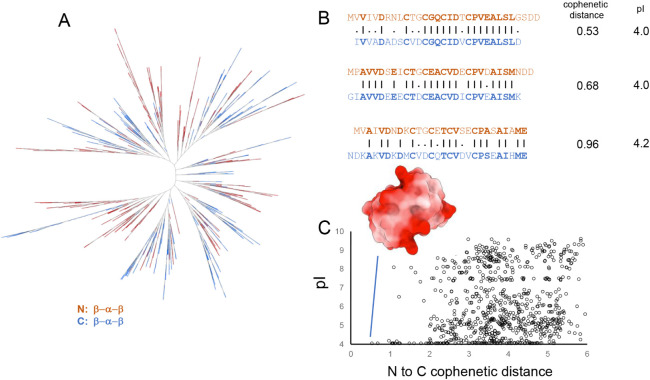 Figure 8
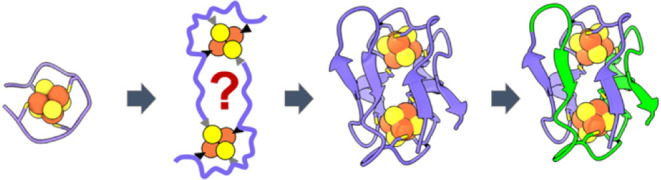 Figure 9
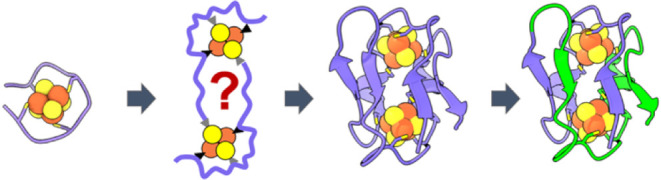 Figure 10
 Figure 11
 Figure 12
Peer Reviews
No public reviews on file for this paper yet. If you reviewed it on a platform where reviews are public (OpenReview, ICLR, NeurIPS, ICML), you can paste yours below so the community can read it here.
Videos
No videos yet. Explain this paper in a talk, walkthrough, or lecture? Add one.
Taxonomy
TopicsMicrobial Fuel Cells and Bioremediation · Metalloenzymes and iron-sulfur proteins · Metal-Catalyzed Oxygenation Mechanisms