Drastic Impact of Donor Substituents on Xanthenes in the PDT of Glioblastoma
O. Karaman, E. Yesilcimen, M. Forough, Z. Elmazoglu, G. Gunbas

TL;DR
This paper explores how changing donor groups in xanthene-based dyes significantly affects their effectiveness in photodynamic therapy for glioblastoma.
Contribution
The study introduces two new selenium-containing xanthene-based photosensitizers with improved PDT efficacy and selectivity for glioblastoma.
Findings
NSeMorph and NSeAze show absorption over 650 nm with molecular weights under 420 g/mol.
NSeAze achieved IC50 values of 456 nM and 461 nM for glioblastoma cell lines.
NSeAze demonstrated high phototoxicity indices, indicating strong activity under illumination.
Abstract
Even though significant progress has been made in treating various cancer types, brain cancers lag drastically. Several factors contribute, led by operational difficulties, the blood-brain barrier, and the tendency of recurrence. Alternative therapies are needed, and photodynamic therapy (PDT) offers several advantages. However, PDT has rarely been explored for brain cancers since, for achieving near-infrared range activation, photosensitizers should have longer conjugation lengths and thus higher molecular weight, which then limits blood-brain barrier penetration. Here, we describe the syntheses and PDT action of two new selenium-containing xanthane-based photosensitizers (NSeMorph and NSeAze) that show absorption over 650 nm with molecular weights lower than 420 g/mol. It has been demonstrated that both NSeMorph and NSeAze showed PDT activity against glioblastoma cell lines (U87MG and…
Genes, proteins, chemicals, diseases, species, mutations and cell lines named across the full text — each resolved to its canonical identifier and authoritative record.
Click any figure to enlarge with its caption.
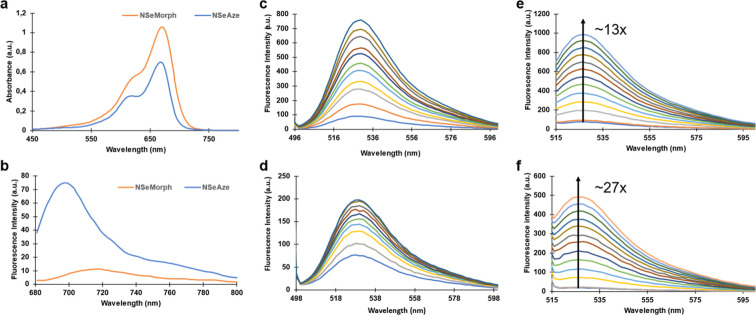 Figure 1
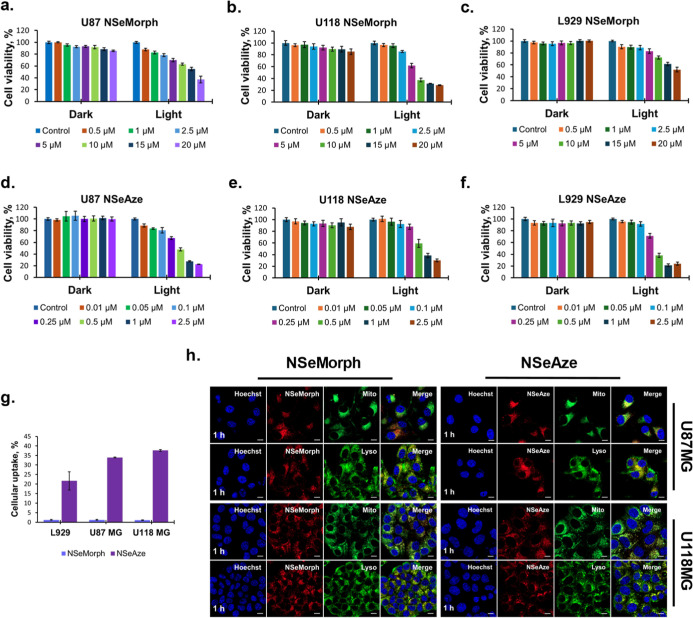 Figure 2
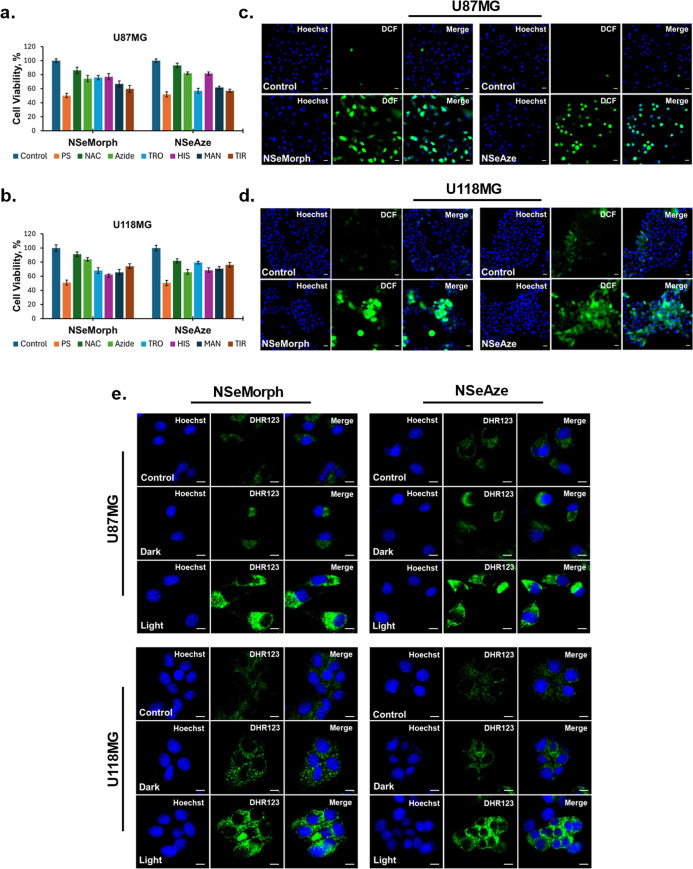 Figure 3
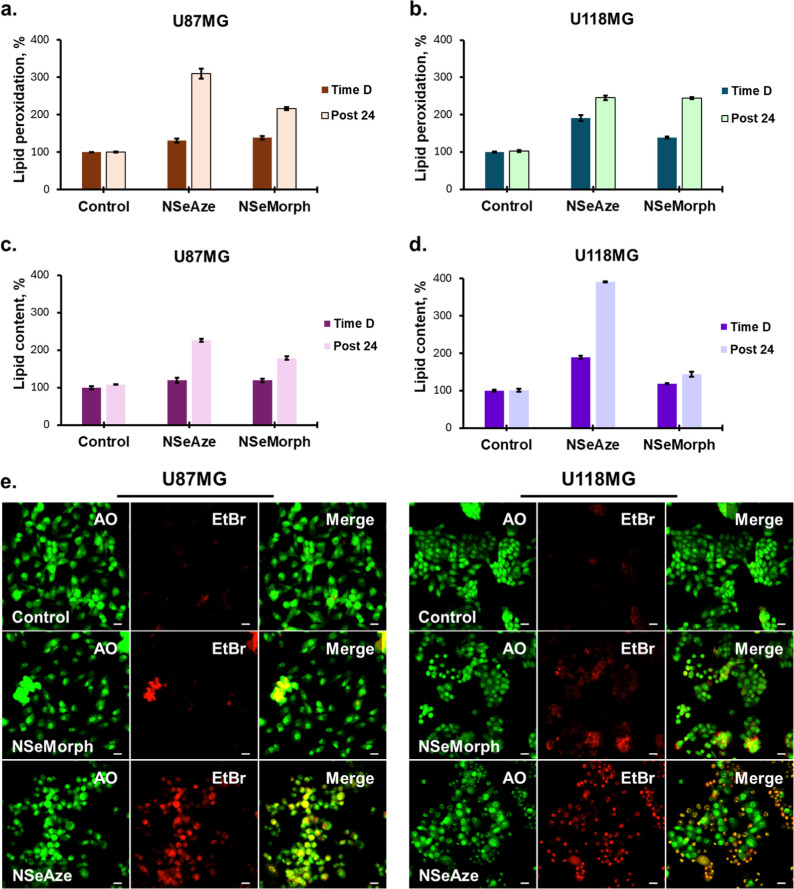 Figure 4
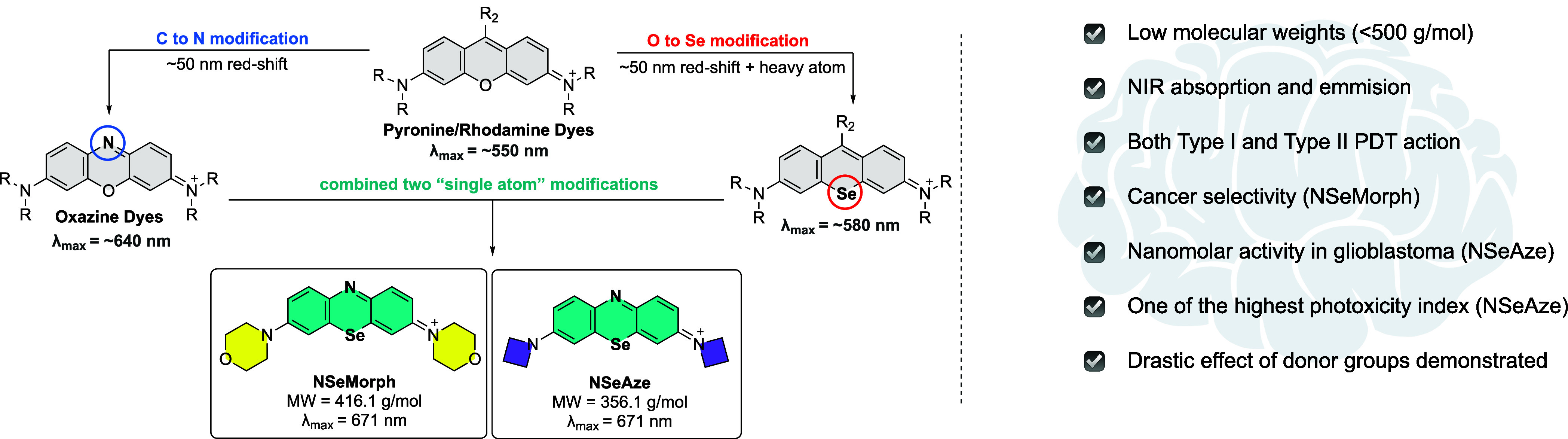 Figure 5
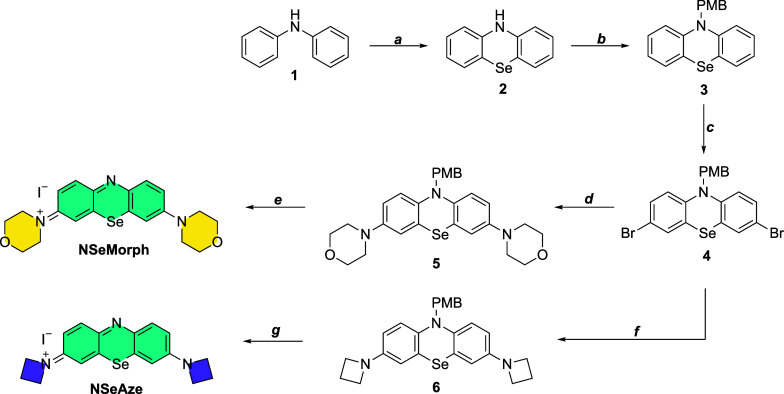 Figure 6
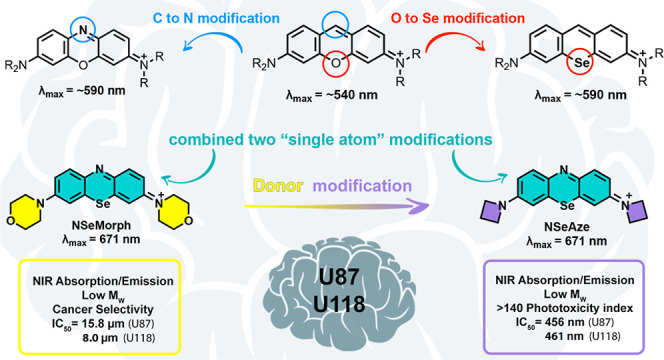 Figure 7
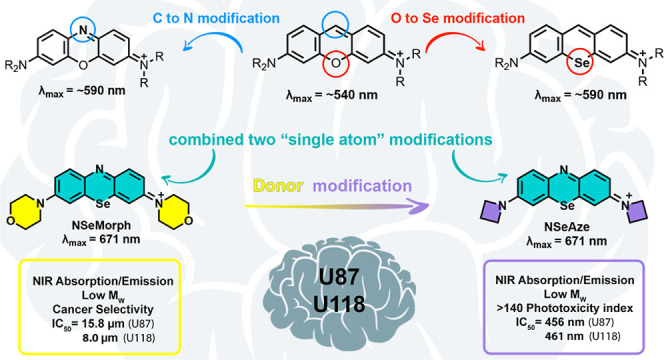 Figure 8
Peer Reviews
No public reviews on file for this paper yet. If you reviewed it on a platform where reviews are public (OpenReview, ICLR, NeurIPS, ICML), you can paste yours below so the community can read it here.
Videos
No videos yet. Explain this paper in a talk, walkthrough, or lecture? Add one.
Taxonomy
TopicsNanoplatforms for cancer theranostics · Photodynamic Therapy Research Studies · Photochromic and Fluorescence Chemistry