Integrated CO2 Capture and Conversion to Formate with a Molecular Platinum Bis(diphosphine) Electrocatalyst
Ciara N. Gillis, Hunter Pauker, R. Dominic Ross, Christopher Hahn, Robert J. Nielsen, Jenny Y. Yang

TL;DR
A new platinum catalyst efficiently converts captured CO2 into formate, skipping energy-intensive concentration steps.
Contribution
A molecular platinum catalyst enables integrated CO2 capture and conversion with high efficiency.
Findings
The catalyst [Pt(dmpe)2](PF6)2 achieves >70% Faradaic efficiency in converting CO2 to formate.
Phenol facilitates CO2 release from the sorbent, enabling its electrochemical reduction.
Hydride transfer kinetics and mechanism were studied computationally and experimentally.
Abstract
Carbon dioxide is a potentially valuable feedstock for carbon-based fuels or commodities but is only available in dilute streams. Many studies have focused on either the capture and concentration of CO2 or the reduction of pure CO2 streams. The direct reduction of sorbent-captured CO2 in an integrated process would skip the energy-intensive CO2 concentration and sorbent regeneration step. Herein, we report the electrocatalytic reduction of 1,3-bis(2,6-diisopropylphenyl)imidazolium-2-carboxylate (IPr·CO2), which forms quantitatively from the reaction of sorbent 1,3-bis(2,6-diisopropylphenyl)imidazol-2-ylidene (IPr) with 10% and 0.04% CO2 streams, by catalyst [Pt(dmpe)2](PF6)2 (dmpe = 1,2-bis(dimethylphosphino)ethane) to formate with >70% Faradaic efficiencies. Unexpectedly, experimental studies indicate that the proton source phenol facilitates rapid decarboxylation of IPr·CO2 to…
Genes, proteins, chemicals, diseases, species, mutations and cell lines named across the full text — each resolved to its canonical identifier and authoritative record.
Click any figure to enlarge with its caption.
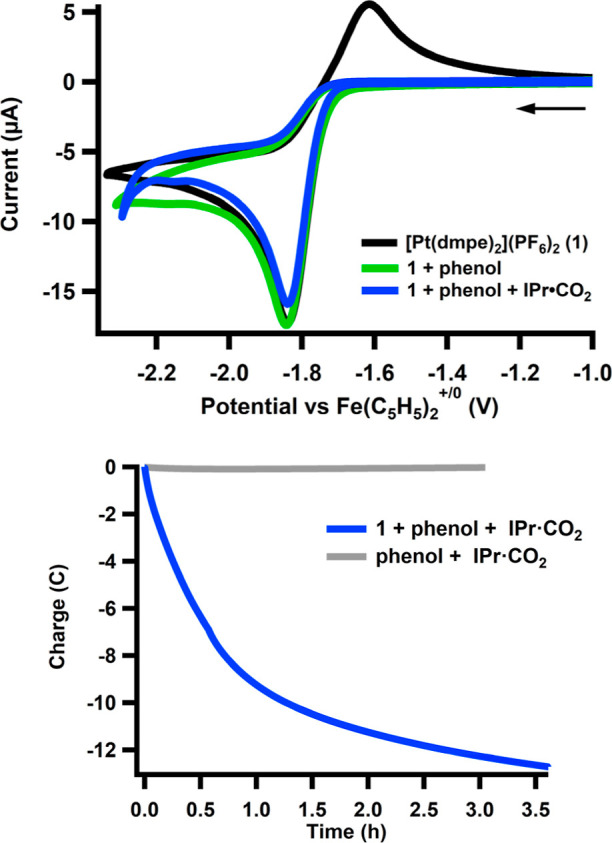 Figure 1
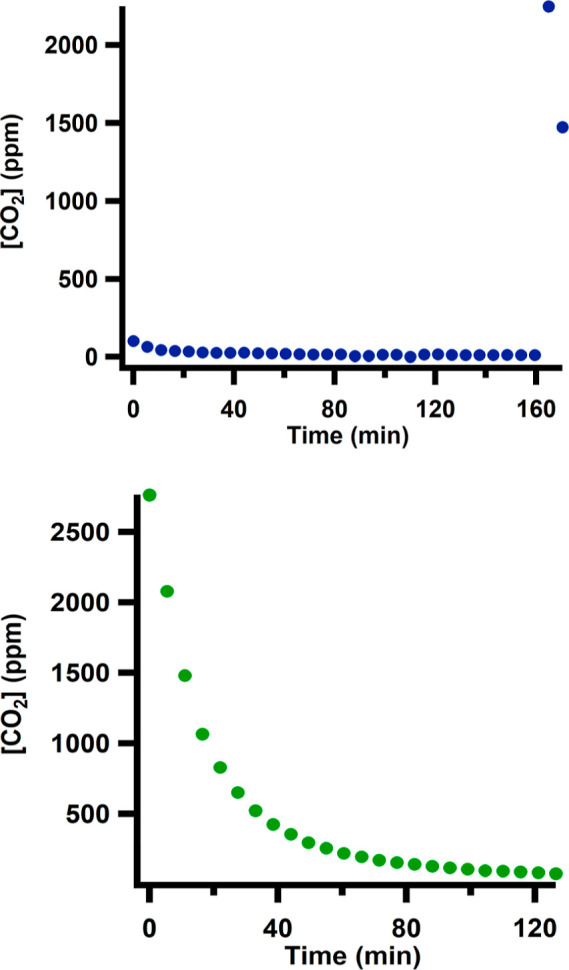 Figure 2
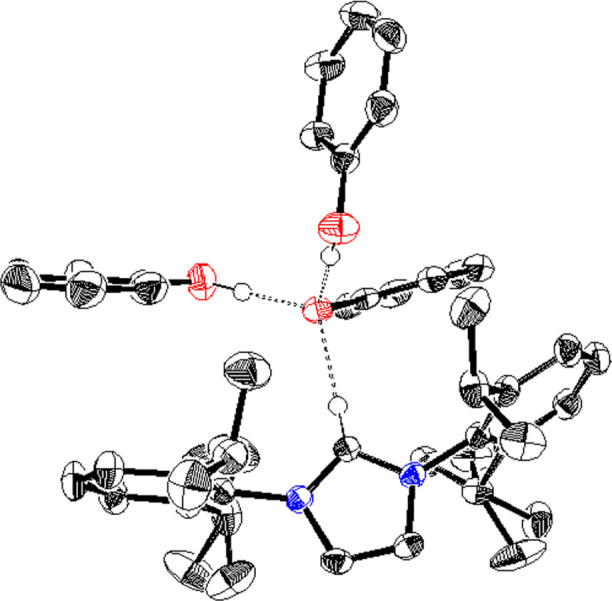 Figure 3
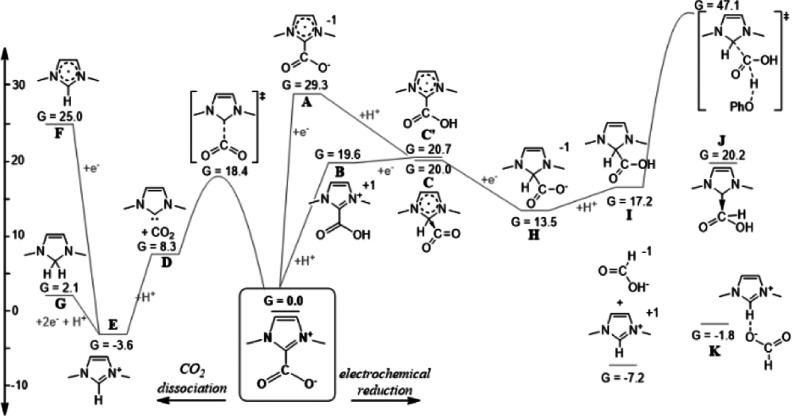 Figure 4
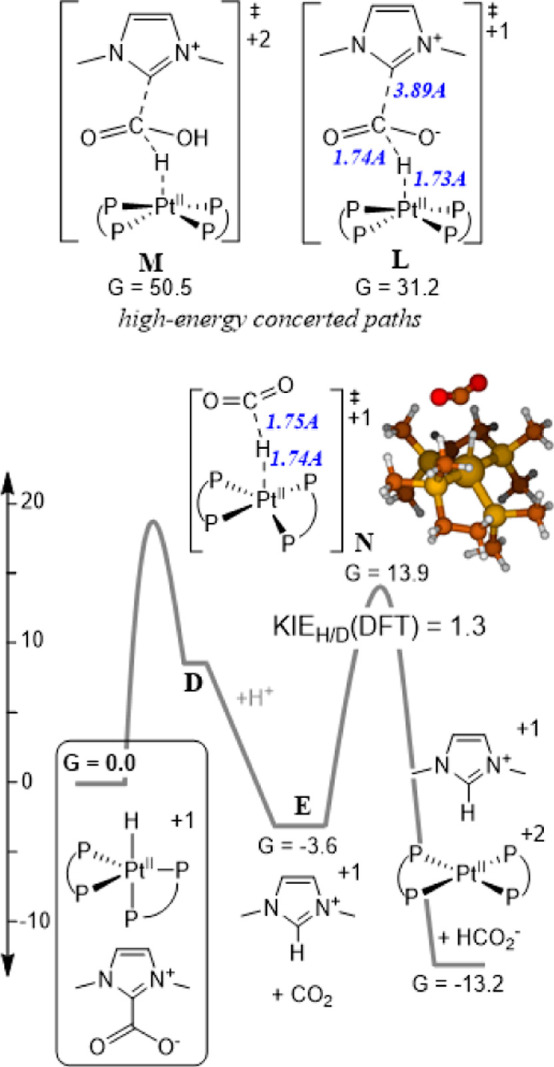 Figure 5
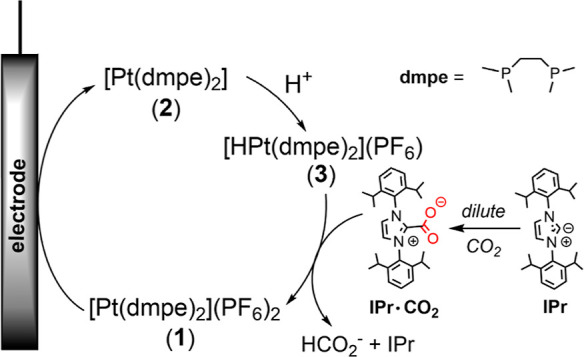 Figure 6
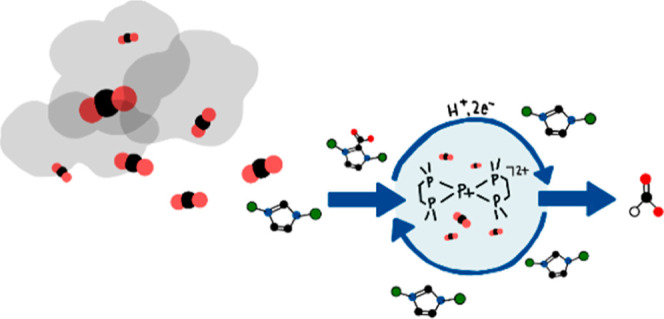 Figure 7
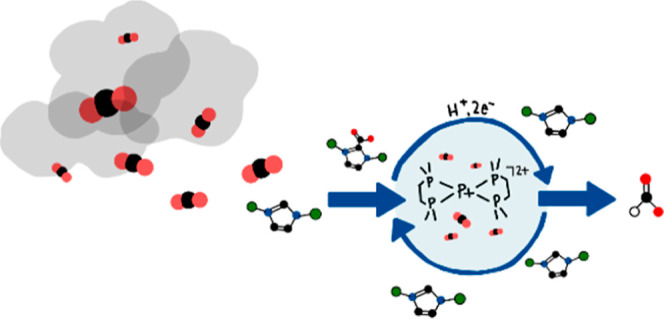 Figure 8
Peer Reviews
No public reviews on file for this paper yet. If you reviewed it on a platform where reviews are public (OpenReview, ICLR, NeurIPS, ICML), you can paste yours below so the community can read it here.
Videos
No videos yet. Explain this paper in a talk, walkthrough, or lecture? Add one.
Taxonomy
TopicsCO2 Reduction Techniques and Catalysts · Carbon dioxide utilization in catalysis · Asymmetric Hydrogenation and Catalysis