Molecular and Functional Divergence of Zebrafish Sox Paralogs Controlling Endoderm Formation and Left–Right Patterning
Simaran Johal, Randa Elsayed, Dongfeng Wang, Conor D Talbot, Roberto Feuda, Kristen A Panfilio, Andrew C Nelson

TL;DR
This study explores how two related proteins in zebrafish, Sox32 and Sox17, evolved to have different roles in forming internal organs and determining left-right body asymmetry.
Contribution
The study reveals how specific structural changes in Sox32 and Sox17 proteins underpin their distinct functions in zebrafish development.
Findings
Human SOX17 cannot induce endoderm specification in zebrafish, unlike zebrafish Sox32.
Evolutionary divergence in the DNA-binding domain of Sox32 explains its specificity for endoderm development.
Conserved peptides in the C-terminal domain of Sox17 are essential for left-right patterning.
Abstract
Endoderm, one of three primary germ layers of vertebrate embryos, makes major contributions to the respiratory and gastrointestinal tracts and associated organs, including the liver and pancreas. In mammals, transcription factor (TF) SOX17 is vital for endoderm organ formation and can induce endoderm progenitor identity. Duplication of ancestral sox17 before or during the early evolution of ray-finned fishes produced paralogs sox32 and sox17 in zebrafish. Sox32 is required for specification of endoderm and progenitors of the left–right (LR) organizer (Kupffer's Vesicle, KV), with Sox17 a downstream target of Sox32 implicated in further KV development. Phenotypic evidence, therefore, suggests functional similarities between zebrafish Sox32 and Sox17 and mammalian SOX17. Here, we directly compare these orthologs and paralogs, using the early zebrafish embryo as a biological platform for…
Genes, proteins, chemicals, diseases, species, mutations and cell lines named across the full text — each resolved to its canonical identifier and authoritative record.
Click any figure to enlarge with its caption.
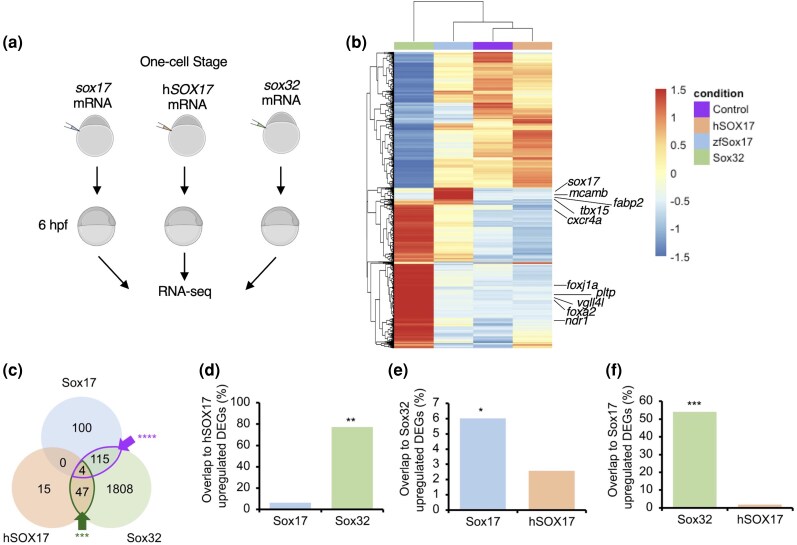 Figure 1
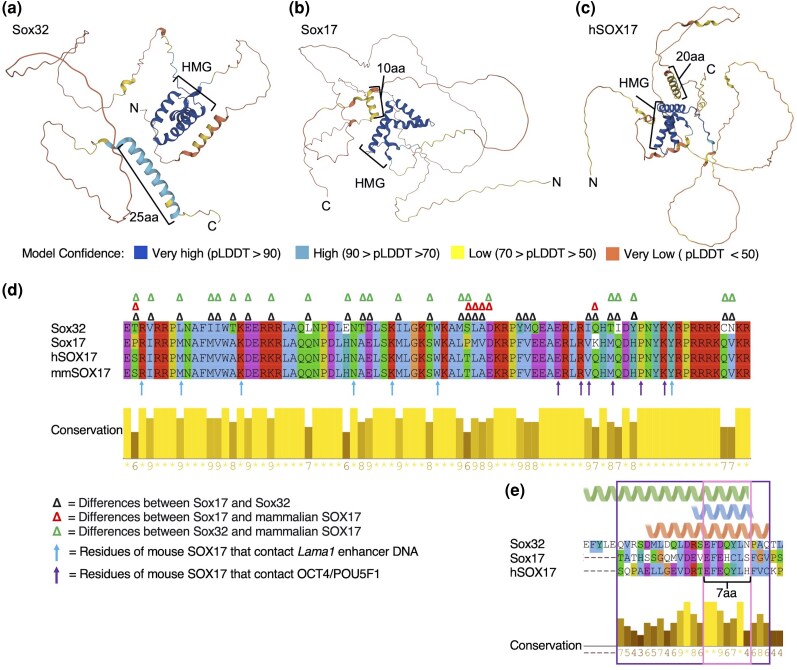 Figure 2
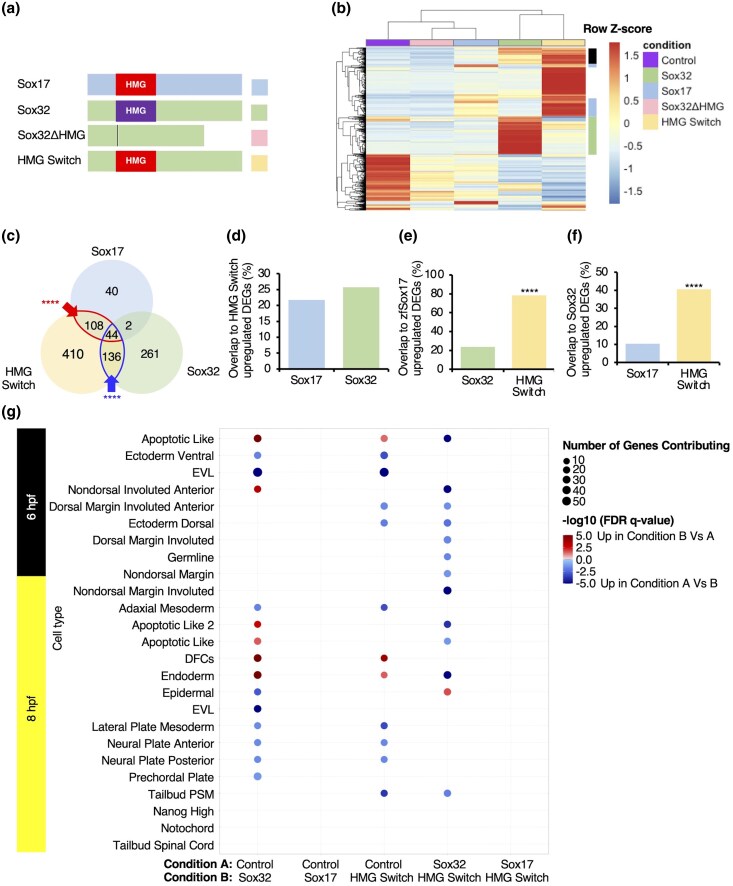 Figure 3
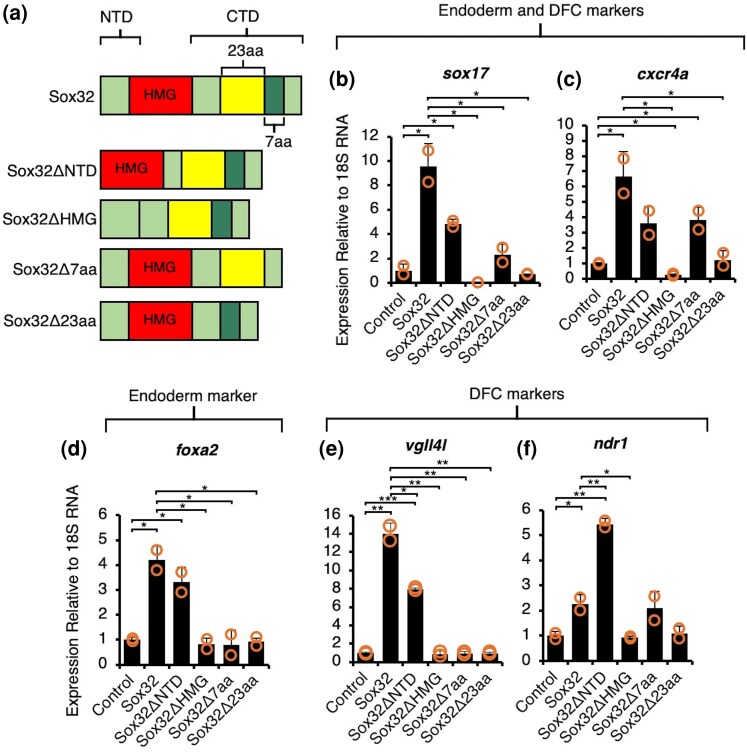 Figure 4
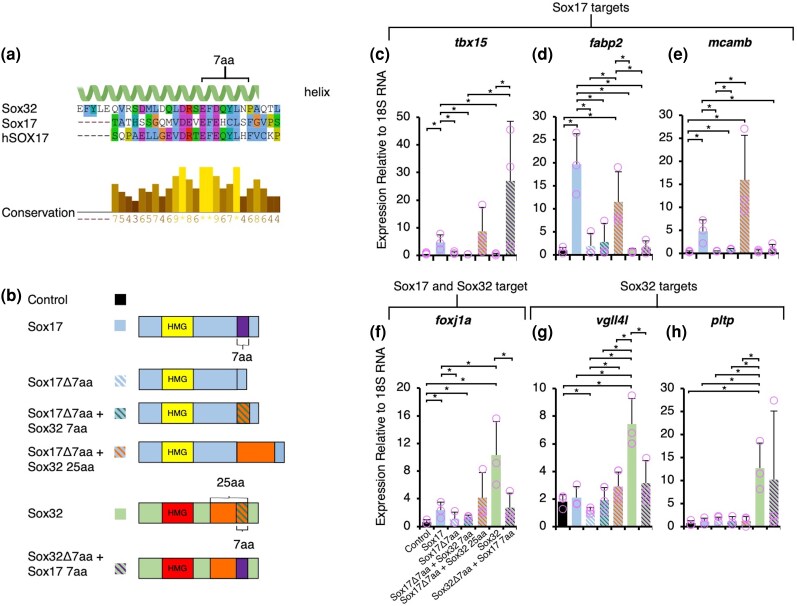 Figure 5
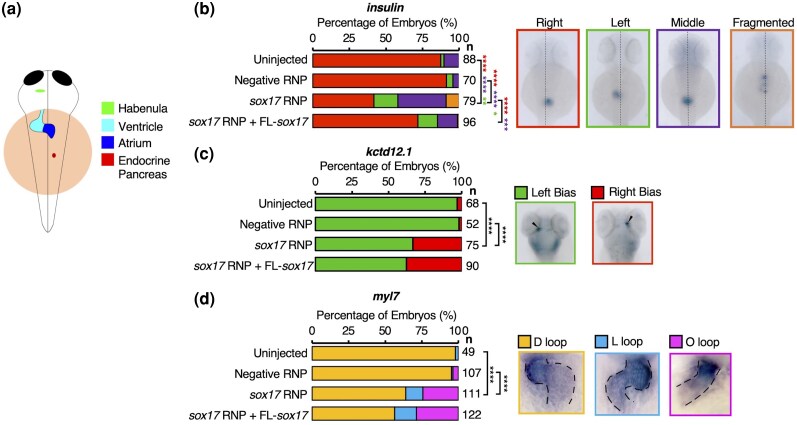 Figure 6
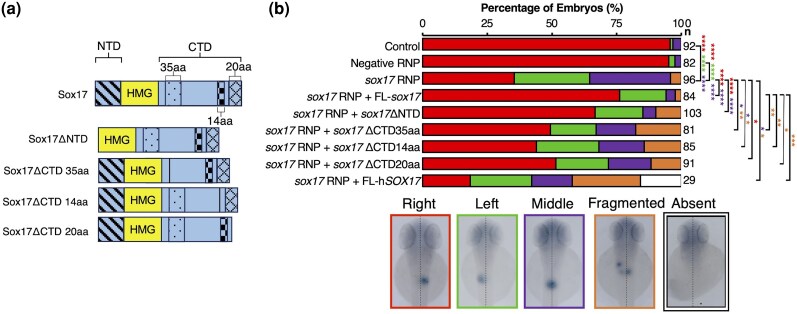 Figure 7
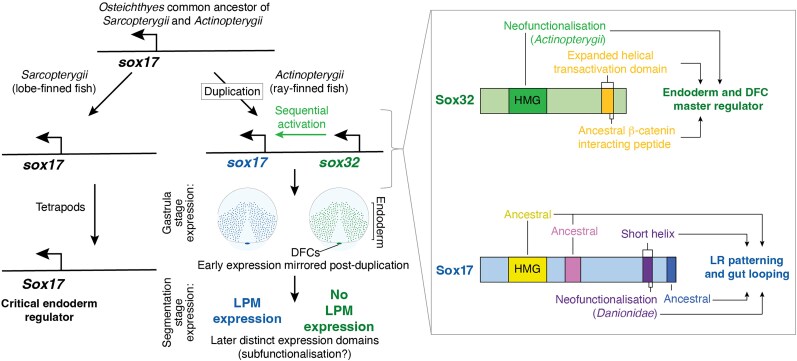 Figure 8
Peer Reviews
No public reviews on file for this paper yet. If you reviewed it on a platform where reviews are public (OpenReview, ICLR, NeurIPS, ICML), you can paste yours below so the community can read it here.
Videos
No videos yet. Explain this paper in a talk, walkthrough, or lecture? Add one.
Taxonomy
TopicsDevelopmental Biology and Gene Regulation · Genetic and Clinical Aspects of Sex Determination and Chromosomal Abnormalities · Congenital heart defects research