Prediction of Individual Melodic Contour Processing in Sensory Association Cortices From Resting State Functional Connectivity
Christine Ahrends, Massimo Lumaca, Morten L. Kringelbach, Diego Vidaurre, Peter Vuust

TL;DR
This study shows that resting brain connections can predict how individuals process music-related brain activity, especially in sensory areas.
Contribution
The study demonstrates that task-related brain activity can be predicted from resting-state connectivity, particularly in sensory association regions.
Findings
Predictability of task activation was highest in sensory association cortices.
Right superior temporal gyrus and bilateral visual association cortex showed the best prediction from resting-state connectivity.
Individual task responses can be predicted in task-relevant or highly variable brain regions.
Abstract
Recent studies suggest that it is possible to predict an individual brain's spatial activation pattern in response to a paradigm from their functional connectivity at rest (rsFC). However, it is unclear whether this prediction works across the brain. We here aim to understand whether individual task activation can be best predicted in local regions that are highly specialised to the task at hand or whether there are domain‐independent regions in the brain that carry most information about the individual. To answer this question, we used fMRI data from participants at rest and during an auditory oddball paradigm. We then predicted individual differences in brain responses to melodic deviants from their rsFC both across the whole brain and within the auditory cortices. Predictability was consistently higher in sensory association cortices: In the local (auditory cortex) parcellation, the…
Genes, proteins, chemicals, diseases, species, mutations and cell lines named across the full text — each resolved to its canonical identifier and authoritative record.
Click any figure to enlarge with its caption.
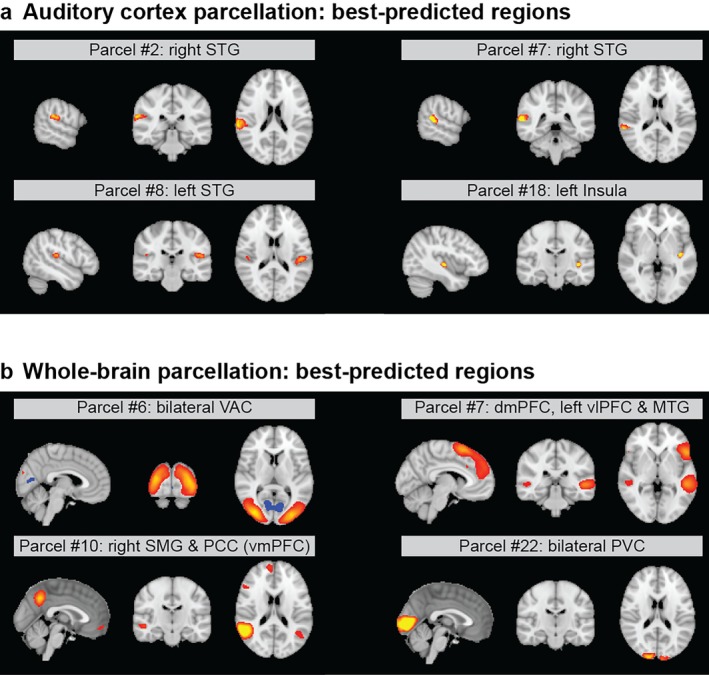 Figure 1
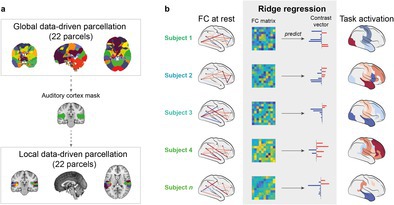 Figure 2
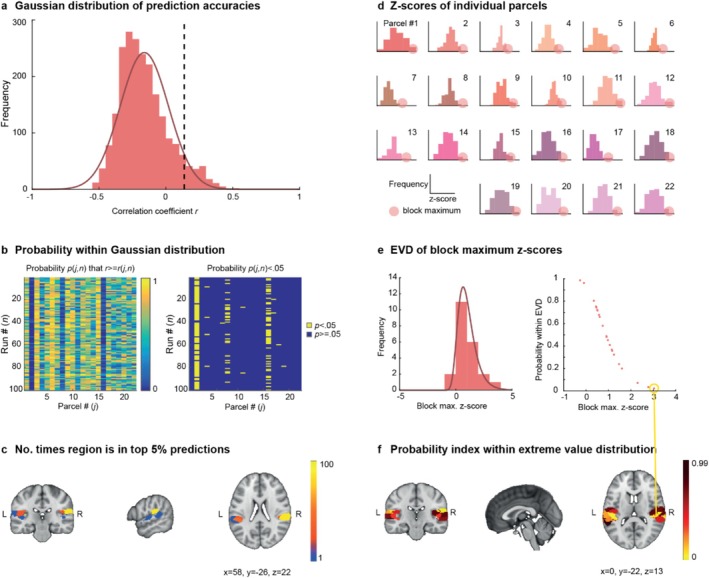 Figure 3
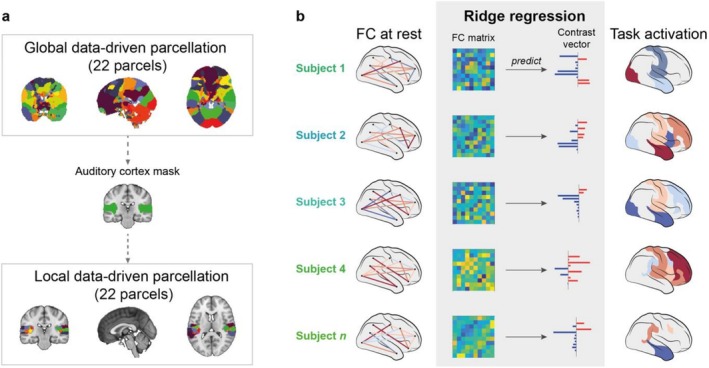 Figure 4
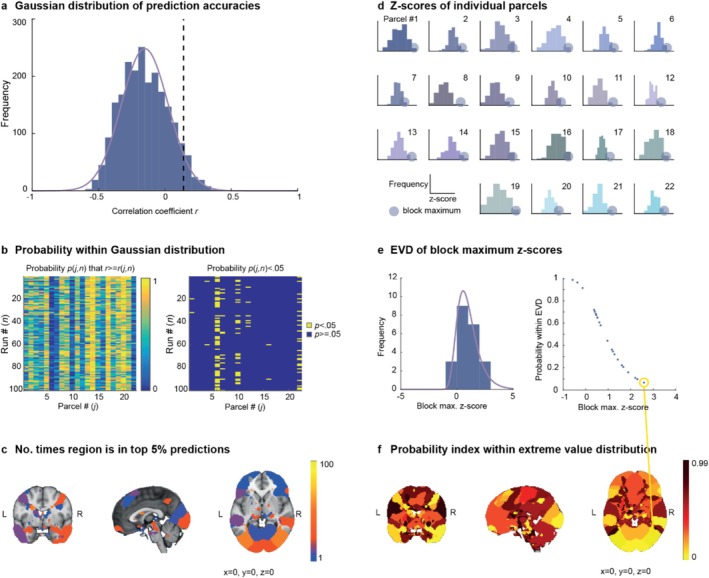 Figure 5
Peer Reviews
No public reviews on file for this paper yet. If you reviewed it on a platform where reviews are public (OpenReview, ICLR, NeurIPS, ICML), you can paste yours below so the community can read it here.
Videos
No videos yet. Explain this paper in a talk, walkthrough, or lecture? Add one.
Taxonomy
TopicsNeuroscience and Music Perception · Functional Brain Connectivity Studies · Neural dynamics and brain function