Oxidative rearrangement of alkynes to chiral α-arylalkanoic esters
Rawiyah Alkahtani, Johannes Westphäling, Aleksandra Gorecka, Rasool Babaahmadi, Hanaa Gieman, Maylis Finance, Jaime Lorente-Martinez, Dhananjay Bhattacherjee, Rebecca L. Melen, Mu-Hyun Baik, Thomas Wirth

TL;DR
A new green method creates chiral esters from alkynes with high yield and selectivity using iodine reagents.
Contribution
A metal-free, enantioselective oxidative rearrangement of alkynes to chiral esters is developed with high yield and enantiomeric excess.
Findings
Chiral α-arylalkanoic esters are synthesized with up to 91% yield and 99% enantiomeric excess.
The reaction works well with electron-rich non-terminal arylalkynes under green conditions.
DFT calculations explain the origin of the enantioselectivity in the process.
Abstract
Chiral α-arylalkanoic esters, valued as anti-inflammatory agents, are synthesised through an enantioselective oxidative rearrangement of alkynes under green, metal-free conditions. This study achieves this transformation using chiral iodine(iii) reagents with para-toluenesulfonic acid and various alcohols, producing the esters in up to 91% yield and 99% enantiomeric excess. The scope of the reaction particularly includes electron-rich non-terminal arylalkynes. Density functional theory calculations give insight into the origin of enantioselectivities of this process. A green, metal-free method achieves enantioselective oxidative rearrangement of alkynes to chiral α-arylalkanoic esters, giving up to 91% yield and 99% ee. Chiral iodine(iii) reagents convert electron-rich arylalkynes, with DFT explaining the high selectivity.
Genes, proteins, chemicals, diseases, species, mutations and cell lines named across the full text — each resolved to its canonical identifier and authoritative record.
Click any figure to enlarge with its caption.
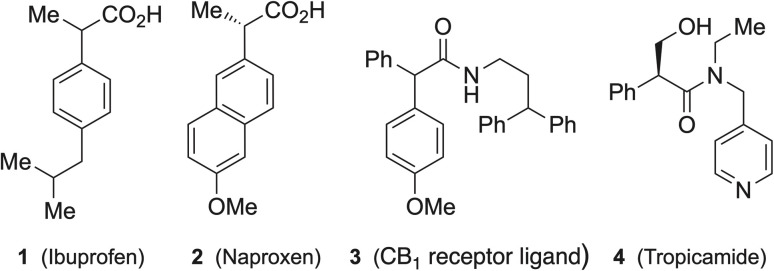 Figure 1
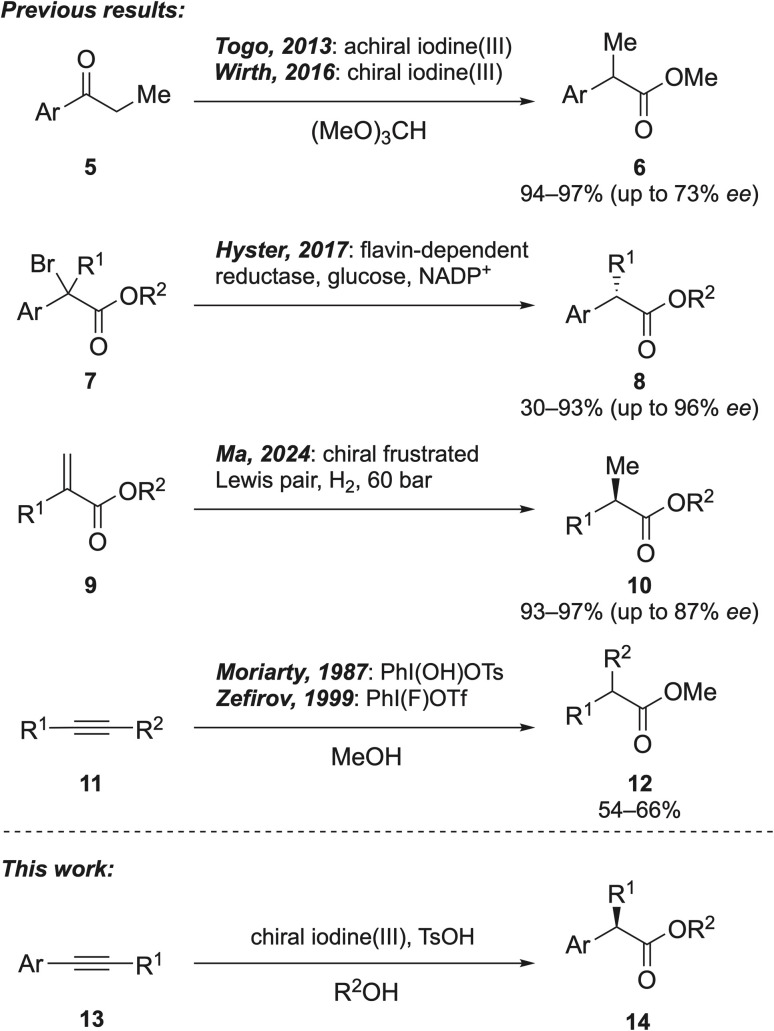 Figure 2
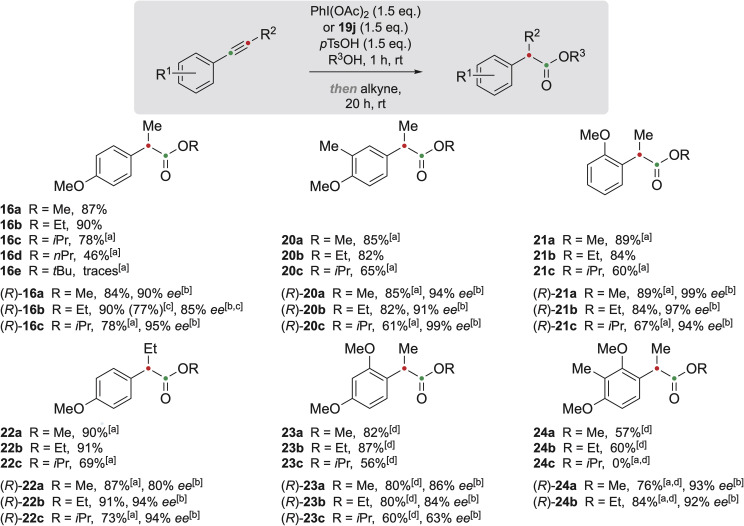 Figure 3
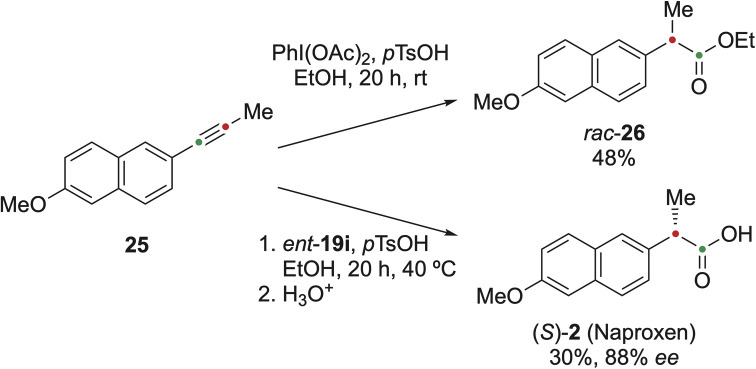 Figure 4
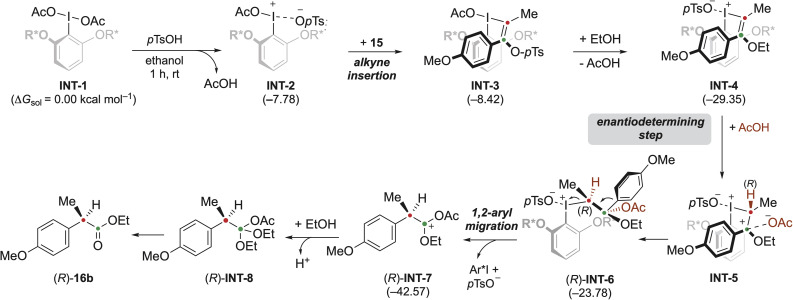 Figure 5
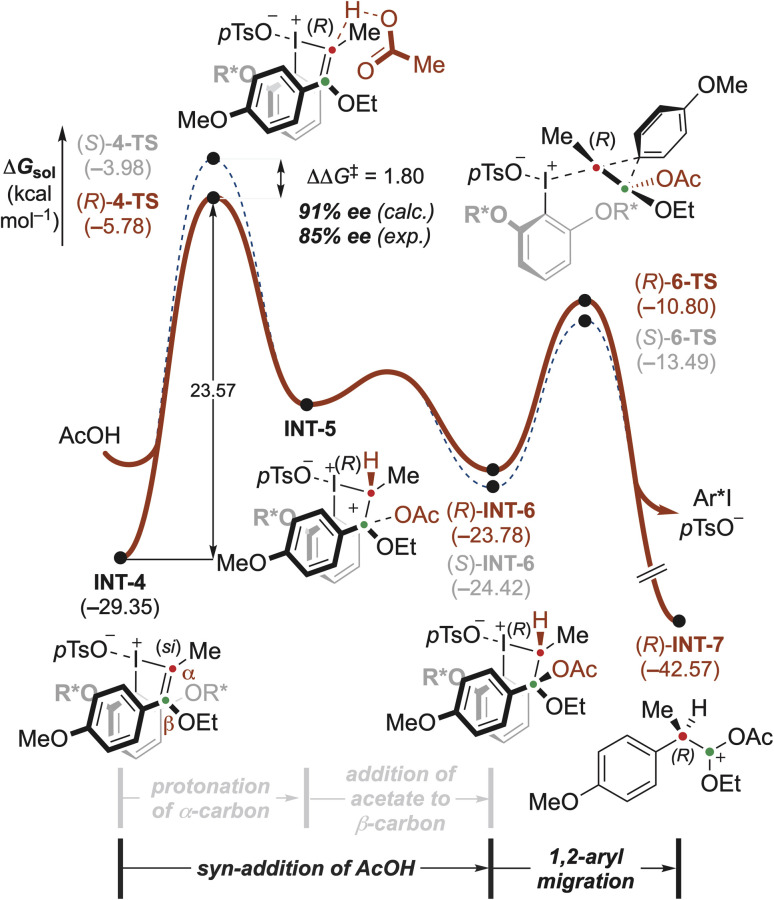 Figure 6
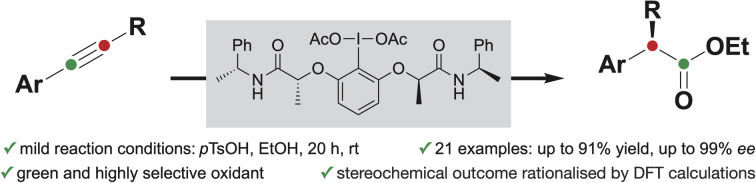 Figure 7
 Figure 8
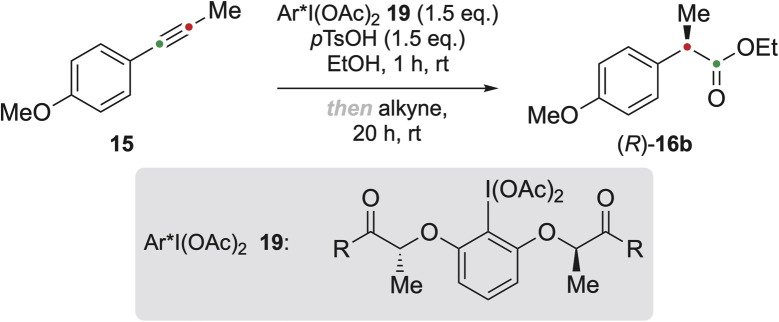 Figure 9
Peer Reviews
No public reviews on file for this paper yet. If you reviewed it on a platform where reviews are public (OpenReview, ICLR, NeurIPS, ICML), you can paste yours below so the community can read it here.
Videos
No videos yet. Explain this paper in a talk, walkthrough, or lecture? Add one.
Taxonomy
TopicsCatalytic C–H Functionalization Methods · Oxidative Organic Chemistry Reactions · Vanadium and Halogenation Chemistry