Inhibited neural response during interpersonal conflict: insights from fNIRS hyperscanning
Kang Cao, Mingming Zhang, Yuxuan Zhang, Jie Li

TL;DR
This study uses brain scans to show how brain activity changes during interpersonal conflict, revealing decreased brain coordination and suggesting ways to improve social interactions.
Contribution
The study introduces new insights into neural deactivation and reduced brain synchronization during interpersonal conflict using fNIRS hyperscanning.
Findings
Brain activity was highest at rest and lowest during conflict in most regions during active role-playing.
Inter-brain synchronization significantly decreased during conflict compared to non-conflict conditions.
The findings suggest disrupted interpersonal alignment during conflict and potential targets for intervention.
Abstract
Interpersonal conflict is a core yet complicated part of social interaction, involving complex mental and emotional processes. However, the neural mechanisms underlying interpersonal conflict are still not fully understood. This study employed functional near-infrared spectroscopy (fNIRS) hyperscanning to explore the brain activity related to interpersonal conflict through both passive video viewing and active role-playing paradigms. The results revealed an unexpected activation pattern – brain activity was highest at rest, lower during conflict, and lowest during neutral interactions (i.e., rest > conflict > neutral) in all ROIs except the rTPJ during active role-playing. This indicates a cortical deactivation effect when people engage in social processing. Additionally, the study found that inter-brain synchronization (IBS) between the two participants' brains decreased significantly…
Genes, proteins, chemicals, diseases, species, mutations and cell lines named across the full text — each resolved to its canonical identifier and authoritative record.
Click any figure to enlarge with its caption.
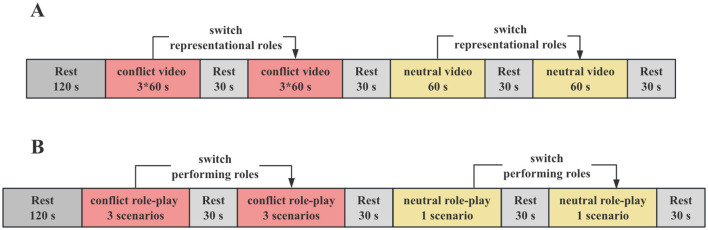 Figure 1
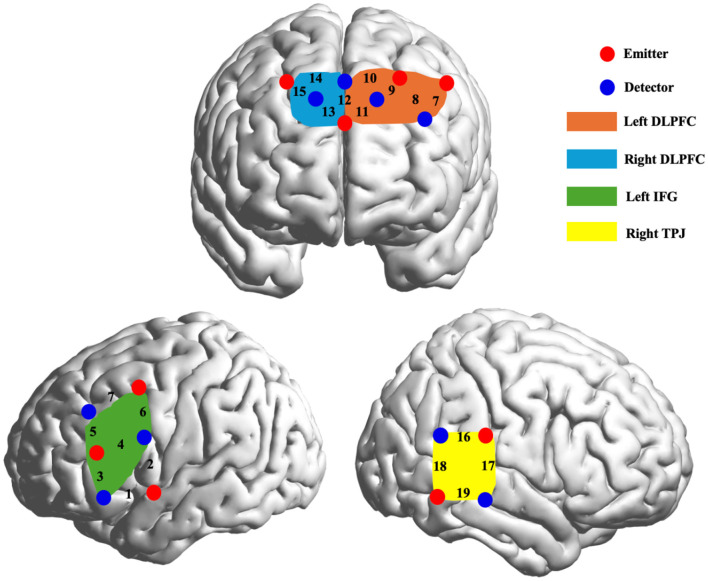 Figure 2
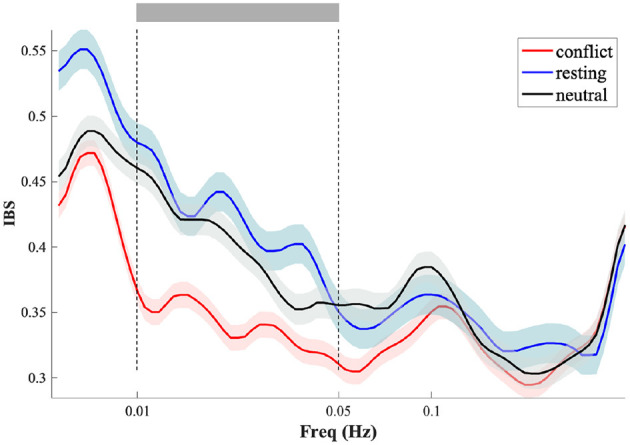 Figure 3
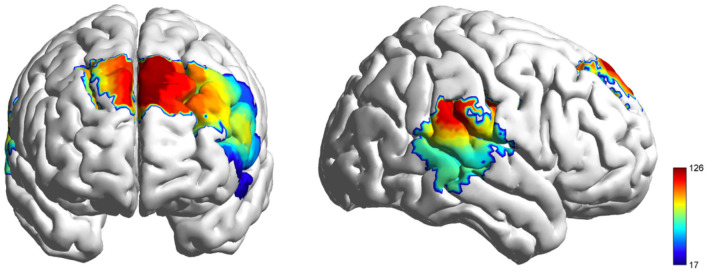 Figure 4
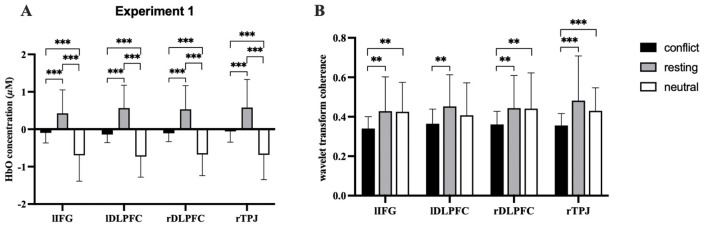 Figure 5
 Figure 6
 Figure 7
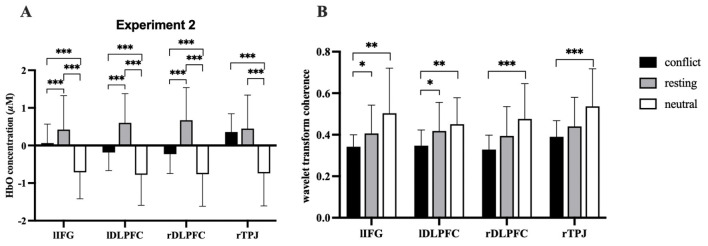 Figure 8
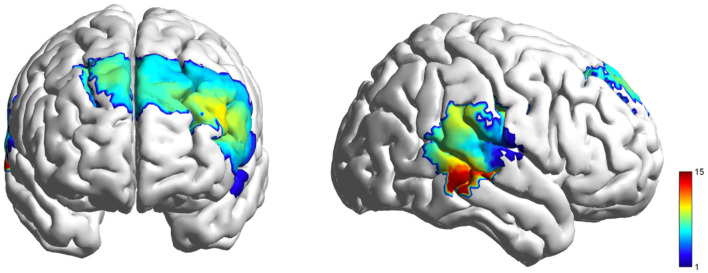 Figure 9
Peer Reviews
No public reviews on file for this paper yet. If you reviewed it on a platform where reviews are public (OpenReview, ICLR, NeurIPS, ICML), you can paste yours below so the community can read it here.
Videos
No videos yet. Explain this paper in a talk, walkthrough, or lecture? Add one.
Taxonomy
TopicsAction Observation and Synchronization · Neural and Behavioral Psychology Studies · Functional Brain Connectivity Studies