Dosimetric effect of internal error correction on pubic bones in image-guided passive scattering proton therapy for prostate cancer
Kimihiro Takemasa, Takahiro Kato, Sho Sasaki, Yuki Narita, Tomohiro Ikeda, Shuta Ogawa, Sho Oyama, Masao Murakami

TL;DR
This study examines how correcting internal errors in proton therapy for prostate cancer can increase radiation doses to the pubic bones, potentially increasing fracture risks.
Contribution
The study quantifies the dosimetric impact of anterior and inferior isocenter shifts on pubic bone dose in proton therapy for prostate cancer.
Findings
Anterior isocenter shifts cause a 14.2 cc increase in pubic bone V80% dose on average.
Dose elevation correlates strongly with proximity between the target and pubic bones (r > 0.66, P < 0.001).
Anterior shifts have a more pronounced effect than inferior shifts on pubic bone dose.
Abstract
Image-guided passive scattering proton therapy (PSPT) has been widely adopted in Japan and worldwide, with substantial long-term clinical data supporting its efficacy in treating prostate cancer. However, as hypofractionated protocols become increasingly common, the impact of internal anatomical shifts on surrounding organs at risk (OARs) warrants renewed attention. The pubic bones, situated near the prostate, are often exposed to unintended high doses, especially during internal error correction based on fiducial marker alignment. This study retrospectively analyzed 30 patients with localized prostate cancer treated with PSPT using lateral opposed fields. Simulated isocenter shifts were applied anteriorly and inferiorly in 2-mm increments up to 10 mm to assess dose changes to the pubic bones. Dose-volume histogram metrics including V80%, V90% and V95% were evaluated. Pubic bones dose…
Genes, proteins, chemicals, diseases, species, mutations and cell lines named across the full text — each resolved to its canonical identifier and authoritative record.
Click any figure to enlarge with its caption.
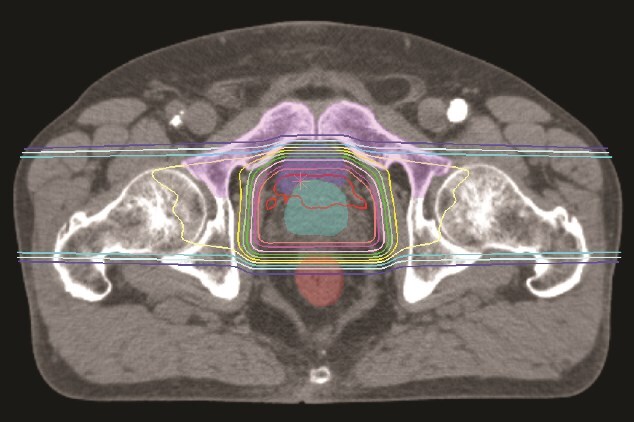 Figure 1
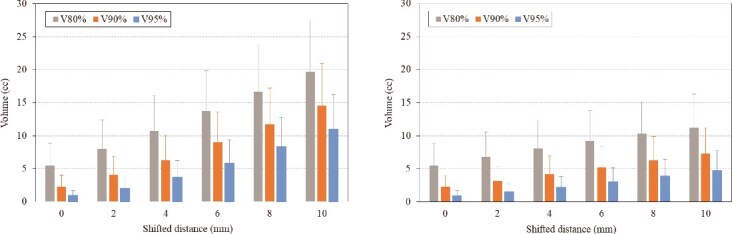 Figure 2
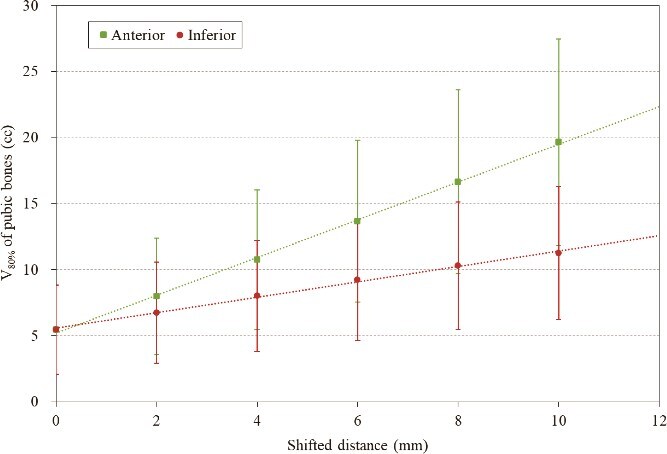 Figure 3
 Figure 4
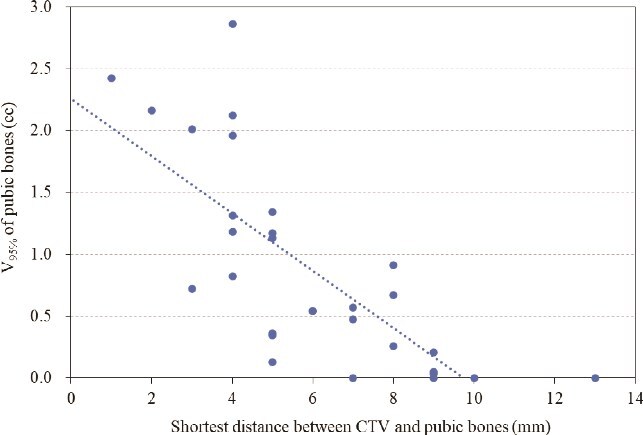 Figure 5
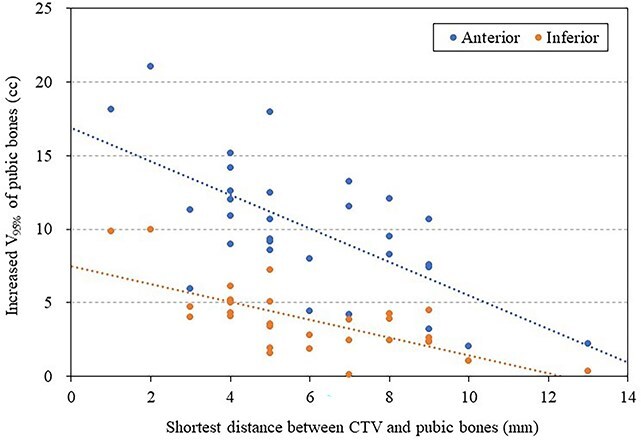 Figure 6
Peer Reviews
No public reviews on file for this paper yet. If you reviewed it on a platform where reviews are public (OpenReview, ICLR, NeurIPS, ICML), you can paste yours below so the community can read it here.
Videos
No videos yet. Explain this paper in a talk, walkthrough, or lecture? Add one.
Taxonomy
TopicsProstate Cancer Diagnosis and Treatment · Advanced Radiotherapy Techniques · Radiation Therapy and Dosimetry