Artificially induced altitudes aerobic and anaerobic performance differences on double-poling ergometer in elite young cross-country skiers
Peter Bartik, Jiří Suchý, Ladislav Pyšný, Jana Pyšná, Dragoş Ioan Tohănean, Pablo Prieto González, Peter Šagát, David Liska, Dr. Peter Bartik, Vassilios Panoutsakopoulos, Dr. Peter Bartik

TL;DR
This study shows that high-altitude simulation increases heart rate in young elite cross-country skiers during double-poling exercises, but not lactate levels.
Contribution
The study introduces a method to assess acute altitude effects using heart rate in double-poling ergometer tests.
Findings
Heart rate increased by 3–5% at high altitude simulation during aerobic and anaerobic exercises.
Lactate concentration did not significantly change between altitudes.
Heart rate is a more effective indicator than lactate for assessing acute altitude effects.
Abstract
The key factors for cross-country skier training are high-altitude acclimatization and strength in double-polling. This study aimed to identify the effects of artificially induced high altitude on acute performance changes during aerobic (AE) and anaerobic (ANE) threshold exercises. Sport-specific tests simulating double-poling cross-country skiing were performed. Eleven (8 ♂ and 3 ♀) highly trained cross-country skiers (age 19±2.81, BMI 21.9±2.1) performed a stress test to determine individual AE and ANE levels and AE and ANE intensity tests at low (500m ASL) and artificially induced high (2000m ASL) altitudes. The altitude was simulated using the hypoxic generator HYP-100™. For double-poling, the ergometer SkiErg ® was used in the standing position. Heart rate (HR) and lactate concentration (LC) in the capillary blood were monitored. For the AE and ANE loads, the average HR values…
Genes, proteins, chemicals, diseases, species, mutations and cell lines named across the full text — each resolved to its canonical identifier and authoritative record.
Click any figure to enlarge with its caption.
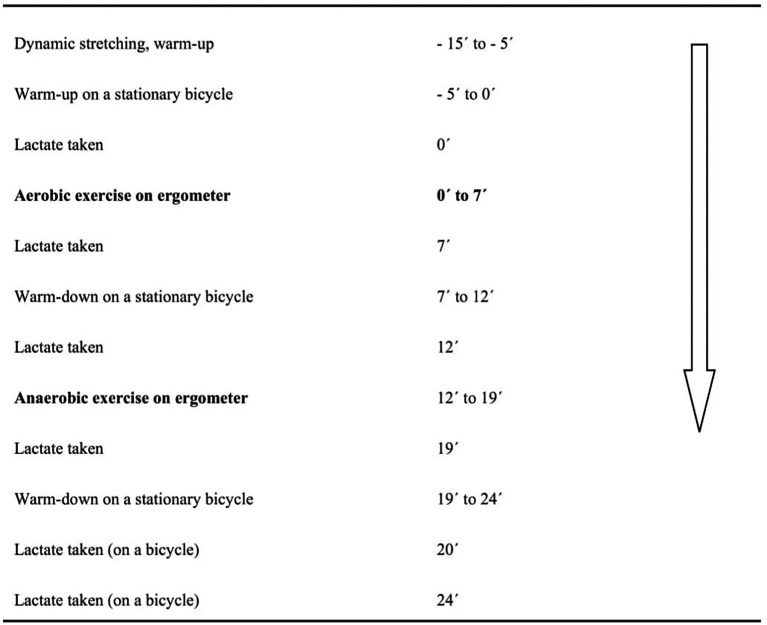 Figure 1
Peer Reviews
No public reviews on file for this paper yet. If you reviewed it on a platform where reviews are public (OpenReview, ICLR, NeurIPS, ICML), you can paste yours below so the community can read it here.
Videos
No videos yet. Explain this paper in a talk, walkthrough, or lecture? Add one.
Taxonomy
TopicsHigh Altitude and Hypoxia · Winter Sports Injuries and Performance · Sports Performance and Training