A self-cascade nanoCRISPR prompts transcellular penetration to potentiate gene editing and tumor killing
Chao Liu, Yangsong Xu, Ning Wang, Hongyu Liu, Xi Yang, Shiyao Zhou, Dongxue Huang, Yingjie Li, Yanjie You, Qinjie Wu, Changyang Gong

TL;DR
A new nanoCRISPR system improves gene editing and tumor killing by enabling transcellular penetration in solid tumors.
Contribution
The self-cascade nanoCRISPR system synergizes apoptosis and transcellular penetration to enhance gene editing and tumor killing.
Findings
NanoCRISPR achieves transfection and apoptosis efficiencies of 85%/84.2% in the first round and 48%/27% in the second round.
Treatment in mice results in ∼83% anti-tumor efficacy with minimal toxicity.
The system enables homogeneous penetration and sustained performance in heterogeneous tumor environments.
Abstract
CRISPR/Cas9-based therapeutics face significant challenges in penetrating the dense microenvironment of solid tumors, resulting in insufficient gene editing and compromised treatment efficacy. Current nanostrategies, which mainly focus on the paracellular pathway attempted to improve gene editing performance, whereas their efficiency remains uneven in the heterogenous extracellular matrix. Here, the nanoCRISPR system is prepared with self-cascading mechanisms for gene editing-mediated robust apoptosis and transcellular penetration. NanoCRISPR unlocks its self-cascade capability within the matrix metallopeptidase 2-enriched tumor microenvironment, initiating the transcellular penetration. By facilitating cellular uptake, nanoCRISPR triggers robust apoptosis in edited malignancies, promoting further transcellular penetration and amplifying gene editing in neighboring tumor cells.…
Genes, proteins, chemicals, diseases, species, mutations and cell lines named across the full text — each resolved to its canonical identifier and authoritative record.
Click any figure to enlarge with its caption.
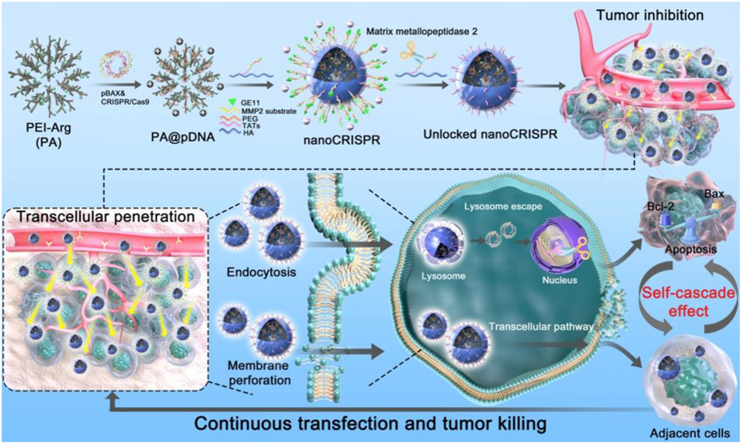 Figure 1
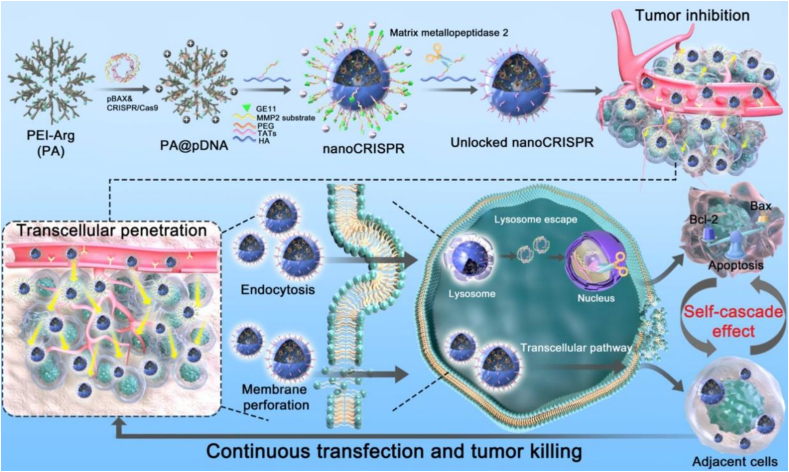 Figure 2
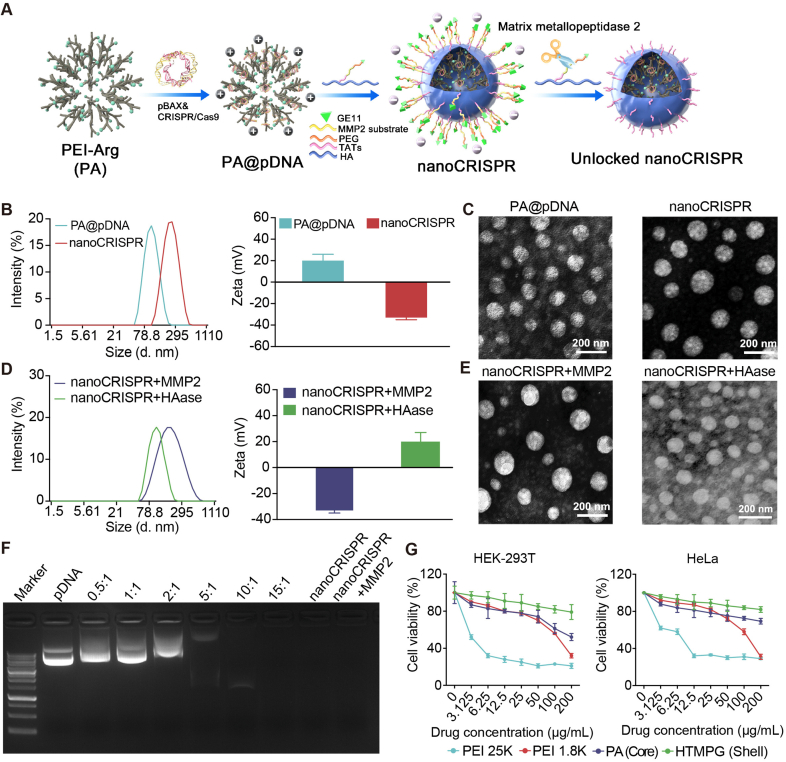 Figure 3
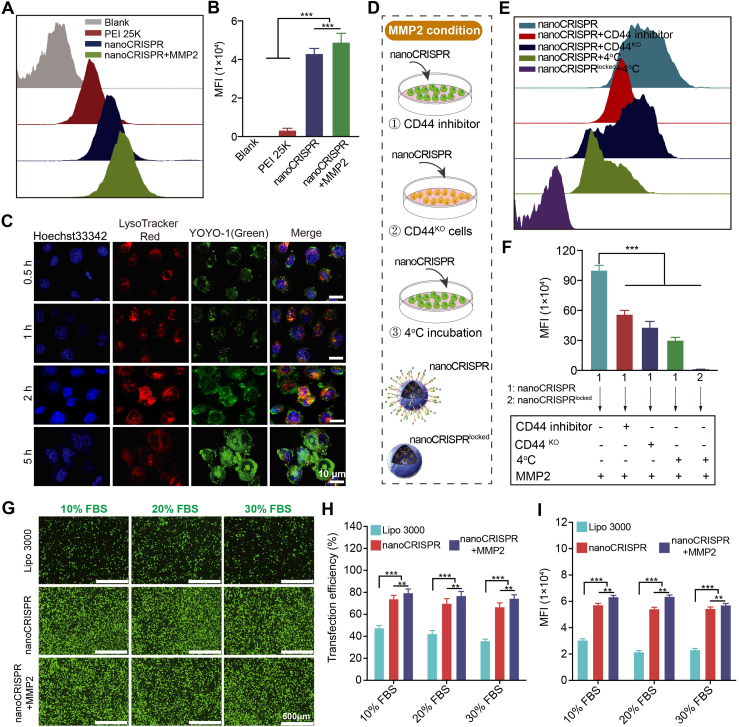 Figure 4
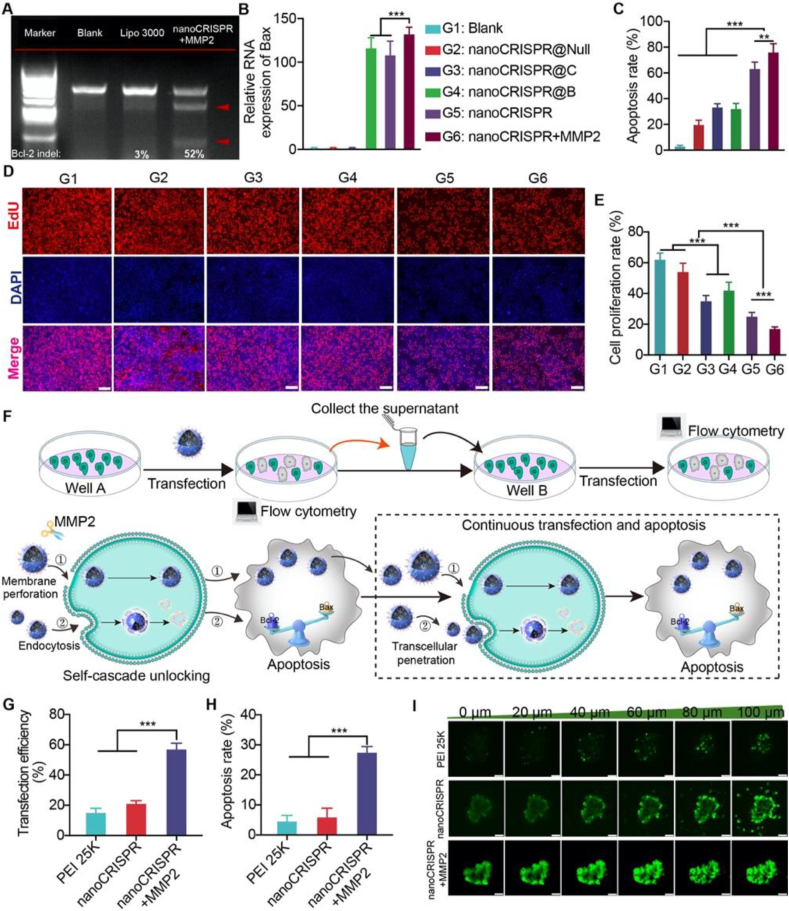 Figure 5
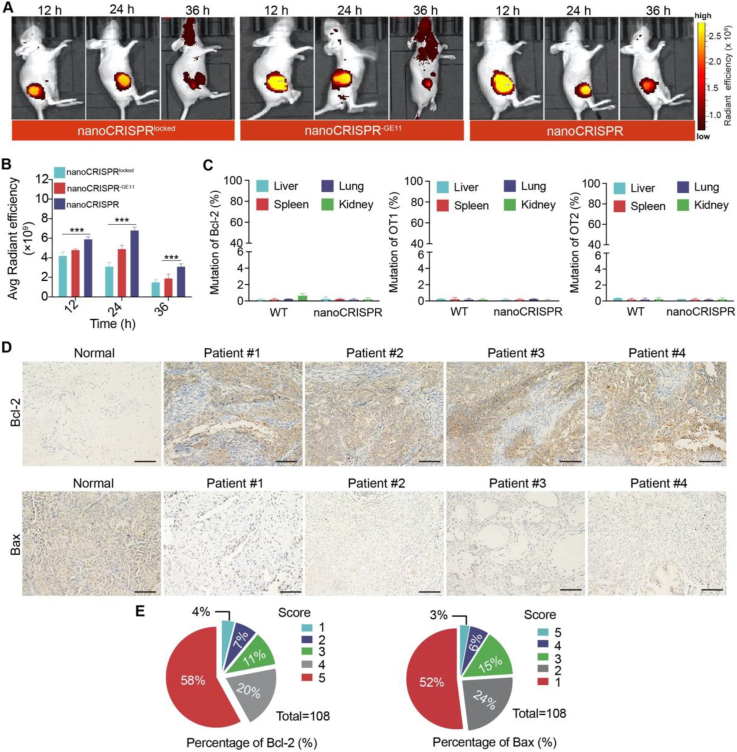 Figure 6
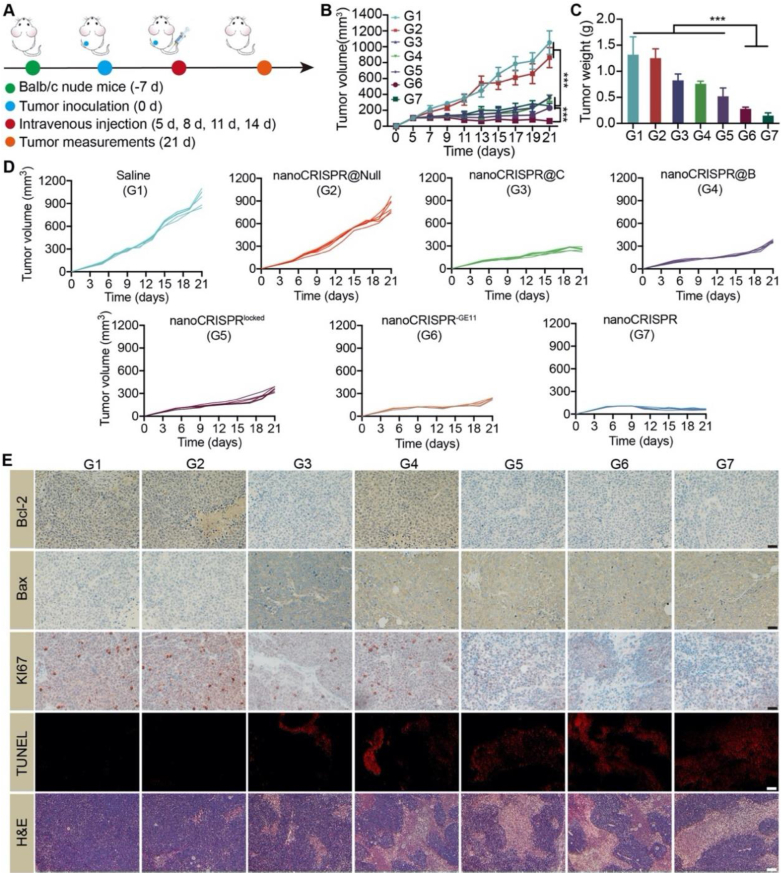 Figure 7
Peer Reviews
No public reviews on file for this paper yet. If you reviewed it on a platform where reviews are public (OpenReview, ICLR, NeurIPS, ICML), you can paste yours below so the community can read it here.
Videos
No videos yet. Explain this paper in a talk, walkthrough, or lecture? Add one.
Taxonomy
TopicsCRISPR and Genetic Engineering · RNA Interference and Gene Delivery · Advanced biosensing and bioanalysis techniques