Polymer-constrained excimer enables flexible and self-healable optoelectronic elastomer for mechanical sensor
Shuyu Zheng, Dazhe Zhao, Nengjie Cao, Jiajia Zhou, Junwen Zhong, Haobing Wang

TL;DR
This paper introduces a self-healing, flexible optoelectronic material with high photoluminescence for use in wearable sensors.
Contribution
A polymer-constrained excimer strategy is introduced to achieve ultra-high photoluminescence and self-healing properties in a flexible elastomer.
Findings
Naphthyl-naphthyl microphase separation in polyisoprene enhances mechanical and self-healing properties.
The material achieves a photoluminescence quantum yield of over 98% through excimer formation.
The copolymer shows superior electret performance suitable for opto-electro-mechanical sensors.
Abstract
The development of high-performance, flexible, and self-healable optoelectronic materials is pivotal for advancing next-generation wearable technologies. In this study, we introduce nanoscale naphthyl-naphthyl microphase separation into a polyisoprene matrix, endowing olefin copolymers with exceptional mechanical properties, high flexibility, and intrinsic self-healing capabilities at room temperature without external stimuli. Notably, by employing a “polymer-constrained excimer” strategy, these copolymers exhibit remarkable photoluminescent properties, achieving an ultra-high photoluminescence quantum yield (PLQY > 98%) through the formation of naphthyl-naphthyl excimers. Experimental and theoretical analyses reveal that under the encapsulation of flexible cis-1,4-polyisoprene segments, nanoscale naphthyl aggregates form stable excimers upon UV stimulation, resulting in extraordinary…
Genes, proteins, chemicals, diseases, species, mutations and cell lines named across the full text — each resolved to its canonical identifier and authoritative record.
Click any figure to enlarge with its caption.
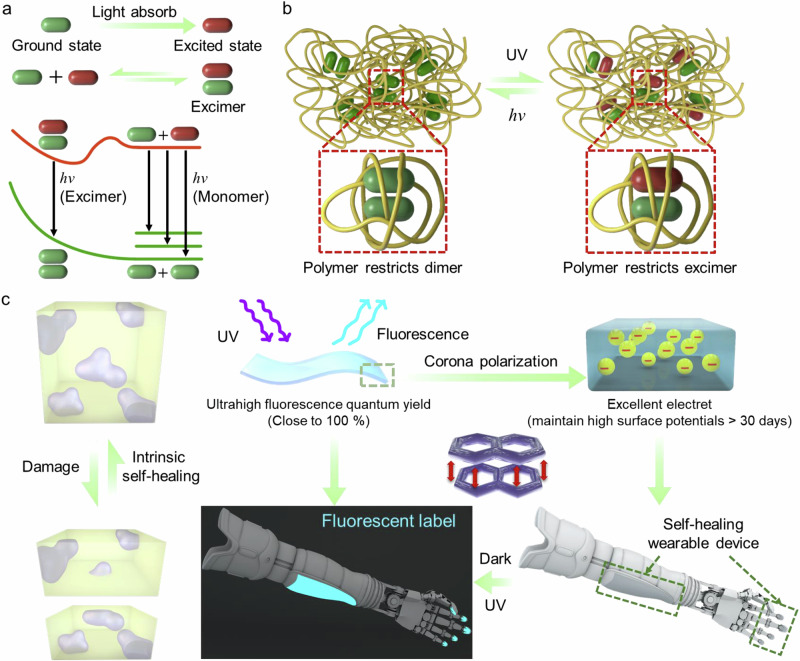 Figure 1
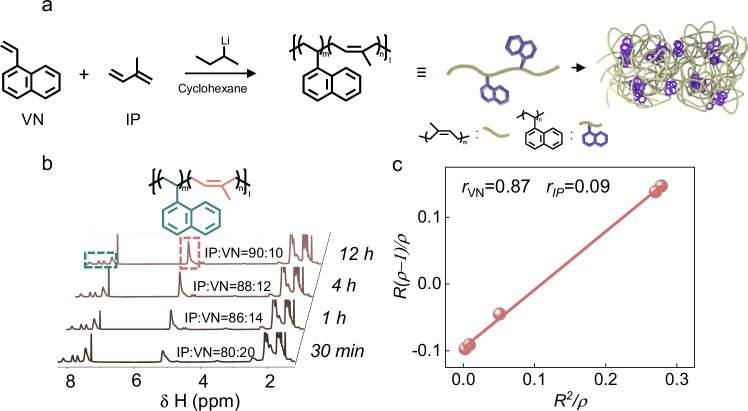 Figure 2
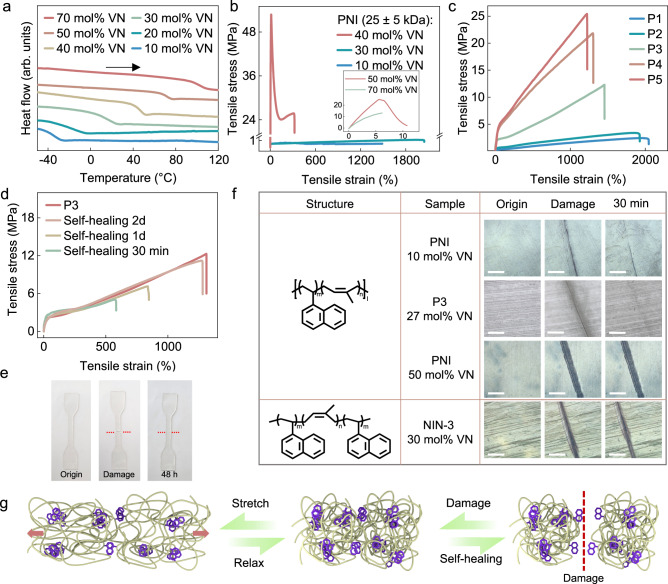 Figure 3
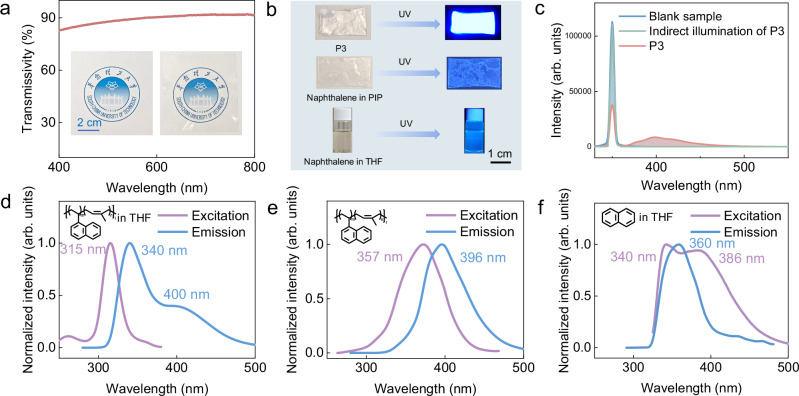 Figure 4
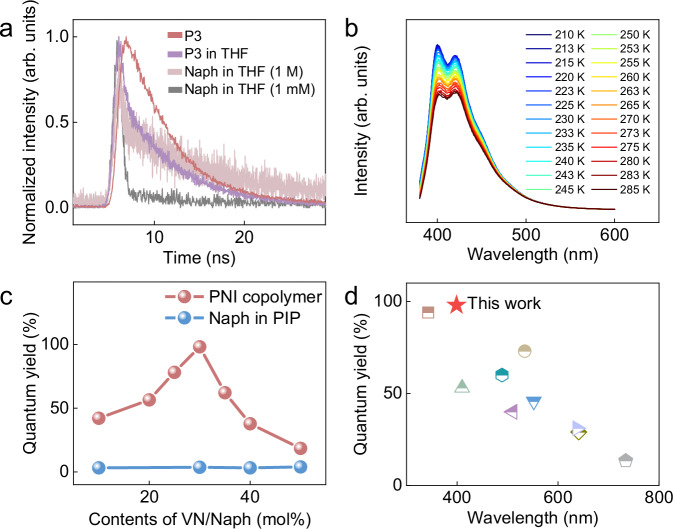 Figure 5
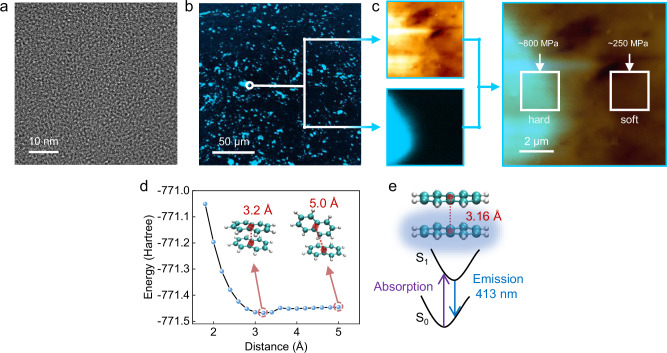 Figure 6
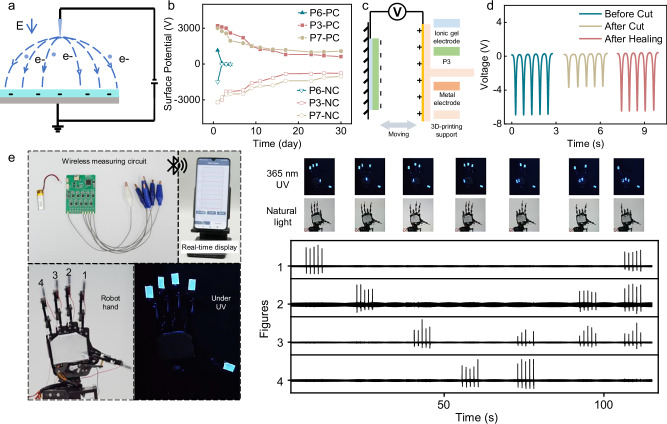 Figure 7
Peer Reviews
No public reviews on file for this paper yet. If you reviewed it on a platform where reviews are public (OpenReview, ICLR, NeurIPS, ICML), you can paste yours below so the community can read it here.
Videos
No videos yet. Explain this paper in a talk, walkthrough, or lecture? Add one.
Taxonomy
TopicsAdvanced Sensor and Energy Harvesting Materials · Polymer composites and self-healing · Dielectric materials and actuators