Multilayer relaxor ferroelectric polymer stacks as data transmitter for real-time and programmable infrared information encryption
Yingke Zhu, Jianghan Wu, Yang Luo, Kede Liu, Hyeonji Hong, Yuxuan Guo, Yuan Meng, Meng Gao, Hanxiang Wu, Jiacheng Fan, Yingjie Du, Ping He, Qibing Pei

TL;DR
A new method for secure infrared data transmission uses a polymer stack to enable real-time encryption and decryption.
Contribution
A multilayer relaxor ferroelectric polymer stack is developed for real-time and programmable infrared encryption.
Findings
An 8-layer RFP stack generates a rectangular temperature wave when an electric field is applied.
The stack's temperature rapidly increases and remains elevated for over 8 seconds under specific electric field conditions.
The system enables real-time and programmable IR encryption due to rapid electrocaloric effects.
Abstract
Infrared information encryption is an emerging technique that leverages infrared (IR) radiation for secure data transmission. However, current IR encryption strategies fail to achieve real-time and precise data transmission, increasing the risk of information leakage. Here, utilizing a bistable adhesion polymer as a transfer medium, a multilayer relaxor ferroelectric polymer (RFP) stack is fabricated without additional thermal loads. An 8-layer RFP stack generates a rectangular temperature wave upon the application of an electric field. Its temperature rapidly increases from 22.1 °C to 26.3 °C and remains above 26 °C for over 8 s under an applied electric field of 80 MV/m at 0.01 Hz. Due to the instantaneous electrocaloric effects (temperature change rate up to10-8 s/K) upon voltage application, the stack enables a real-time and programmable IR information encryption and decryption…
Genes, proteins, chemicals, diseases, species, mutations and cell lines named across the full text — each resolved to its canonical identifier and authoritative record.
Click any figure to enlarge with its caption.
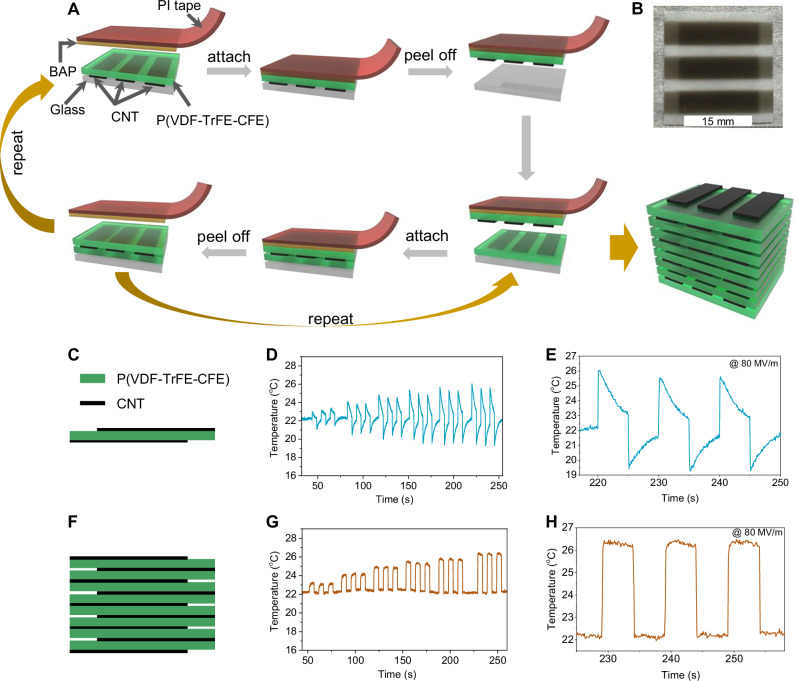 Figure 1
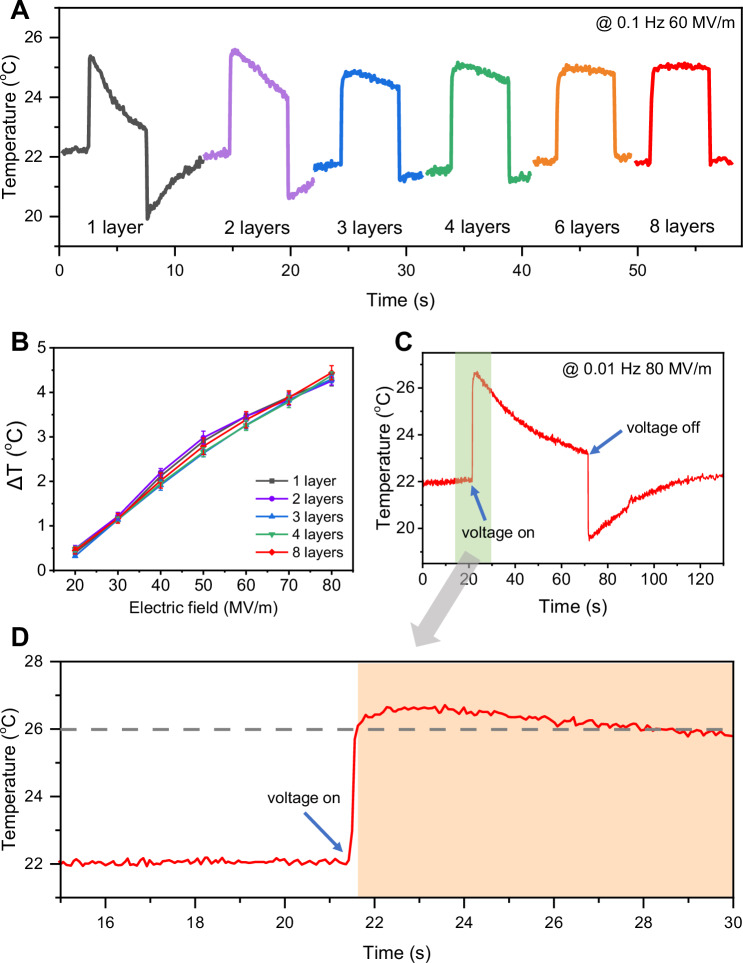 Figure 2
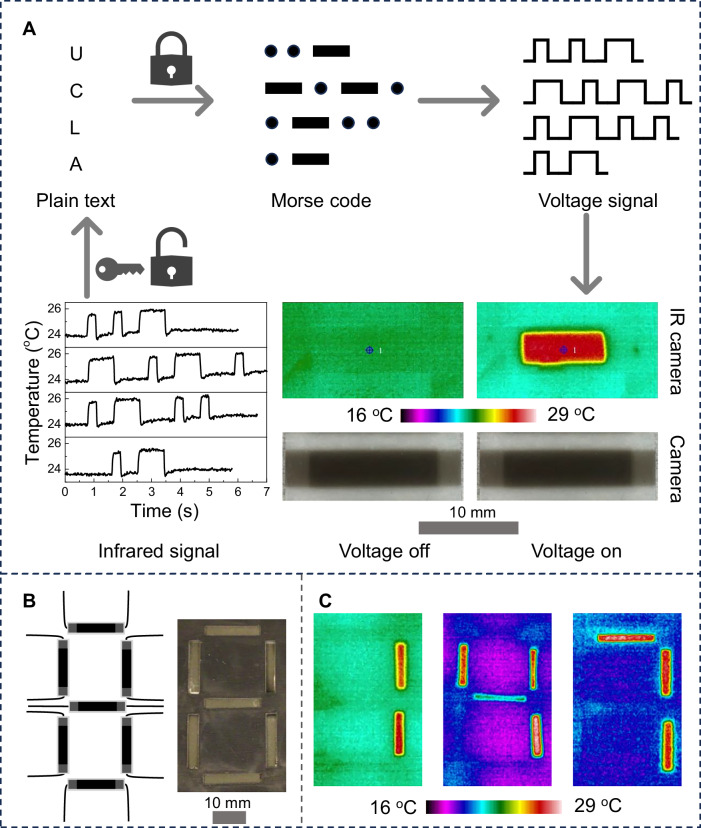 Figure 3
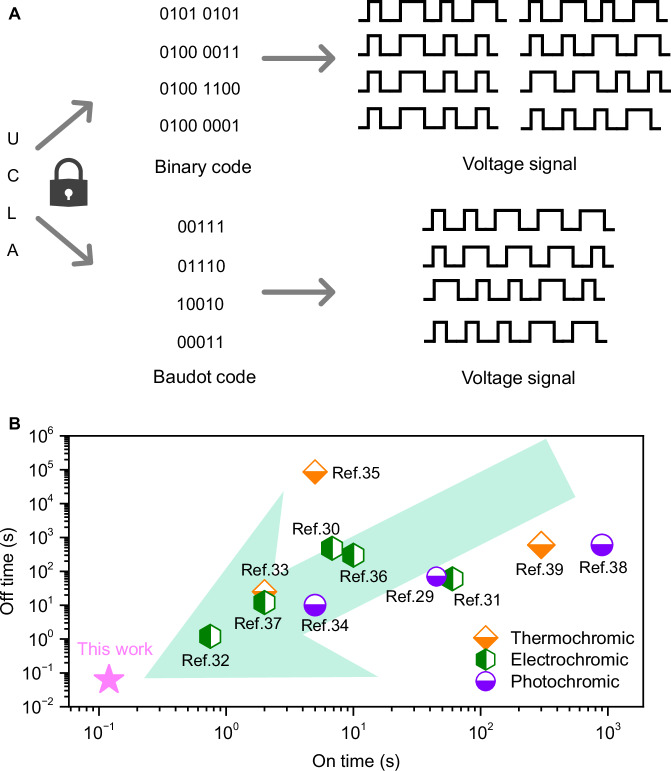 Figure 4
Peer Reviews
No public reviews on file for this paper yet. If you reviewed it on a platform where reviews are public (OpenReview, ICLR, NeurIPS, ICML), you can paste yours below so the community can read it here.
Videos
No videos yet. Explain this paper in a talk, walkthrough, or lecture? Add one.
Taxonomy
TopicsDielectric materials and actuators · Advanced Sensor and Energy Harvesting Materials · Ferroelectric and Piezoelectric Materials