Evolving Southern Ocean overturning in warming climates
Tingting Zhu, Wei Liu

TL;DR
The Southern Ocean circulation intensifies and shifts poleward in warming climates, with eddies compensating differently in the past and future.
Contribution
The study reveals distinct eddy compensation mechanisms in past and future warming scenarios, linked to Antarctic bottom water formation.
Findings
Eulerian-mean MOC shifts poleward under high-emission scenarios, with eddy compensation maintaining intensified residual overturning.
Eddy-induced MOC is modulated by surface heat and freshwater flux changes in warming climates.
Mid-Pliocene and future warming show distinct eddy compensation patterns due to differences in buoyancy forcing and ventilation.
Abstract
The Southern Ocean Meridional Overturning Circulation (MOC) has intensified in recent decades, yet the interplay between its Eulerian and eddy components under future warming remains uncertain. Using ensemble climate simulations, here we show that the Eulerian-mean MOC shifts poleward under high-emission scenarios during the twenty-first century, with compensating eddy-induced MOC sustaining a uniformly intensified residual overturning. This response is less pronounced under low-emission scenarios with climate mitigation. Likewise, a poleward-shifted Eulerian-mean MOC occurred during the Mid-Pliocene Warm Period, but with weaker, broader eddy compensation, leading to non-uniform intensified residual overturning. Across past and future warming climates, the eddy-induced MOC is primarily modulated by surface heat flux changes at lower latitudes and by freshwater flux changes at higher…
Genes, proteins, chemicals, diseases, species, mutations and cell lines named across the full text — each resolved to its canonical identifier and authoritative record.
Click any figure to enlarge with its caption.
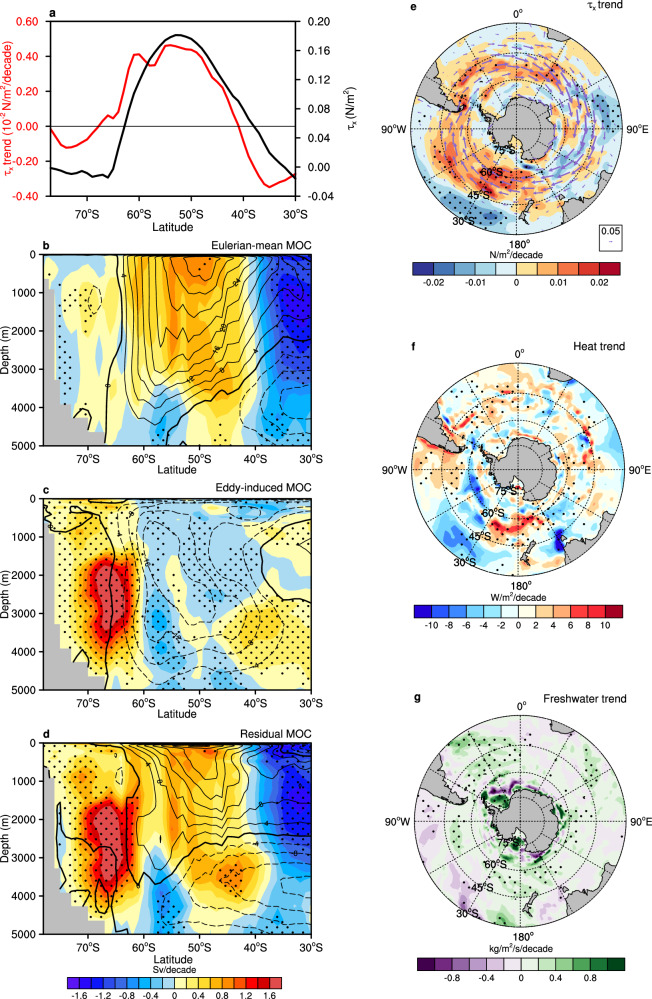 Figure 1
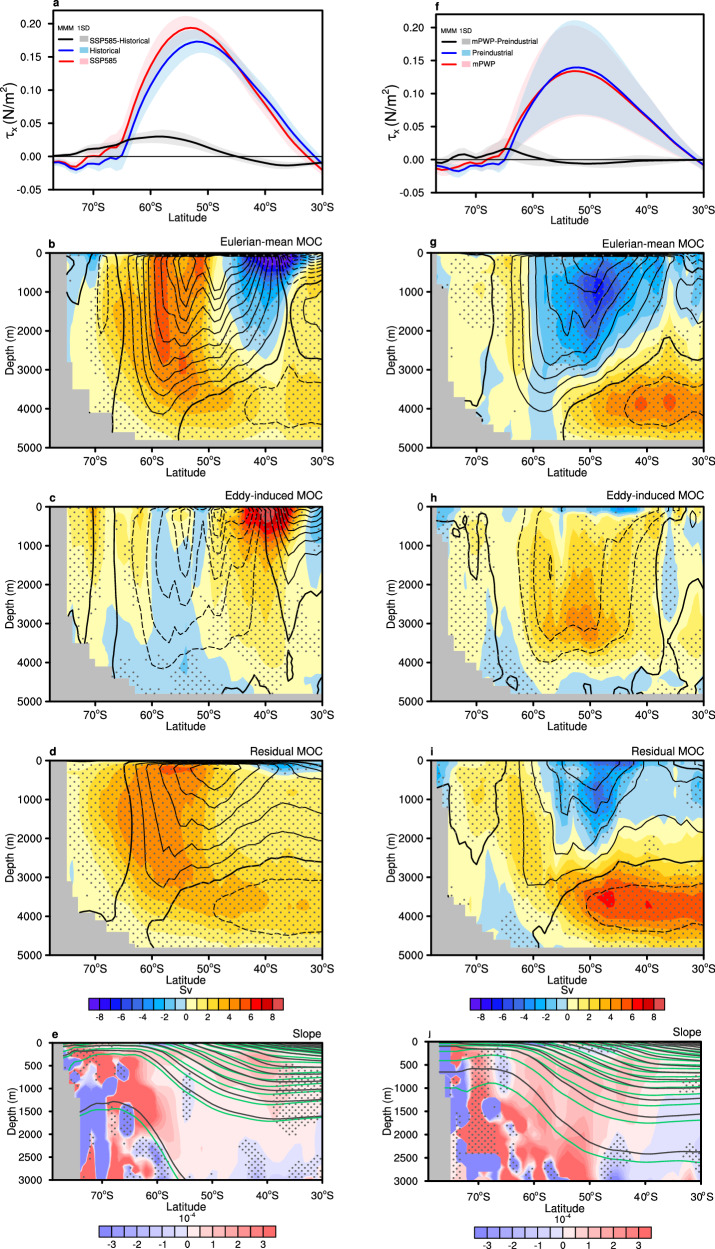 Figure 2
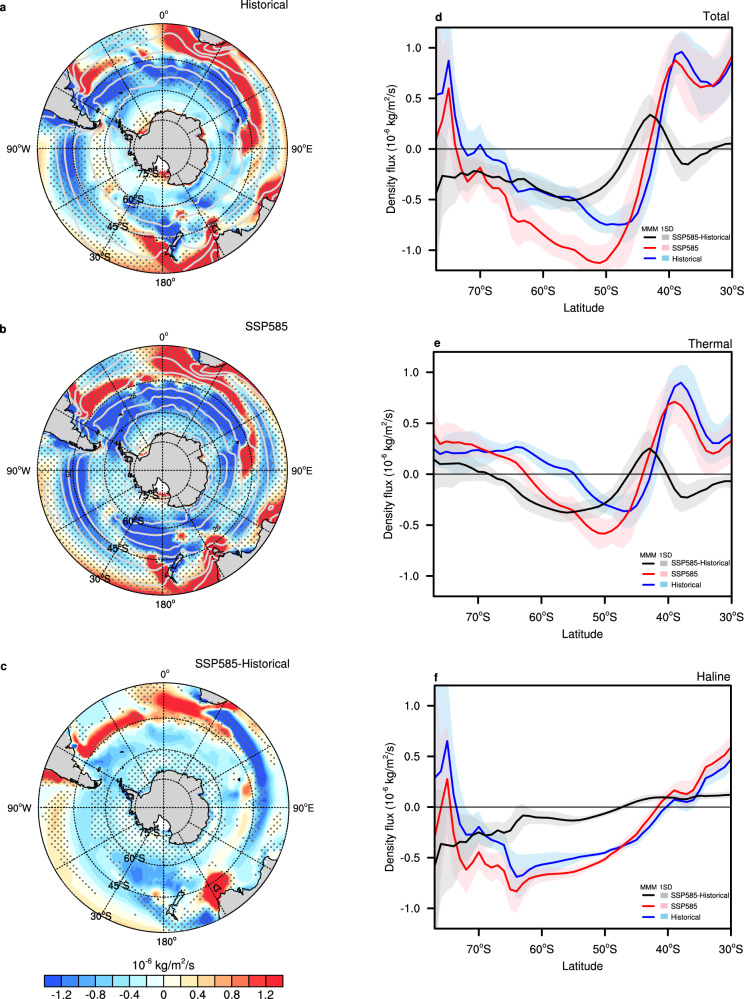 Figure 3
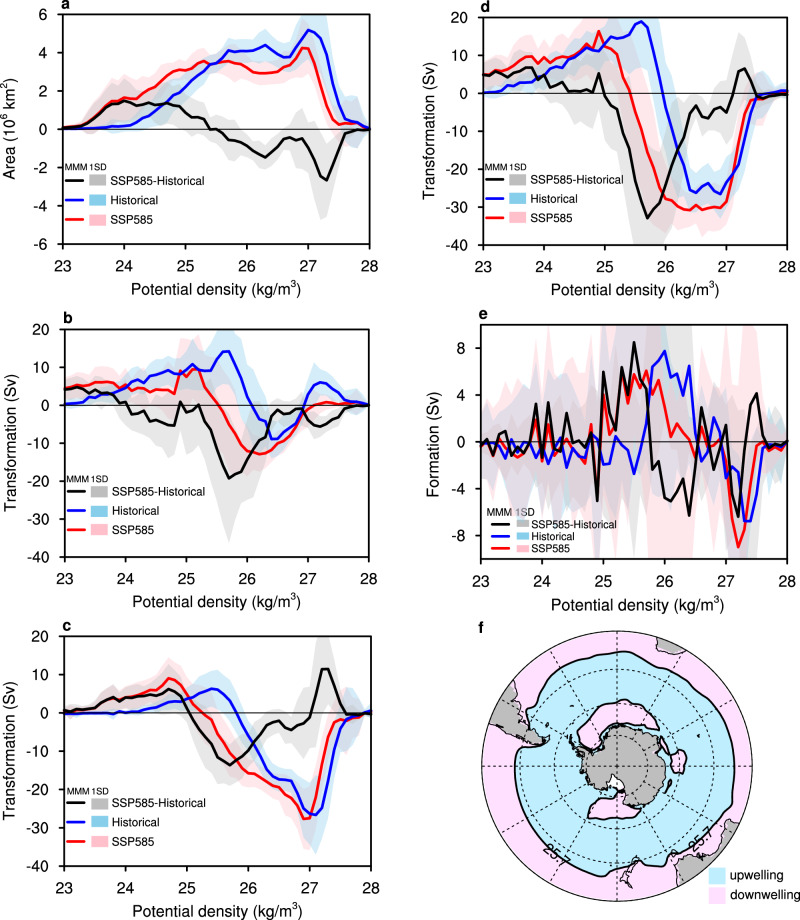 Figure 4
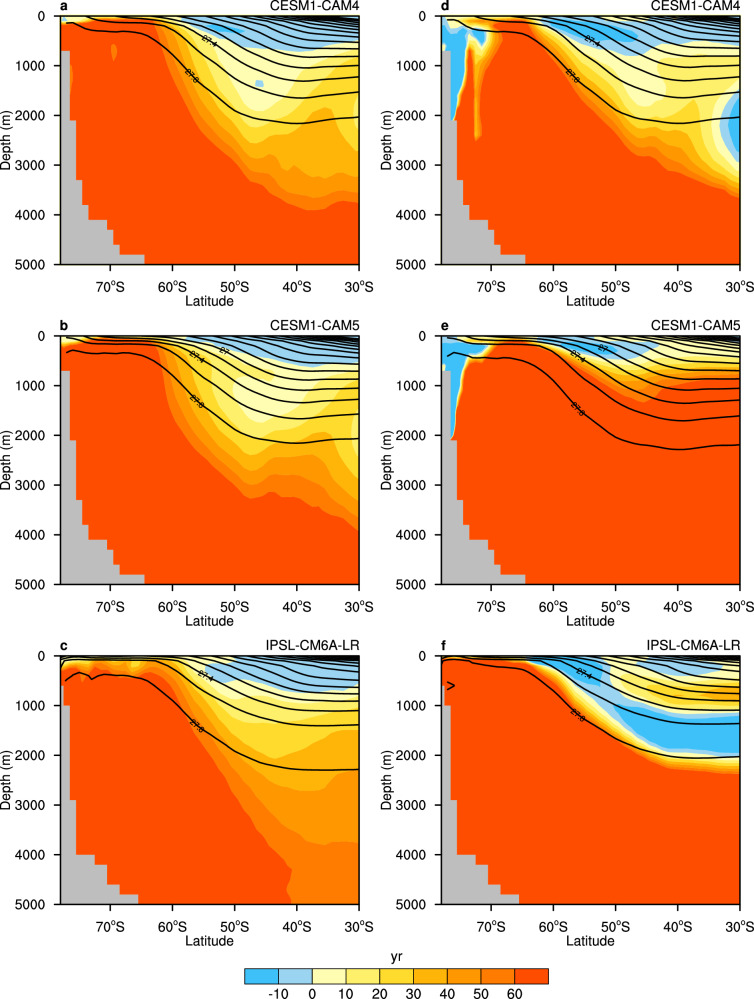 Figure 5
Peer Reviews
No public reviews on file for this paper yet. If you reviewed it on a platform where reviews are public (OpenReview, ICLR, NeurIPS, ICML), you can paste yours below so the community can read it here.
Videos
No videos yet. Explain this paper in a talk, walkthrough, or lecture? Add one.
Taxonomy
TopicsOceanographic and Atmospheric Processes · Geology and Paleoclimatology Research · Climate variability and models