Rapid self-recognition ability in the cleaner fish
Shumpei Sogawa, Taiga Kobayashi, Redouan Bshary, Will Sowersby, Satoshi Awata, Naoki Kubo, Yuta Nakai, Masanori Kohda

TL;DR
Cleaner fish show rapid self-recognition in mirrors, suggesting they may be self-aware, similar to humans and some other animals.
Contribution
The study reveals rapid mirror self-recognition in cleaner fish and identifies behavioral differences before and after recognition.
Findings
Cleaner fish achieve mirror self-recognition rapidly, indicating possible self-awareness.
Behavioral differences were observed before and after mirror self-recognition in cleaner fish.
Self-recognition in cleaner fish shows parallels with human self-awareness processes.
Abstract
Whether animals are self-aware has important implications for our approaches to both animal cognition and animal welfare. A landmark moment in animal cognition research was when great apes passed the mark-test and demonstrated mirror self-recognition (MSR). Animals that pass the mark-test are capable of visually self-recognising and considered to be self-aware. Other taxa, including a fish, the cleaner wrasse (cleaner fish: Labroides dimidiatus) have also now passed the mark-test, forcing a rethink of the mental and neurological requirements for MSR. Previous research has largely focused on which species can pass the mark-test, rather than the processes underlying MSR. Here, we marked mirror-naïve cleaner fish with an ecologically relevant mark resembling an ectoparasite and then undertook detailed behavioural observations after exposure to a mirror. We found that cleaner fish achieve…
Genes, proteins, chemicals, diseases, species, mutations and cell lines named across the full text — each resolved to its canonical identifier and authoritative record.
Click any figure to enlarge with its caption.
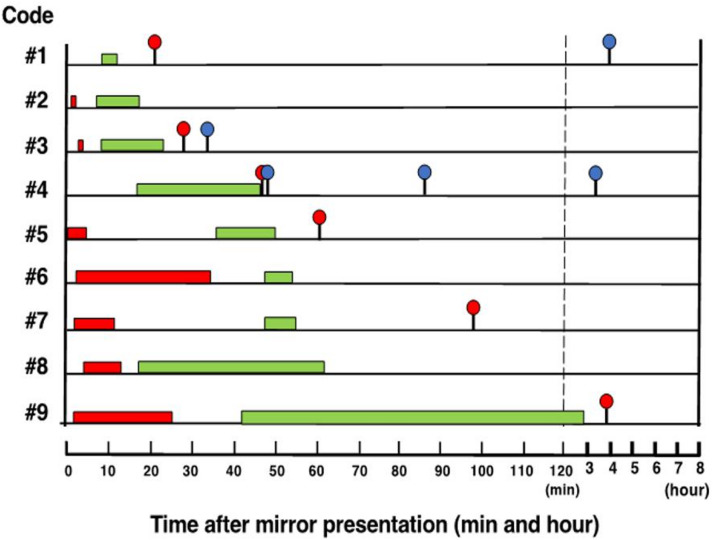 Figure 1
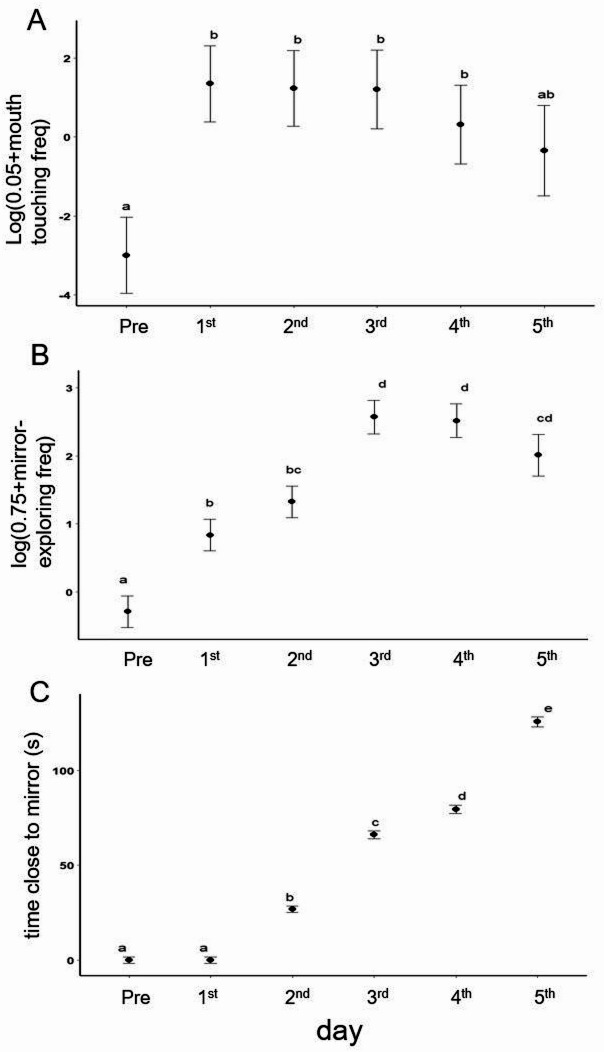 Figure 2
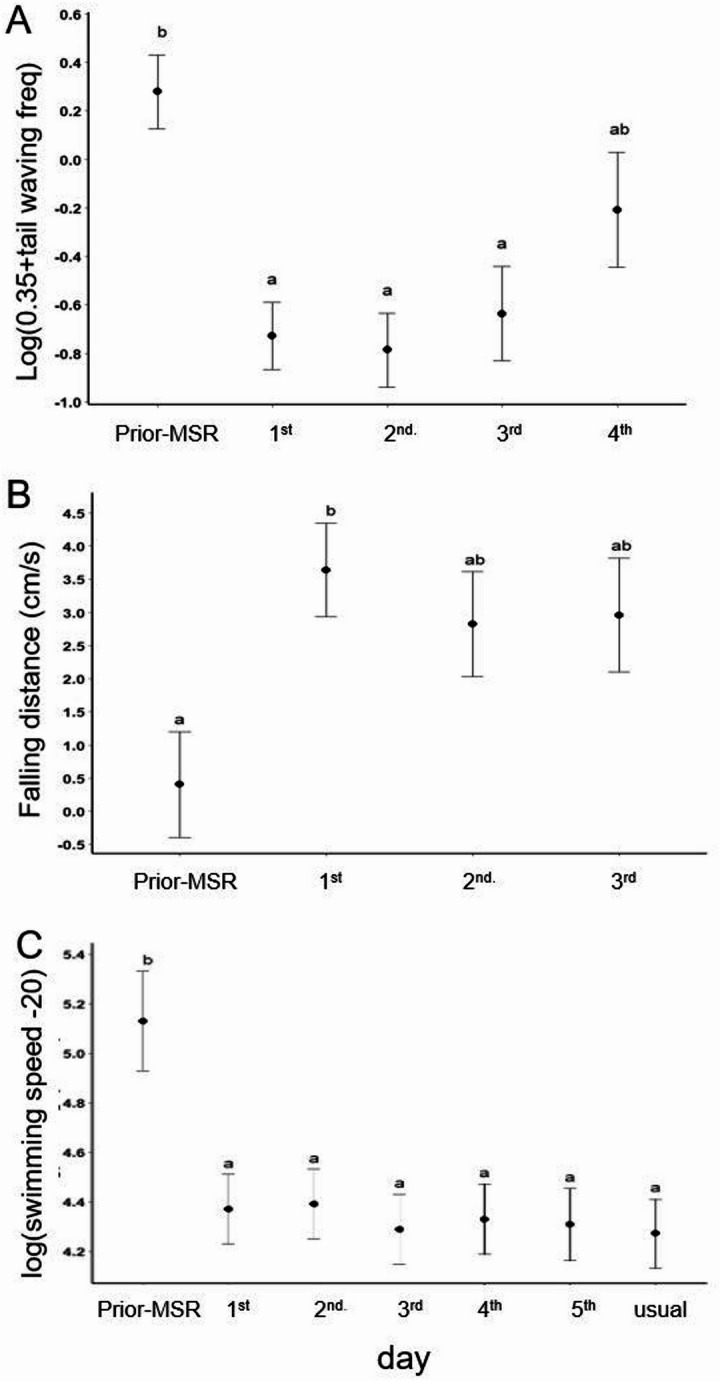 Figure 3
Peer Reviews
No public reviews on file for this paper yet. If you reviewed it on a platform where reviews are public (OpenReview, ICLR, NeurIPS, ICML), you can paste yours below so the community can read it here.
Videos
No videos yet. Explain this paper in a talk, walkthrough, or lecture? Add one.
Taxonomy
TopicsPrimate Behavior and Ecology · Human-Animal Interaction Studies · Action Observation and Synchronization