Engineering a single-chain immunoglobulin scaffold loaded with a latent-releasable cytotoxic pore-forming peptide
Izaskun Morillo, Joao Zulaica, Asier R. Caballero, Jaione Auzmendi-Iriarte, Eneko Largo, Beatriz Apellaniz, Arkaitz Carracedo, Marco Piva, José L. Nieva, Edurne Rujas

TL;DR
Researchers engineered a modified antibody that delivers a cytotoxic peptide specifically to tumors, reducing off-target effects and improving therapeutic potential.
Contribution
A novel antibody-based delivery system for a latent cytotoxic peptide activated by tumor-specific proteases is developed.
Findings
The scIgG-Pmod2-2 hybrid retained the functional properties of the original antibody.
The construct showed favorable pharmacokinetics and tumor-specific peptide activation.
The redesigned Pmod2-2 peptide was stable and compatible with antibody fusion.
Abstract
Pore-forming peptides (PFPs) hold strong anti-tumor potential but require delivery systems to ensure stability and prevent off-target effects. In this study, we develop a strategy to transport a PFP in a biologically latent, precursor-like state. Specifically, based on the therapeutic antibody atezolizumab, which targets the tumor-associated programmed death-ligand 1, we engineered a single-chain IgG (scIgG) construct with flexible linkers embedding the melittin sequence. To further enable tumor-specific activation, melittin was flanked by regions cleavable by matriptase/ST14 (MT), a protease overexpressed in carcinomas. Initial constructs failed due to cytotoxicity during expression, prompting the redesign of melittin into a variant named Pmod2-2. This peptide retained potent pore-forming ability and was compatible with IgG fusion. The resulting scIgG-Pmod2-2 hybrid preserved Fab and…
Genes, proteins, chemicals, diseases, species, mutations and cell lines named across the full text — each resolved to its canonical identifier and authoritative record.
Click any figure to enlarge with its caption.
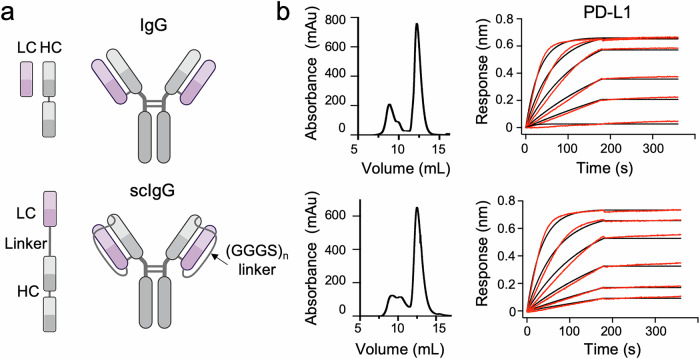 Figure 1
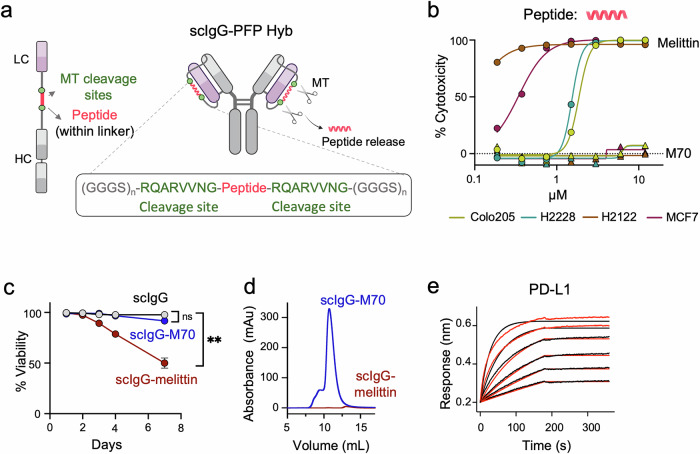 Figure 2
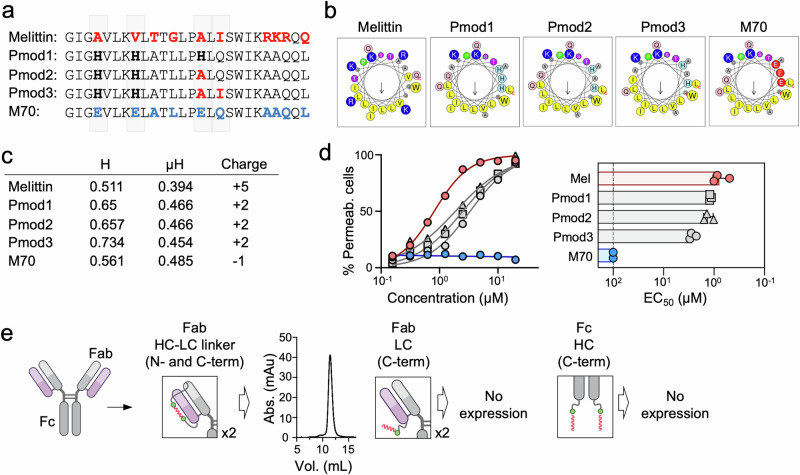 Figure 3
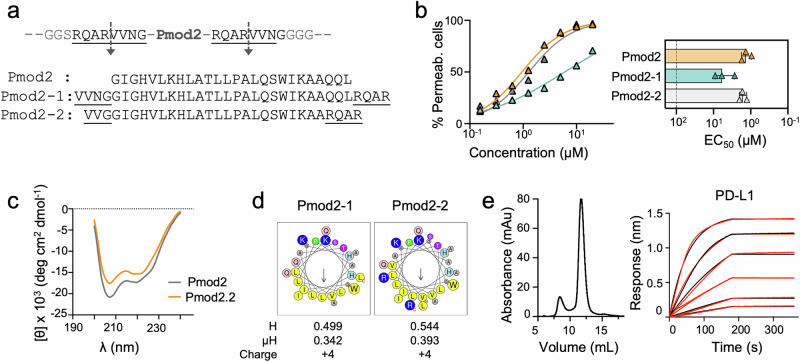 Figure 4
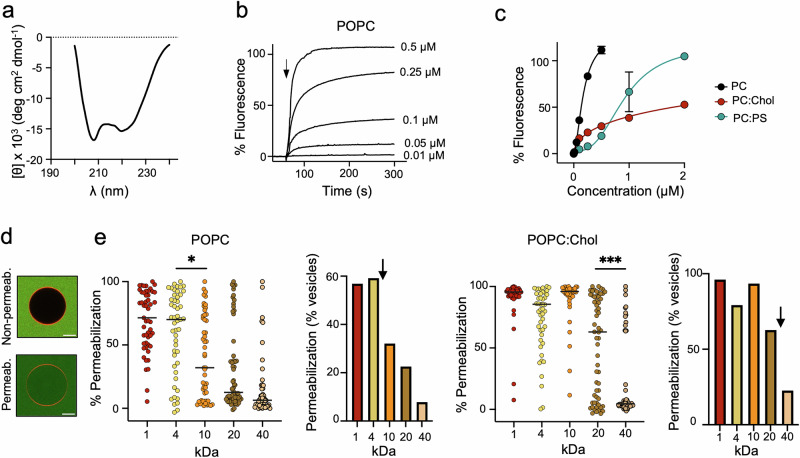 Figure 5
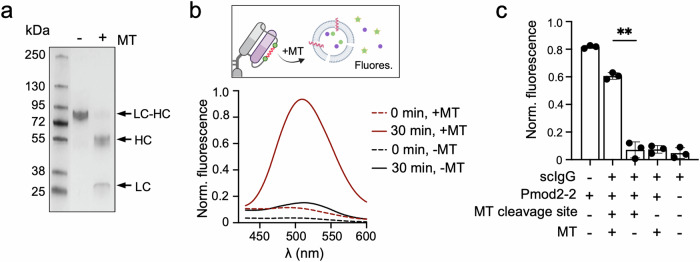 Figure 6
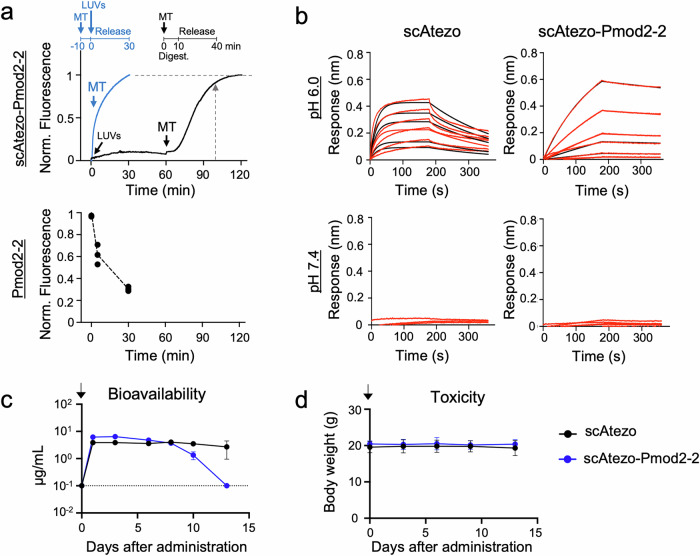 Figure 7
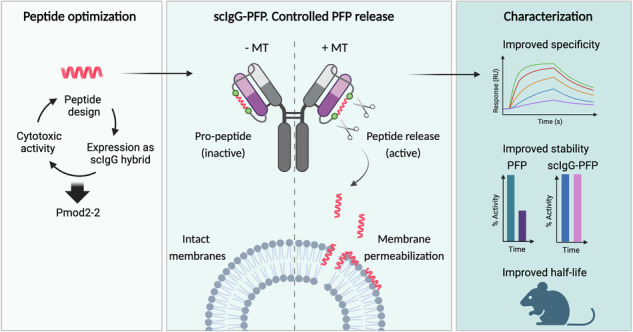 Figure 8
Peer Reviews
No public reviews on file for this paper yet. If you reviewed it on a platform where reviews are public (OpenReview, ICLR, NeurIPS, ICML), you can paste yours below so the community can read it here.
Videos
No videos yet. Explain this paper in a talk, walkthrough, or lecture? Add one.
Taxonomy
TopicsNanoparticle-Based Drug Delivery · Monoclonal and Polyclonal Antibodies Research · RNA Interference and Gene Delivery