Dose standardization for transcranial electrical stimulation: an accessible approach
Jake Toth, Méadhbh Brosnan, Rory-Jay King, Boyan Ivanov, Mahnaz Arvaneh

TL;DR
This paper introduces a new method to standardize transcranial electrical stimulation doses using accessible participant data, improving consistency across individuals.
Contribution
A novel dose standardization method for tES that avoids structural imaging and uses regression models trained on demographic and morphological data.
Findings
Regression models predicted peak E-field strengths using accessible parameters, reducing variability compared to fixed dosing.
Montage-specific models explained 43% variability in conventional and 21% in HD montages, while montage-agnostic models explained 36% and 13%, respectively.
The method showed robust performance on unseen data, offering a significant improvement over current approaches.
Abstract
Transcranial electrical stimulation (tES) is a widely used non-invasive brain stimulation technique. However, due to high inter-individual variability in the induced electric fields (E-fields), a fixed stimulation current delivers an inconsistent dose. We developed a dose standardization method without the requirement of participant-specific structural imaging and E-field modeling. Robust multiple linear regression models were trained to predict peak E-field strengths across 10 electrode montages and 418 healthy adults. These regression models predicted peak E-field strengths in unseen participants from accessible demographic and morphological parameters. Estimated peak E-field strength values were subsequently used to standardize tES dosages across our population. Additionally, we developed montage-agnostic models which incorporated inter-electrode distances for each participant.…
Genes, proteins, chemicals, diseases, species, mutations and cell lines named across the full text — each resolved to its canonical identifier and authoritative record.
Click any figure to enlarge with its caption.
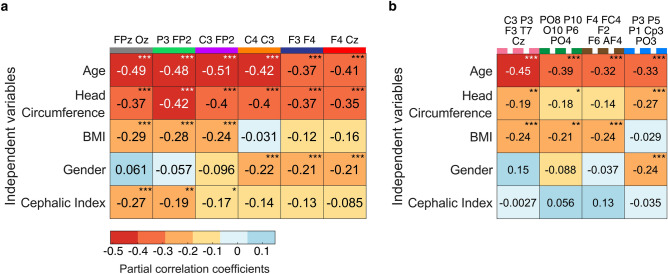 Figure 1
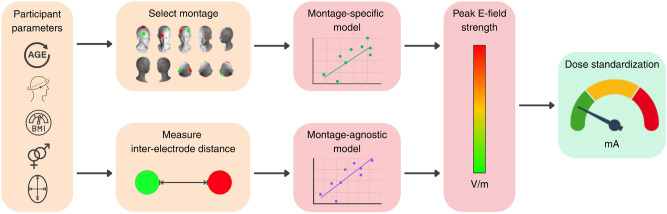 Figure 2
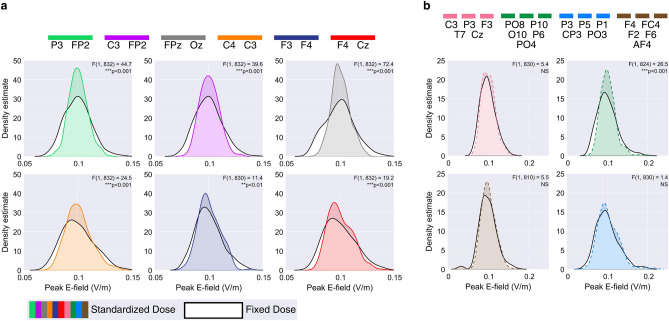 Figure 3
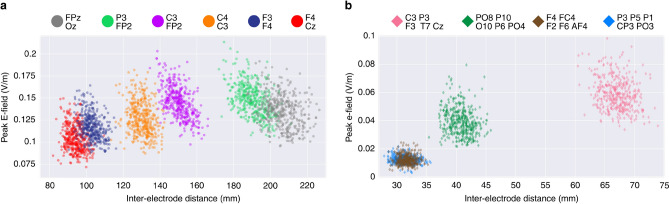 Figure 4
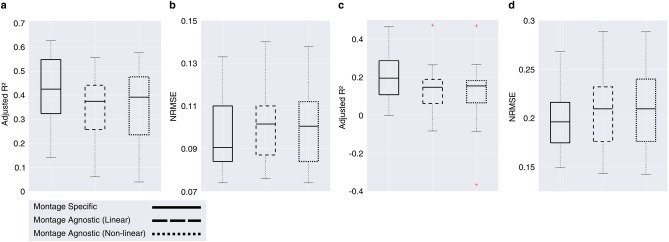 Figure 5
 Figure 6
 Figure 7
 Figure 8
Peer Reviews
No public reviews on file for this paper yet. If you reviewed it on a platform where reviews are public (OpenReview, ICLR, NeurIPS, ICML), you can paste yours below so the community can read it here.
Videos
No videos yet. Explain this paper in a talk, walkthrough, or lecture? Add one.
Taxonomy
TopicsTranscranial Magnetic Stimulation Studies · Electroconvulsive Therapy Studies · Neurological disorders and treatments