Perceived sensorimotor synchrony enhances pain modulation and attenuates laser-evoked potentials
Xinyu Pan, Yian Xiao, Li Hu, Xuejing Lu

TL;DR
Synchronizing movement with music reduces pain perception and brain responses to pain, suggesting rhythm-based therapy as a non-drug pain treatment.
Contribution
The study demonstrates that perceived sensorimotor synchrony has analgesic effects, offering a novel non-pharmacological pain management approach.
Findings
Participants who drummed and listened to music reported greater pain reduction than other groups.
In-phase synchrony led to stronger perceived synchrony and greater pain reduction compared to asynchrony.
Electrophysiological data showed reduced laser-evoked N2 amplitudes with perceived synchrony.
Abstract
Sensorimotor synchronization to music, referring to the temporal alignment of movement with auditory rhythms, has been associated with immersive engagement and enhanced pleasure. In the present study, we investigated its analgesic effects by three main experiments involving 224 healthy participants. Pain modulation was assessed by changes in responses to noxious laser stimuli before and after auditory stimulation (listening vs. no listening) and drumming activity (drumming vs. no drumming). Participants in the drumming-and-listening group exhibited greater reductions in pain intensity and unpleasantness than those in other groups, highlighting the analgesic advantage of such combination (Experiment 1). We then manipulated the perceived synchrony and revealed that participants in the in-phase synchrony group reported stronger perceived synchrony and greater pain reduction, when compared…
Genes, proteins, chemicals, diseases, species, mutations and cell lines named across the full text — each resolved to its canonical identifier and authoritative record.
Click any figure to enlarge with its caption.
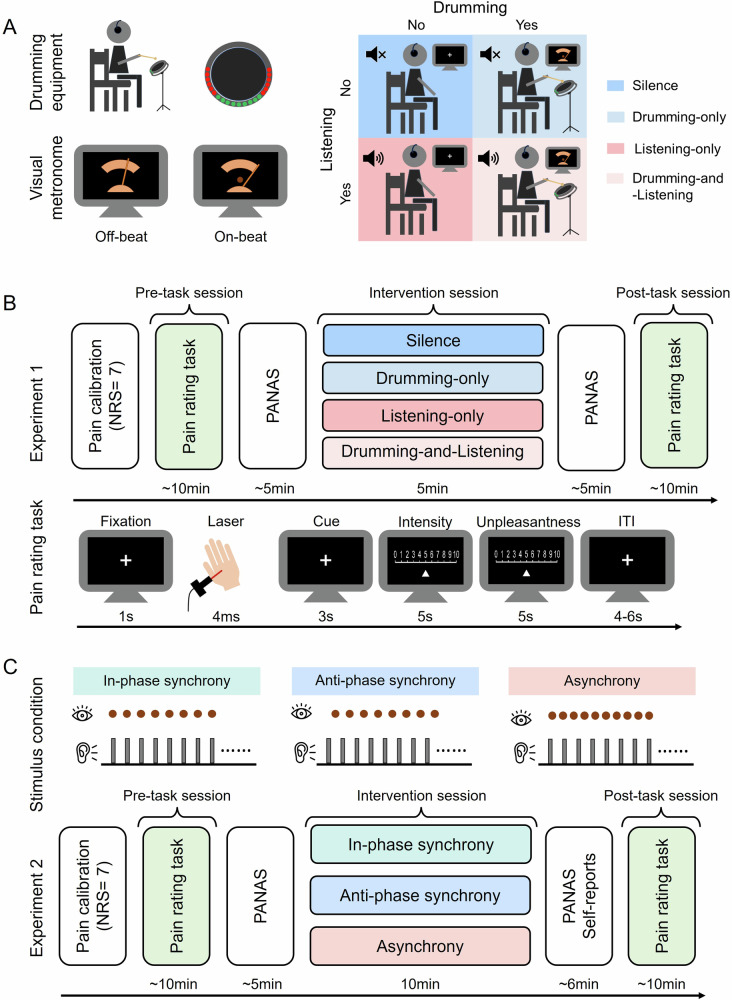 Figure 1
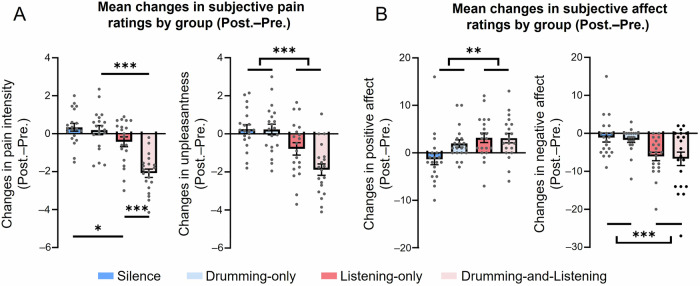 Figure 2
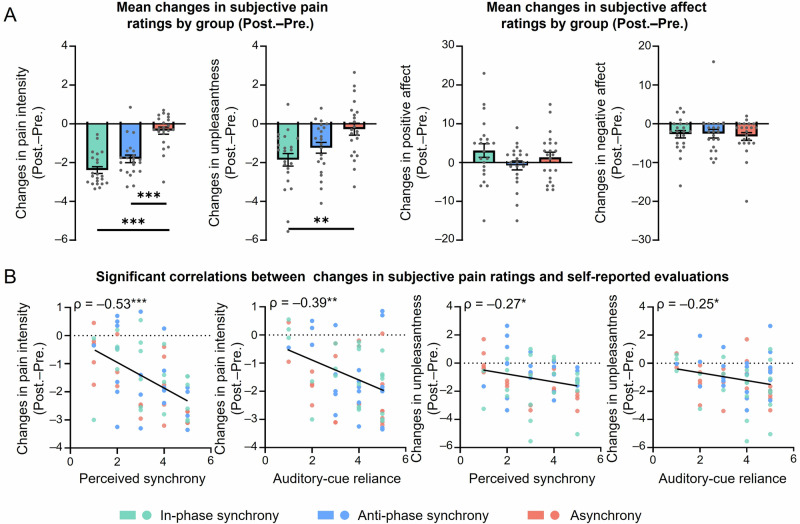 Figure 3
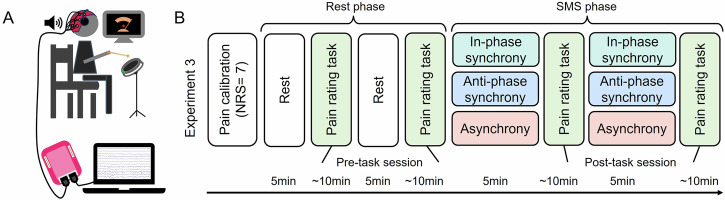 Figure 4
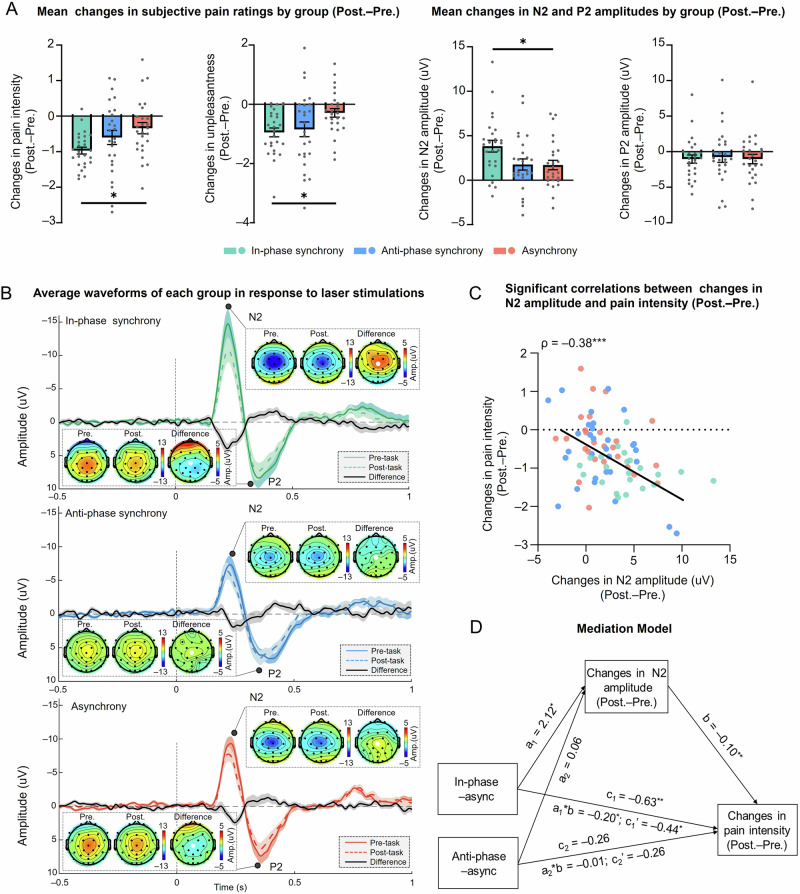 Figure 5
Peer Reviews
No public reviews on file for this paper yet. If you reviewed it on a platform where reviews are public (OpenReview, ICLR, NeurIPS, ICML), you can paste yours below so the community can read it here.
Videos
No videos yet. Explain this paper in a talk, walkthrough, or lecture? Add one.
Taxonomy
TopicsAction Observation and Synchronization · Tactile and Sensory Interactions · Virtual Reality Applications and Impacts