Evaluating the PANSS using item response theory in forensic psychiatric samples from five European nations
Andreas Wippel, Giovanni de Girolamo, Pawel Gosek, Janusz Heitzman, Laura Iozzino, Inga Markiewicz, Donato Martella, Marco Picchioni, Hans-Joachim Salize, Annemarie Unger, Johannes Wancata, Rainer W. Alexandrowicz

TL;DR
This study evaluates the PANSS in psychiatric patients using statistical models to understand how well it measures symptoms and its link to violent behavior.
Contribution
The study applies Item Response Theory to the PANSS for the first time in forensic and general psychiatric samples.
Findings
The Partial Credit Model showed poor fit with disordered thresholds for most PANSS items.
Differential item functioning revealed significant differences between forensic and non-violent patients, especially for items related to violence risk.
Findings suggest limitations in comparing PANSS scores between forensic and general psychiatric populations.
Abstract
Item Response Theory (IRT) describes a set of statistical models describing how individual items in a test or questionnaire relate to the underlying characteristic or trait that the test claims to measure. Until now IRT models have not been applied to the Positive and Negative Syndrome Scale (PANSS) in forensic and general psychiatric samples to establish its psychometric properties and explore the link between psychotic symptom severity and violent behavior in schizophrenia. This study investigated patients with schizophrenia spectrum disorders and a history of violence from forensic institutions and non-violent patients from general psychiatric settings in five European countries. A total of 398 participants were assessed using the PANSS. IRT analysis revealed a poor model fit for the Partial Credit Model (PCM) with considerably disordered thresholds for most items. Differential item…
Genes, proteins, chemicals, diseases, species, mutations and cell lines named across the full text — each resolved to its canonical identifier and authoritative record.
Click any figure to enlarge with its caption.
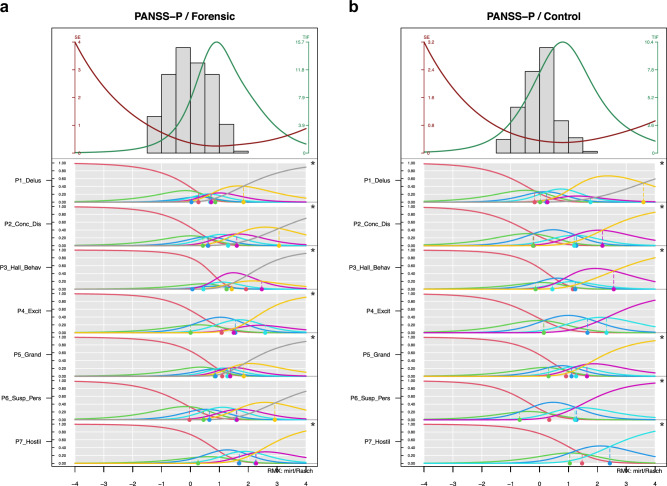 Figure 1
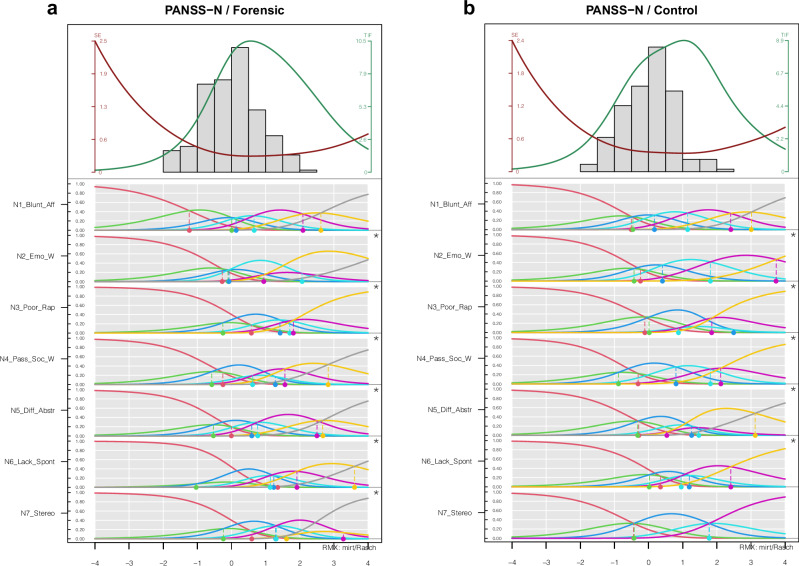 Figure 2
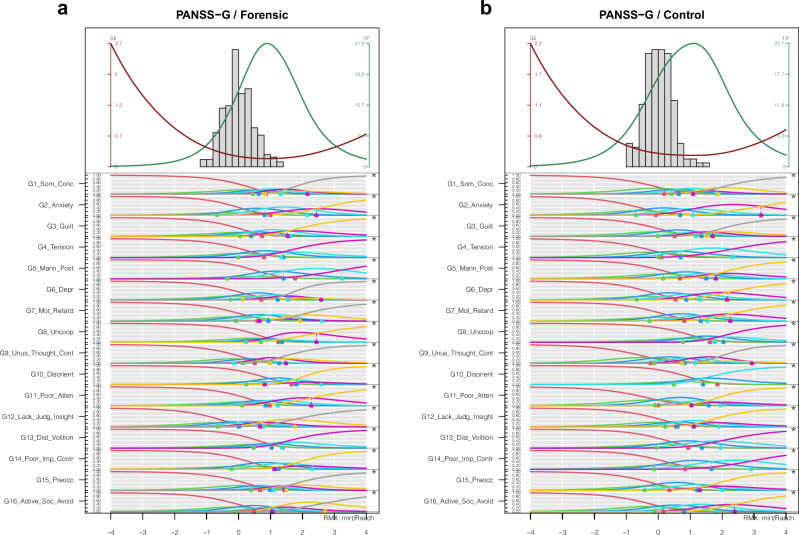 Figure 3
Peer Reviews
No public reviews on file for this paper yet. If you reviewed it on a platform where reviews are public (OpenReview, ICLR, NeurIPS, ICML), you can paste yours below so the community can read it here.
Videos
No videos yet. Explain this paper in a talk, walkthrough, or lecture? Add one.
Taxonomy
TopicsPsychopathy, Forensic Psychiatry, Sexual Offending · Schizophrenia research and treatment · Personality Disorders and Psychopathology