SAHRANG: Subarachnoid Hemorrhage Recovery and Galantamine: A Pilot Multicenter Randomized Placebo-Controlled Trial
Bosco Seong Kyu Yang, Jude P. J. Savarraj, Elena Moreno, Kevin E. Immanuel, Georgene Hergenroeder, Glenda Torres, Jung Hwan Kim, Sophie Samuel, Claudia Pedroza, James C. Grotta, Andrew Barreto, H. Alex Choi

TL;DR
This pilot study tested if galantamine is safe and well-tolerated in patients with subarachnoid hemorrhage, finding no significant differences in safety compared to a placebo.
Contribution
The study is the first to evaluate galantamine's tolerability and safety in SAH patients in a randomized, placebo-controlled trial.
Findings
Galantamine was as tolerable as placebo, with similar discontinuation rates due to adverse events.
Mortality rates were comparable between the galantamine and placebo groups at 90 days.
Bradycardia was the most common adverse event in both treatment groups.
Abstract
Subarachnoid hemorrhage (SAH) causes life-long neurologic dysfunction. Peripheral inflammatory processes as a reaction to brain injury have been shown to worsen outcomes after SAH. Galantamine has been shown to reduce proinflammatory microglial activities and improve synaptic connections. We hypothesize that galantamine treatment after SAH mitigates inflammation-mediated neuronal injury and improve outcomes. We conducted a pilot clinical trial to examine the tolerability and safety of galantamine in patients with SAH. This prospective, multicenter, double-masked, randomized, placebo-controlled study contiguously screened and enrolled adult patients presenting with aneurysmal SAH with a Fisher grade of 3 within 72 h of symptom onset. A total of 60 patients were enrolled with a 1:1 ratio to two treatment arms. The first 30 patients were randomly assigned to receive galantamine at 8 mg…
Genes, proteins, chemicals, diseases, species, mutations and cell lines named across the full text — each resolved to its canonical identifier and authoritative record.
Click any figure to enlarge with its caption.
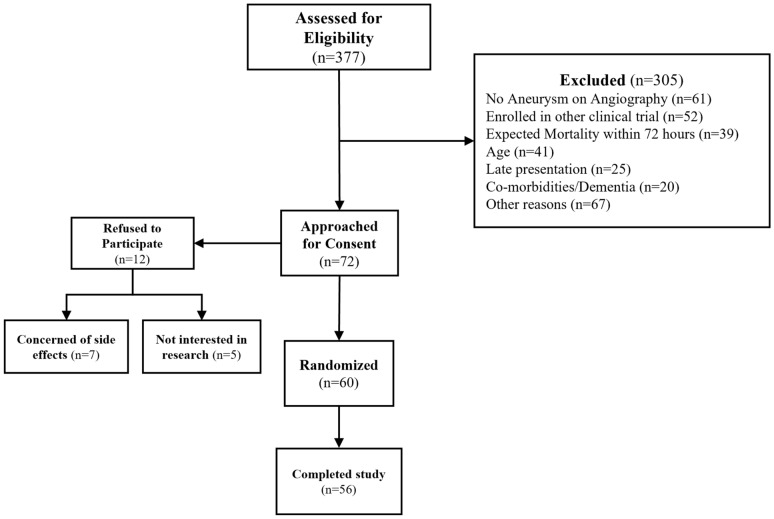 Figure 1
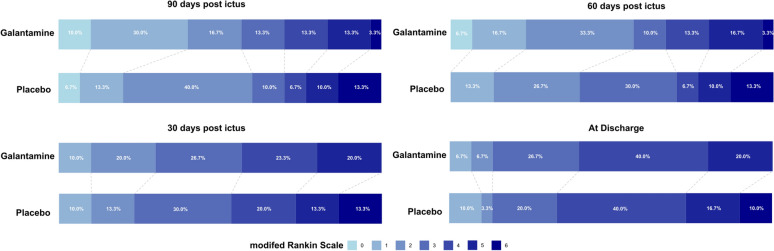 Figure 2
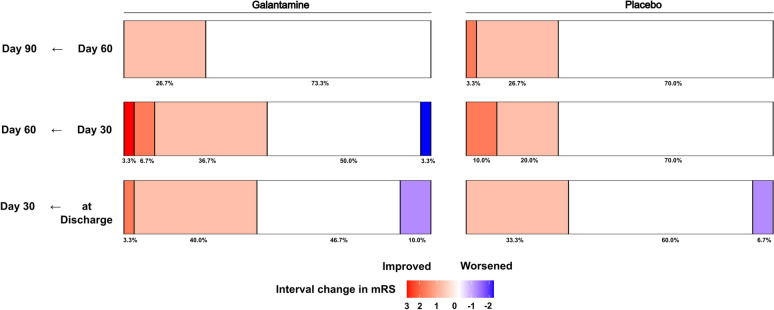 Figure 3
Peer Reviews
No public reviews on file for this paper yet. If you reviewed it on a platform where reviews are public (OpenReview, ICLR, NeurIPS, ICML), you can paste yours below so the community can read it here.
Videos
No videos yet. Explain this paper in a talk, walkthrough, or lecture? Add one.
Taxonomy
TopicsIntracranial Aneurysms: Treatment and Complications · Neuroinflammation and Neurodegeneration Mechanisms · Traumatic Brain Injury and Neurovascular Disturbances