Developmental differences in threat learning are associated with changes in frontal-central theta activity
Gil Shner-Livne, Nadav Barak, Ido Shitrit, Rany Abend, Tomer Shechner

TL;DR
This study shows that adolescents and adults differ in brain activity during threat learning, with adolescents showing less effective inhibition of threat responses.
Contribution
The study is the first to examine developmental differences in threat learning through theta and alpha frequency EEG activity in youth.
Findings
Adolescents showed higher induced theta activity to threat and safety cues during acquisition compared to adults.
Adults exhibited decreased evoked theta activity during extinction, while adolescents showed persistent threat contingencies.
Both groups showed consistent alpha suppression towards the threat cue, indicating sustained vigilance.
Abstract
Major theories link variations in threat learning to the emergence of anxiety symptoms, especially during adolescence. Despite significant neural maturation of threat learning circuitry during this developmental stage, research on adolescence-specific neural responses during threat learning is limited. This study was the first to examine threat learning mechanisms through neural frequency activity among youth, focusing on activity in the theta (4–7 Hz) and alpha (8–12 Hz) frequency bands. Sixty-three adolescents and 65 adults completed a two-day threat acquisition and extinction procedure, while brain activity was measured using electroencephalography (EEG). Analyses focused on developmental differences in high temporal resolution changes in frequency activity, distinguishing between induced and evoked EEG signals. Developmental differences were mainly observed in frontal-central theta…
Genes, proteins, chemicals, diseases, species, mutations and cell lines named across the full text — each resolved to its canonical identifier and authoritative record.
Click any figure to enlarge with its caption.
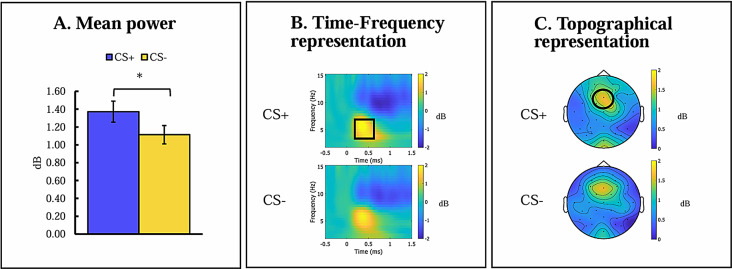 Figure 1
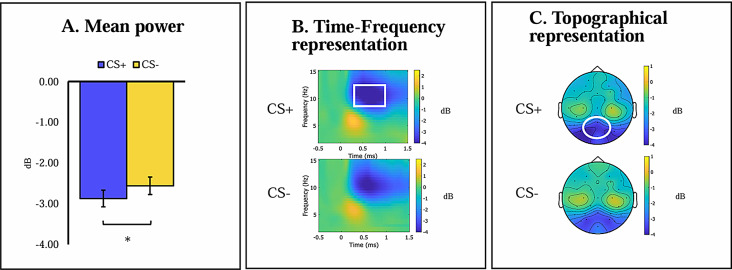 Figure 2
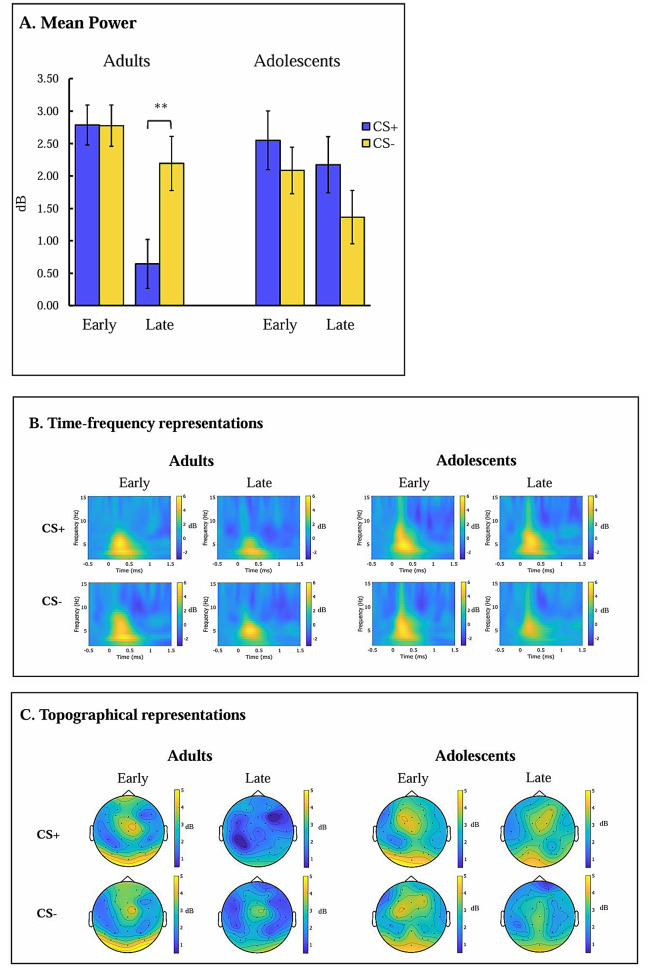 Figure 3
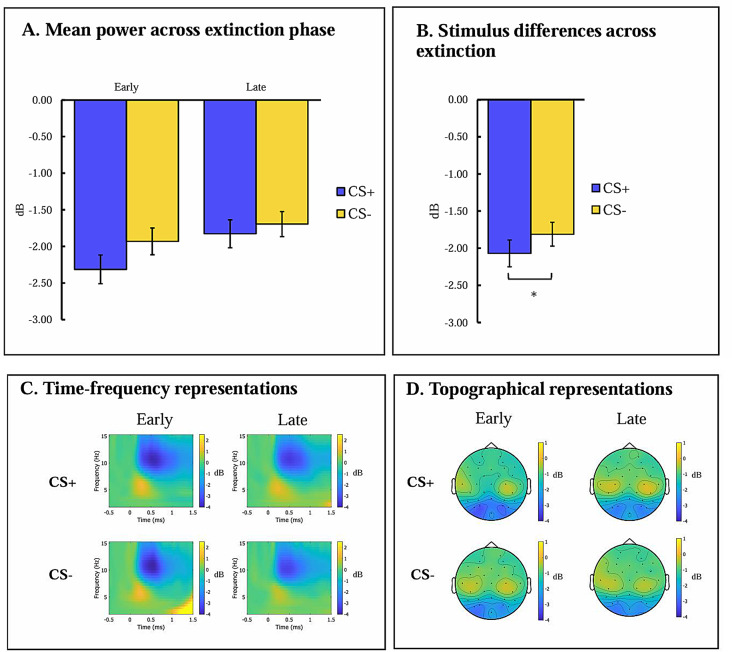 Figure 4
Peer Reviews
No public reviews on file for this paper yet. If you reviewed it on a platform where reviews are public (OpenReview, ICLR, NeurIPS, ICML), you can paste yours below so the community can read it here.
Videos
No videos yet. Explain this paper in a talk, walkthrough, or lecture? Add one.
Taxonomy
TopicsMemory and Neural Mechanisms · Neural and Behavioral Psychology Studies · Neural dynamics and brain function