Effects of fecal microbiota transplantation on the abundance and diversity of selected fungal and archaeal species in the gut microbiota in the rat model of schizophrenia
Agnieszka Krawczyk, Tomasz Kasperski, Tomasz Gosiewski, Agnieszka Nikiforuk, Agnieszka Potasiewicz, Zbigniew Arent, Dominika Salamon

TL;DR
This study explores how fecal microbiota transplantation affects gut fungi and archaea in a rat model of schizophrenia, finding limited impact from the procedure.
Contribution
The study is among the first to investigate FMT's effects on specific fungal and archaeal species in a schizophrenia rat model.
Findings
C. tropicalis colonization increased to nearly 100% post-FMT across all groups, suggesting natural maturation.
Malassezia spp. abundance declined after FMT and placebo, indicating procedural effects rather than FMT-specific changes.
Archaeal species like Methanobrevibacter smithii were absent in all samples.
Abstract
The gut microbiome has been increasingly recognized for its potential role in schizophrenia through gut-brain interactions involving immune, neural, and metabolic pathways. This pilot study evaluated the impact of fecal microbiota transplantation (FMT) on the abundance and variability of selected fungal and archaeal species in the gut microbiota in the rat model of schizophrenia. Sprague-Dawley rats using as a prenatal methylazoxymethanol acetate (MAM-E17) model of schizophrenia underwent FMT or placebo. Fecal DNA was extracted and analyzed via quantitative Real-Time PCR (qPCR) to quantify selected fungi (Candida tropicalis, Malassezia spp., Cryptococcus neoformans) and archaea (Methanobrevibacter smithii, Methanosphaera stadtmanae) before and after intervention A slightly higher prevalence of C. tropicalis was noted in MAM-exposed rats compared to healthy controls (19% vs. 10%).…
Genes, proteins, chemicals, diseases, species, mutations and cell lines named across the full text — each resolved to its canonical identifier and authoritative record.
Click any figure to enlarge with its caption.
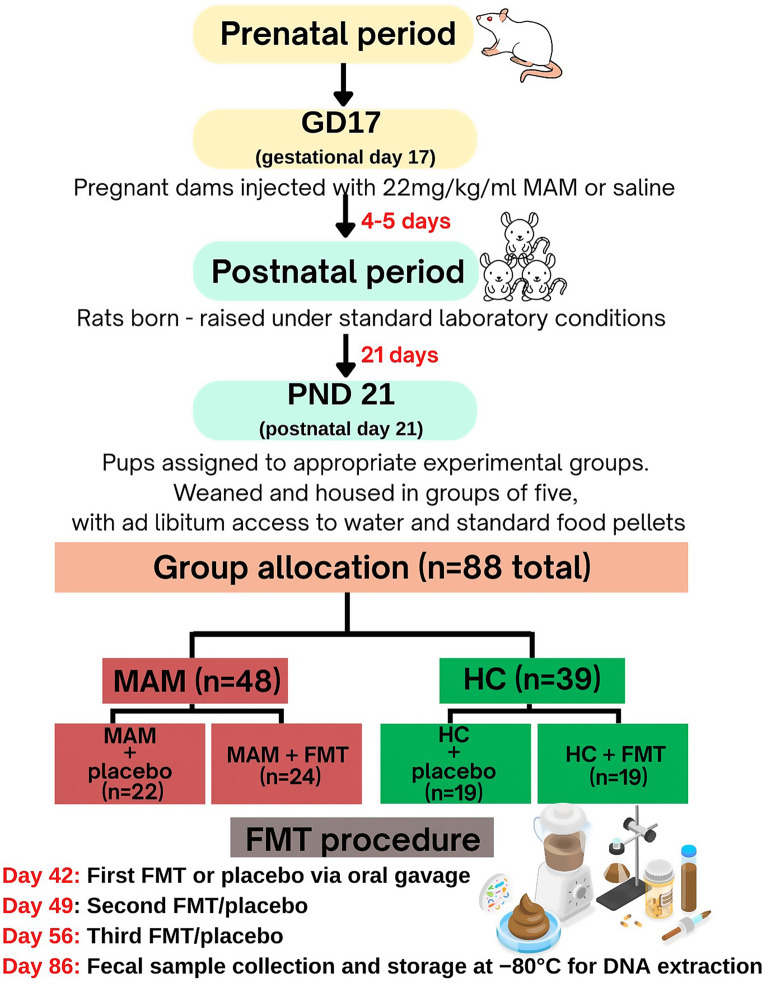 Figure 1
 Figure 2
Peer Reviews
No public reviews on file for this paper yet. If you reviewed it on a platform where reviews are public (OpenReview, ICLR, NeurIPS, ICML), you can paste yours below so the community can read it here.
Videos
No videos yet. Explain this paper in a talk, walkthrough, or lecture? Add one.
Taxonomy
TopicsGut microbiota and health · Clostridium difficile and Clostridium perfringens research · Tryptophan and brain disorders