Feto-placental endothelial cells of female neonates are more susceptible to gestational diabetes-induced changes
Silvija Tokic, Axel Schlagenhauf, Katrin A. Dohr, Gernot Desoye, Ursula Hiden

TL;DR
Female fetal endothelial cells respond more strongly to gestational diabetes than male cells, affecting their gene activity and function.
Contribution
This study reveals that female feto-placental endothelial cells show a stronger transcriptional and functional response to gestational diabetes compared to male cells.
Findings
Female fpEC showed more differentially expressed genes in response to gestational diabetes than male fpEC.
GDM reduced proliferation and increased network formation in female fpEC but not in male cells.
GDM amplified sex-biased gene expression despite converging cellular behavior between sexes.
Abstract
Fetal sex influences gene expression in the healthy feto-placental endothelium, potentially contributing to sex-dependent developmental programming and disease risk. Gestational diabetes mellitus (GDM) alters maternal–fetal homeostasis and placental vascular function. Building on previous findings of sex-biased gene expression in healthy feto-placental endothelial cells (fpEC), we investigated whether these biases persist or change following GDM exposure. We first identified sex-biased gene expression in fpEC from GDM pregnancies, then analyzed GDM-induced changes separately in male and female fpEC. Gene ontology enrichment was performed using the PANTHER database. Proliferation and network formation were assessed by BrdU incorporation assay and Matrigel assay, respectively. Female fpEC exhibited a greater transcriptional response to GDM, with more differentially expressed genes than…
Genes, proteins, chemicals, diseases, species, mutations and cell lines named across the full text — each resolved to its canonical identifier and authoritative record.
Click any figure to enlarge with its caption.
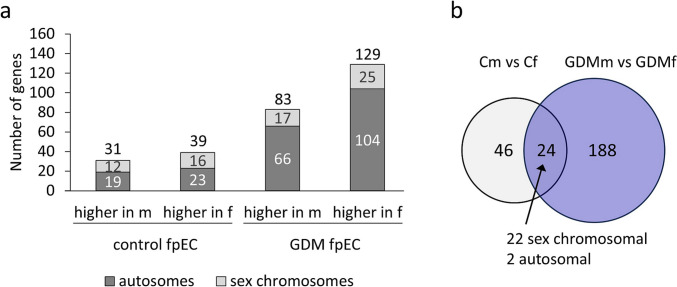 Figure 1
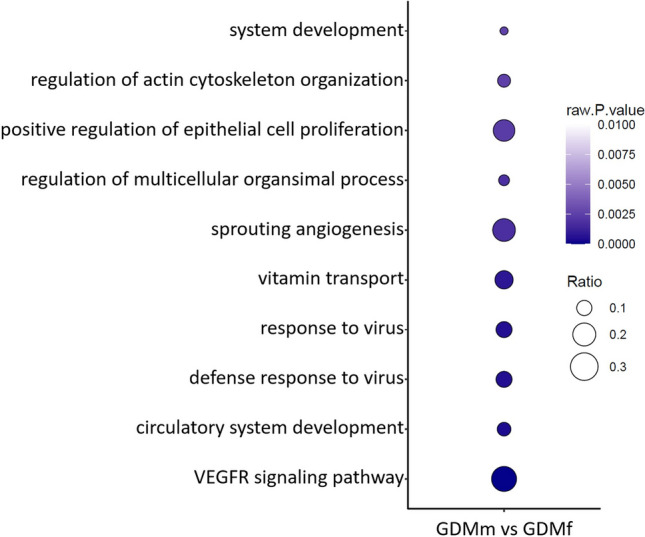 Figure 2
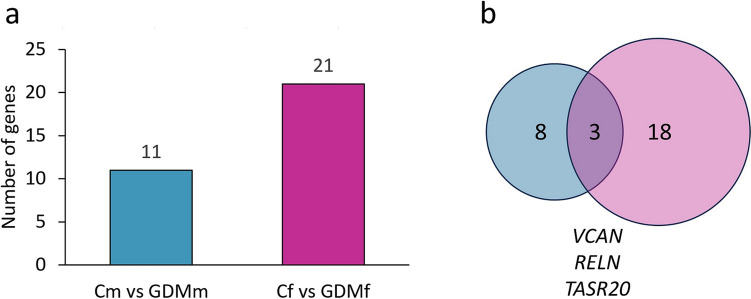 Figure 3
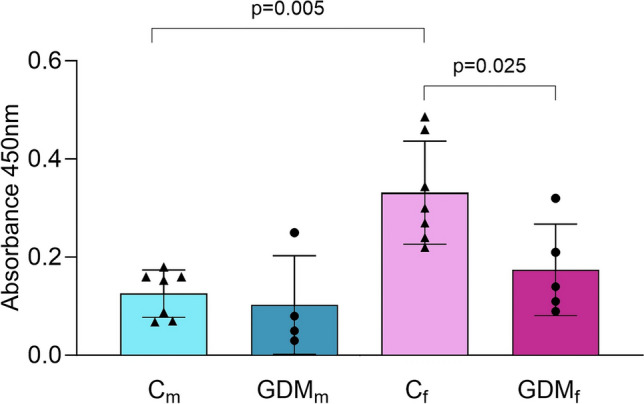 Figure 4
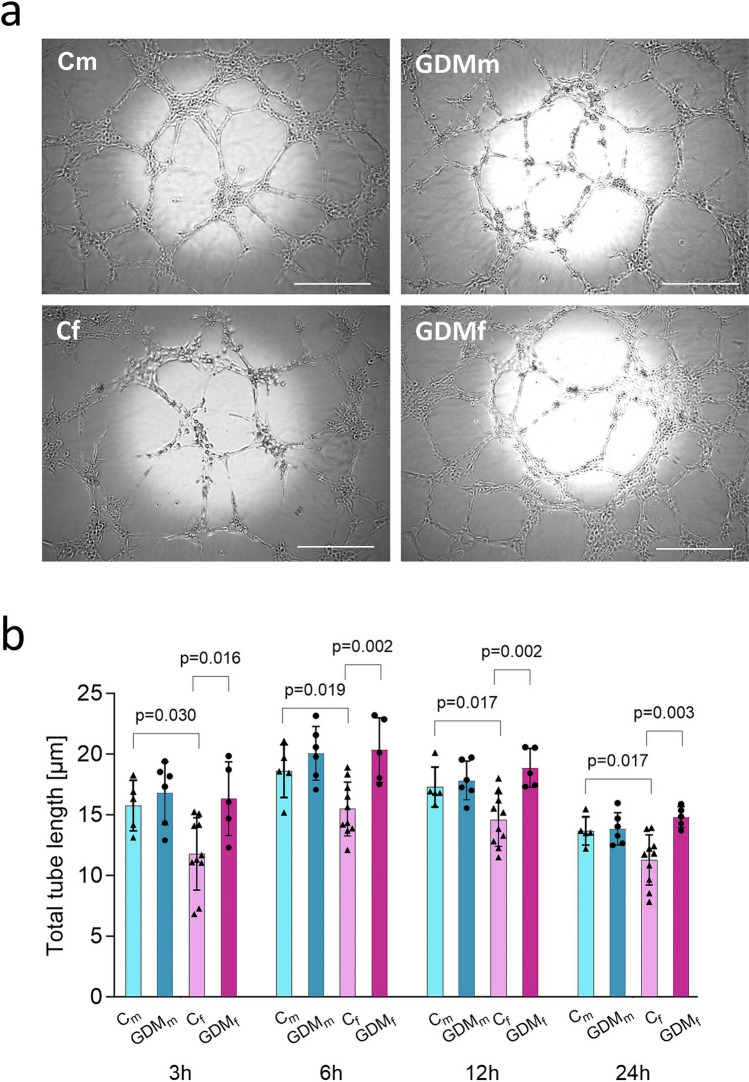 Figure 5
Peer Reviews
No public reviews on file for this paper yet. If you reviewed it on a platform where reviews are public (OpenReview, ICLR, NeurIPS, ICML), you can paste yours below so the community can read it here.
Videos
No videos yet. Explain this paper in a talk, walkthrough, or lecture? Add one.
Taxonomy
TopicsPregnancy and preeclampsia studies · Gestational Diabetes Research and Management · Birth, Development, and Health