Fistula formation in recurrent sigmoid diverticulitis - a domain of laparoscopic surgery?
Lennart Zimniak, Stephan Gretschel, Hendrik Christian Albrecht, Kjell Sonnenberg, Christoph Wullstein, Attila Dubecz, Michael Karg, Joerg-Peter Ritz

TL;DR
This study compares laparoscopic and open surgery for treating fistulas caused by recurrent sigmoid diverticulitis, finding laparoscopic surgery offers faster recovery without increased risk.
Contribution
The study provides empirical evidence that laparoscopic surgery may offer better postoperative outcomes for fistula formation in recurrent sigmoid diverticulitis.
Findings
Laparoscopic surgery resulted in shorter hospital stays, earlier drain removal, and quicker return of bowel function compared to open surgery.
No significant differences were observed in anastomotic leakage rates, mortality rates, wound infection rates, or operating time between the two surgical approaches.
Abstract
Chronic sigmoid diverticulitis is the most common benign cause of sigmoid-bladder fistulas (SBF) and sigmoid-vaginal fistulas (SVF). This multicenter retrospective comparative study analyzed the perioperative and postoperative outcomes between laparoscopic and open surgical procedures. The study included 101 patients from four German hospitals who underwent elective sigmoid resection for SBF, SVF, or combined fistulas between January 2010 and July 2024. Patient data were retrospectively analyzed, comparing outcomes based on the surgical approach. Of the 101 patients, 70 (69.3%) had a sigmoid-bladder fistula, 29 (28.7%) had a sigmoid-vaginal fistula, and 2 (2%) had a combined fistula. Fifty-seven patients (56.4%) underwent open surgery, while 44 (43.6%) had laparoscopic surgery. The median hospital stay was significantly shorter in the laparoscopic group (11 days vs. 16 days, p =…
Genes, proteins, chemicals, diseases, species, mutations and cell lines named across the full text — each resolved to its canonical identifier and authoritative record.
Click any figure to enlarge with its caption.
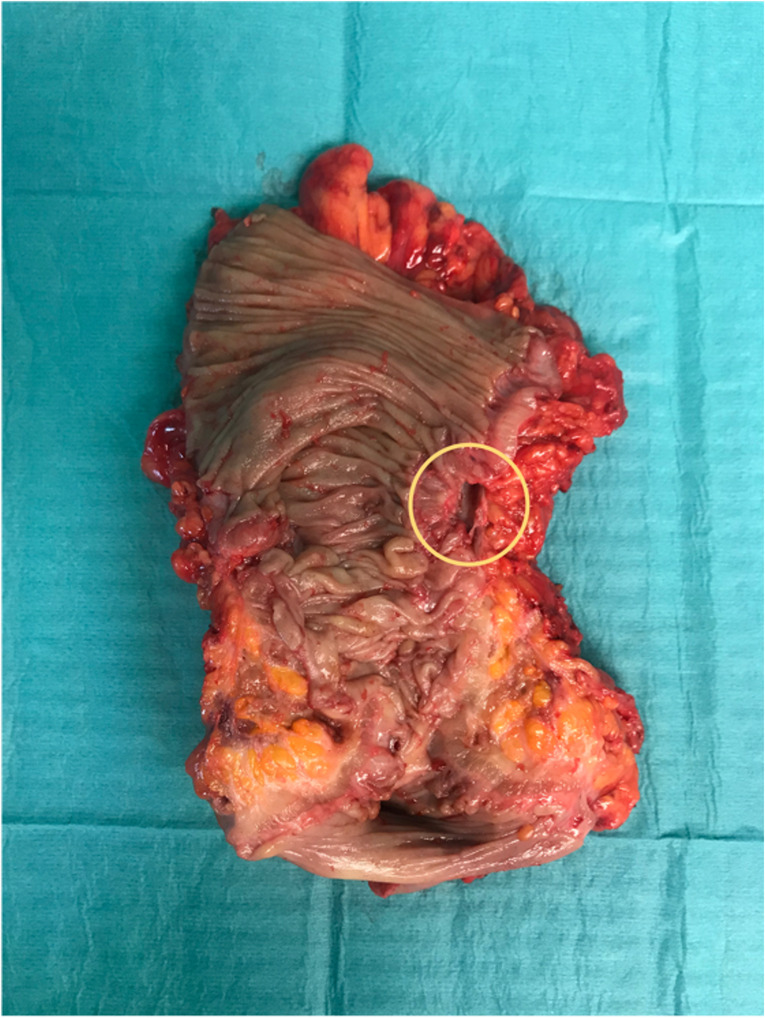 Figure 1
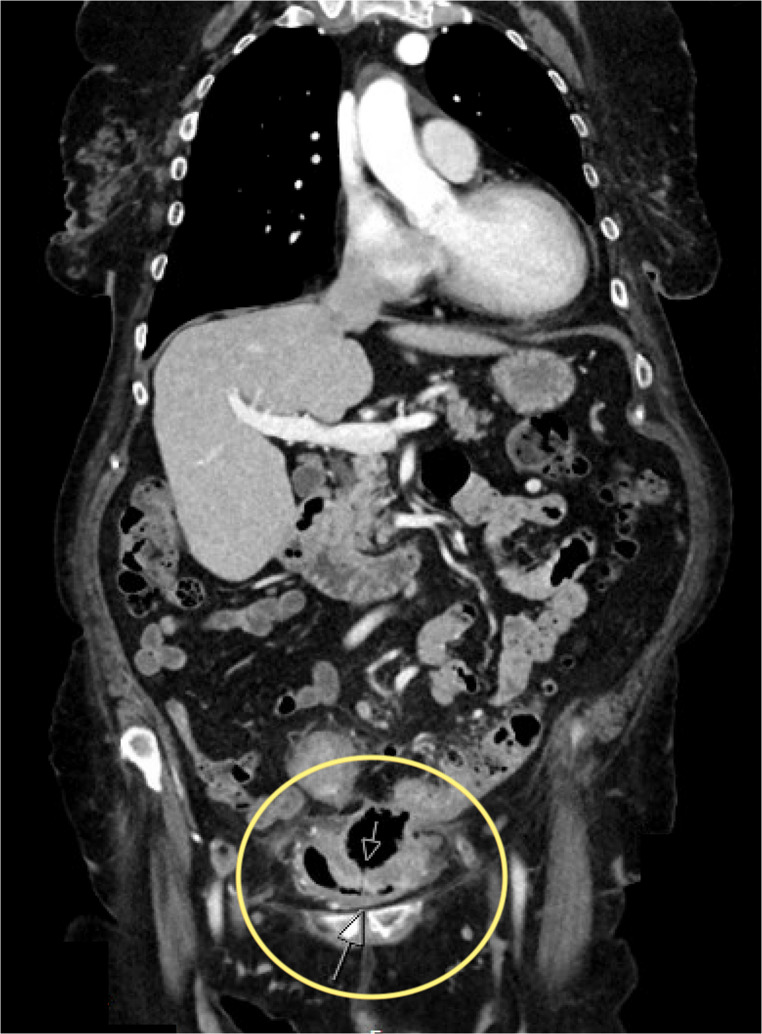 Figure 2
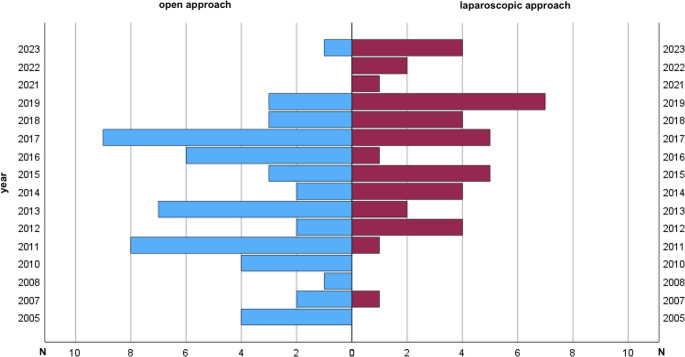 Figure 3
Peer Reviews
No public reviews on file for this paper yet. If you reviewed it on a platform where reviews are public (OpenReview, ICLR, NeurIPS, ICML), you can paste yours below so the community can read it here.
Videos
No videos yet. Explain this paper in a talk, walkthrough, or lecture? Add one.
Taxonomy
TopicsDiverticular Disease and Complications · Anorectal Disease Treatments and Outcomes · Biliary and Gastrointestinal Fistulas