Podocyte specific exon skipping after disease onset improves kidney pathology and function in a mouse model of Alport syndrome
Kentarou Hashikami, Ryosuke Kobayashi, Ryotaro Hori, Kenta Danbayashi, Yasunori Nio

TL;DR
A new mouse model shows that skipping a specific gene exon after disease onset can improve kidney function and pathology in Alport syndrome.
Contribution
A tamoxifen-inducible, podocyte-specific exon-skipping model for Alport syndrome enables post-onset therapeutic evaluation.
Findings
Exon skipping restored collagen IV α5 expression and improved kidney function in mice.
Post-onset treatment reversed glomerular injury and ameliorated kidney pathology.
The model supports the feasibility of exon-skipping therapies for monogenic kidney diseases.
Abstract
Alport syndrome (AS) is a hereditary kidney disorder caused by mutations in COL4A3, COL4A4, and COL4A5, which often lead to progressive renal failure. Although angiotensin II receptor blockers are available for symptomatic treatment, no radical or curative therapies currently exist. Given the genetic basis of AS, exon-skipping therapy has the potential to serve as a definitive treatment. In this study, we established a tamoxifen-inducible exon 21–skipping mouse model, enabling the evaluation of post-onset therapeutic intervention. We generated a novel AS mouse model harboring a patient-derived nonsense mutation (R471*) in exon 21 of Col4a5 on a C57BL/6 background. Using this strain, we further developed a tamoxifen-inducible, podocyte-specific exon 21–skipping model. Induction of exon skipping, either before or after disease onset, restored truncated collagen IV α5 expression, improved…
Genes, proteins, chemicals, diseases, species, mutations and cell lines named across the full text — each resolved to its canonical identifier and authoritative record.
Click any figure to enlarge with its caption.
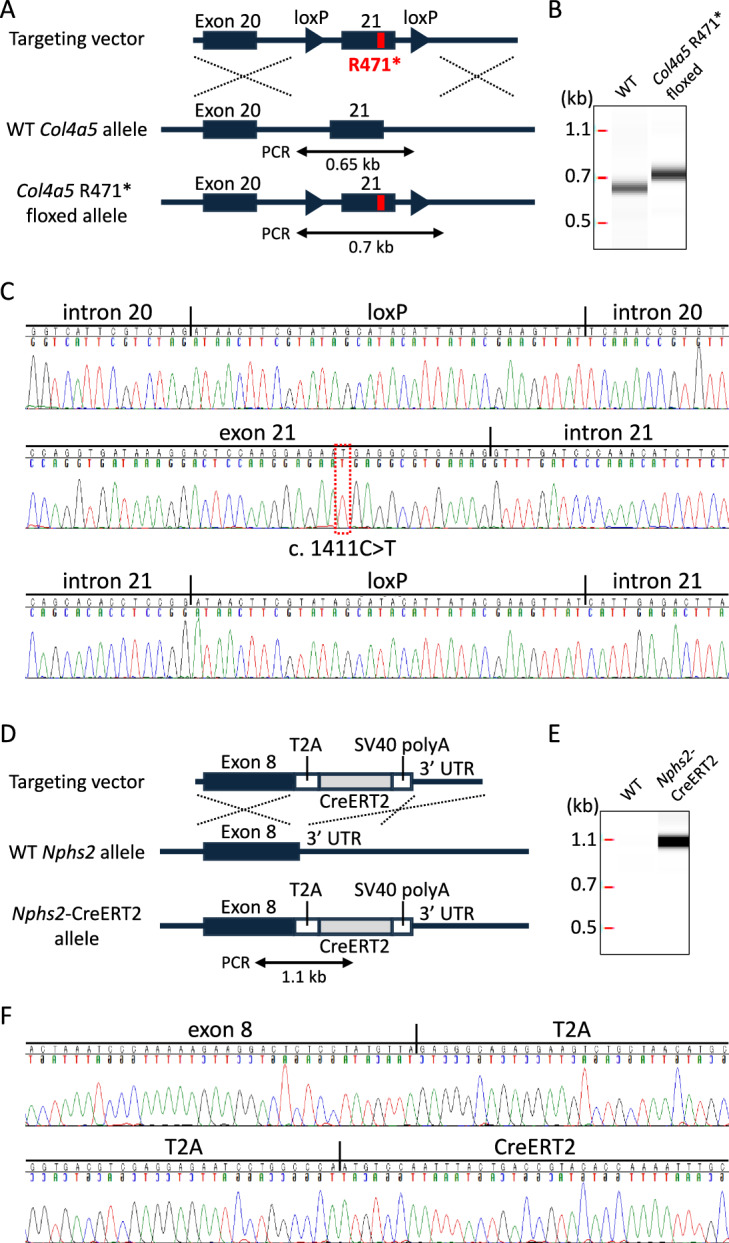 Figure 1
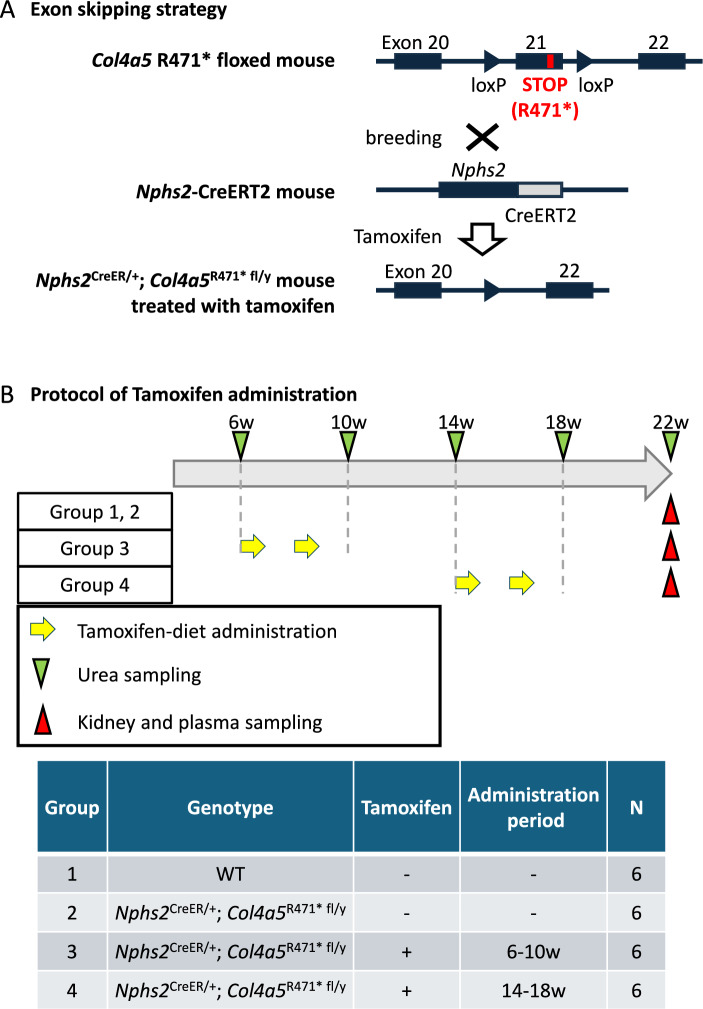 Figure 2
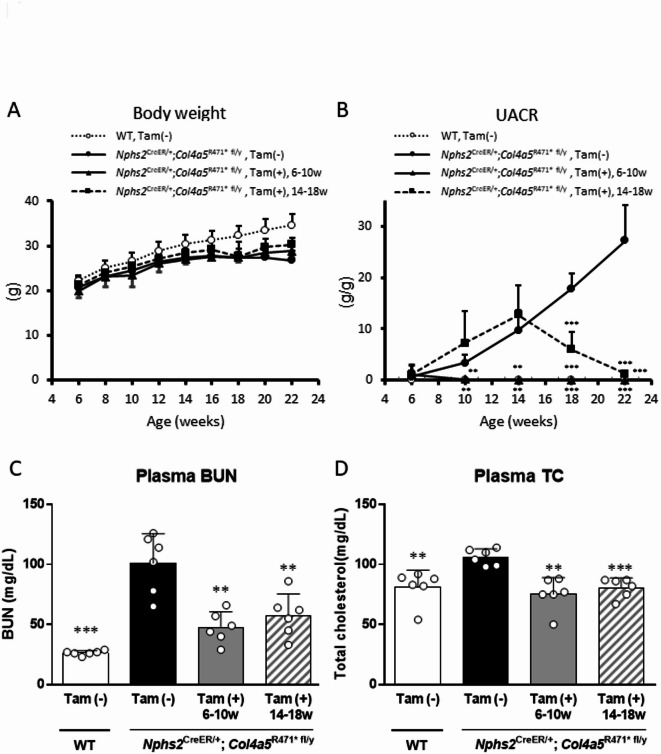 Figure 3
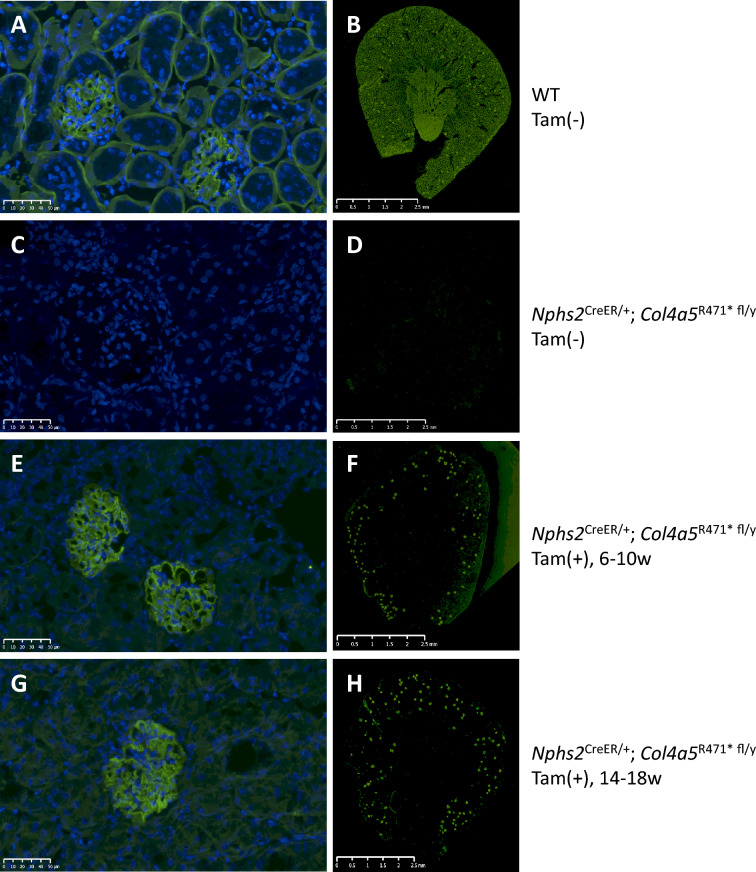 Figure 4
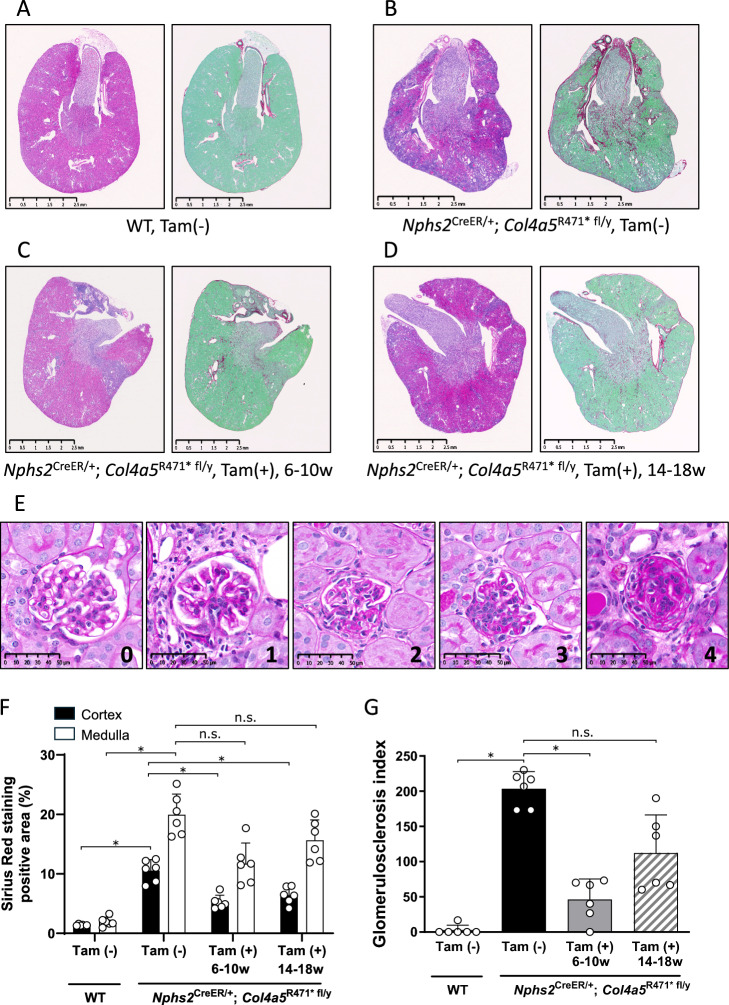 Figure 5
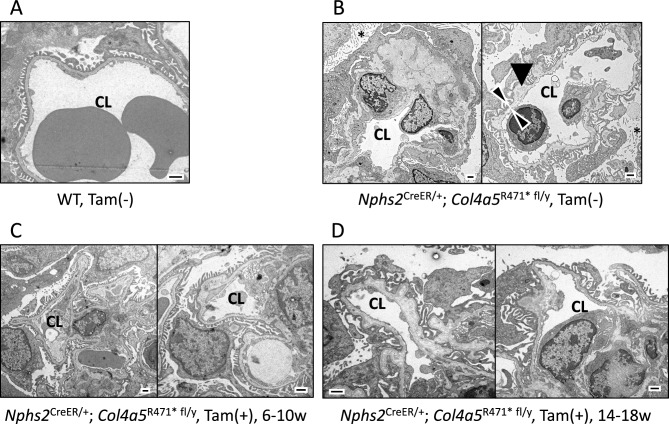 Figure 6
Peer Reviews
No public reviews on file for this paper yet. If you reviewed it on a platform where reviews are public (OpenReview, ICLR, NeurIPS, ICML), you can paste yours below so the community can read it here.
Videos
No videos yet. Explain this paper in a talk, walkthrough, or lecture? Add one.
Taxonomy
TopicsCell Adhesion Molecules Research · Renal and related cancers · Renal Diseases and Glomerulopathies