The ability to divide spatial attention across non-contiguous locations develops in middle childhood
Tashauna L. Blankenship, Roger Strong, Melissa M. Kibbe

TL;DR
The ability to split attention between non-contiguous locations emerges during middle childhood, as shown by comparing performance in children and adults.
Contribution
This study reveals the developmental timeline of multifocal spatial attention in children.
Findings
8-year-olds and adults showed better performance on valid trials, indicating multifocal attention.
6-year-olds performed similarly on invalid trials, suggesting a single focus of attention.
The ability to divide attention between non-contiguous locations develops during middle childhood.
Abstract
Adults can effectively divide visual attention across non-contiguous spatial locations. However, it is currently unknown whether the ability to deploy multifocal attention is a hallmark of human endogenous attention, or whether this ability develops with maturation of the neural areas that support deployment of attention across multiple locations. Across two experiments we investigated children’s and adults’ ability to split attention in an adaptation of Awh and Pashler’s (Journal of Experimental Psychology, 26[2], 834–846, 2000) task. Participants were cued to attend to two non-contiguous spatial locations in an array of six locations. In Valid trials, participants were probed to report the identity of the digit that appeared briefly in one or both of the cued locations. In Invalid trials, participants were probed to report the identity of the digit that appeared in an uncued location…
Genes, proteins, chemicals, diseases, species, mutations and cell lines named across the full text — each resolved to its canonical identifier and authoritative record.
Click any figure to enlarge with its caption.
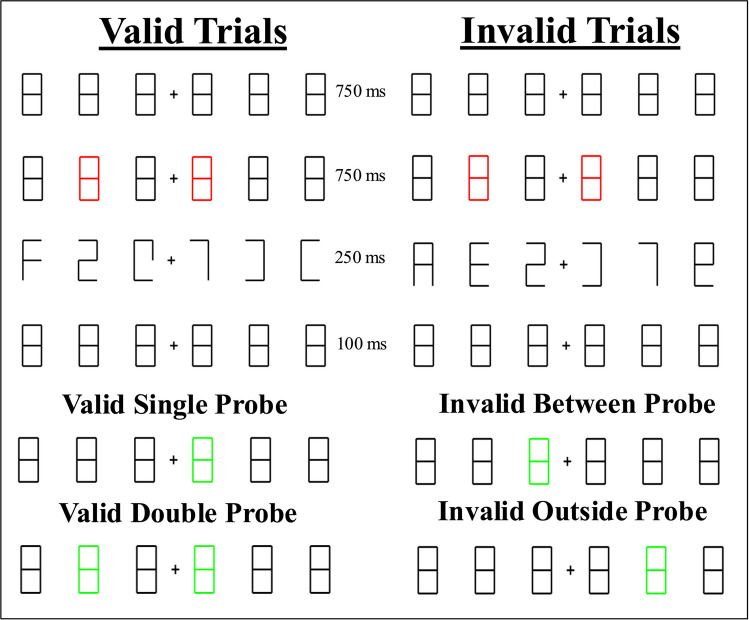 Figure 1
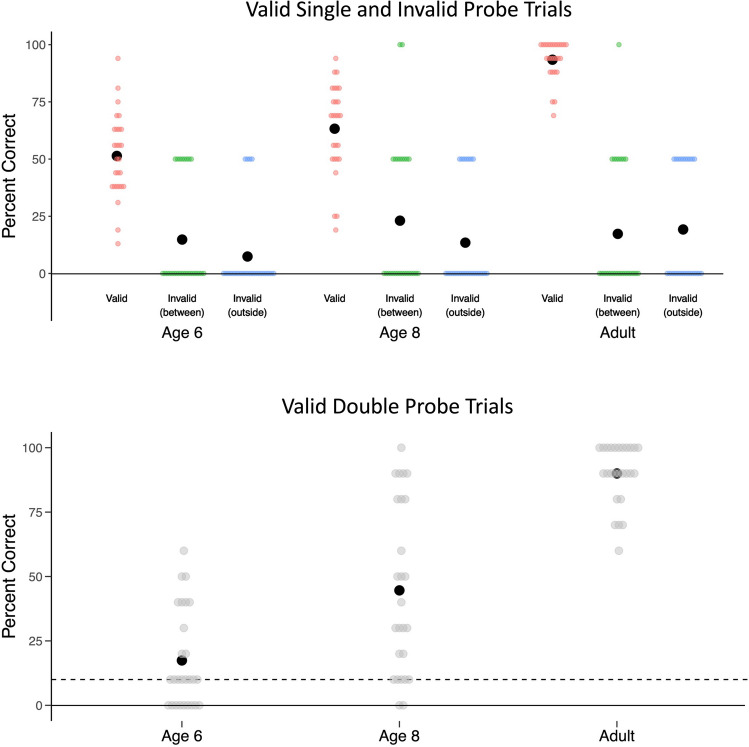 Figure 2
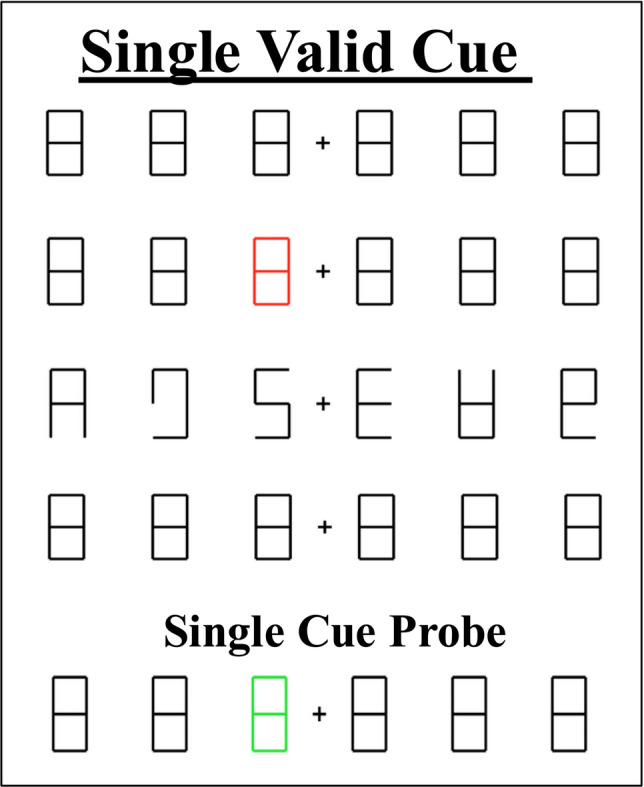 Figure 3
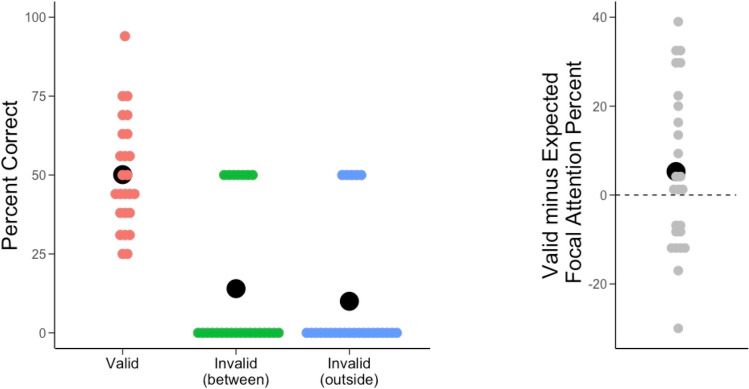 Figure 4
Peer Reviews
No public reviews on file for this paper yet. If you reviewed it on a platform where reviews are public (OpenReview, ICLR, NeurIPS, ICML), you can paste yours below so the community can read it here.
Videos
No videos yet. Explain this paper in a talk, walkthrough, or lecture? Add one.
Taxonomy
TopicsNeural and Behavioral Psychology Studies · Spatial Neglect and Hemispheric Dysfunction · Face Recognition and Perception