Comparing the effect of three levels of end-expiratory pressure during facemask ventilation on gastric insufflation in patients with obesity: a randomized controlled trial
Maha Mostafa, Ahmed Hasanin, Mohamed M. Zakaria, Hamza Kandel, Walid Hamimy, Ayman Abougabal, Mamdouh M. Elshal

TL;DR
This study found that higher end-expiratory pressure during face-mask ventilation increases gastric insufflation in obese patients, while lower pressure levels are safer.
Contribution
The study is the first to compare three end-expiratory pressure levels and their impact on gastric insufflation in obese patients under anesthesia.
Findings
High PEEP (8 cmH2O) significantly increased gastric insufflation compared to ZEEP and low PEEP.
ZEEP and low PEEP showed similar and lower rates of gastric insufflation.
Gastric insufflation occurred in all groups, but was most severe with high PEEP.
Abstract
We compared the effect of three levels of end-expiratory pressure on the incidence of gastric insufflation during face-mask ventilation in patients with obesity. This randomized controlled trial included adult obese patients undergoing elective non-cardiac surgery under general anesthesia with neuromuscular blockade. Patients were randomized to receive either zero-end-expiratory pressure (ZEEP group), 4-cmH2O positive end-expiratory pressure (PEEP) (low-PEEP group), or 8-cmH2O PEEP (high-PEEP group) during volume-controlled mask ventilation. Gastric antral cross-sectional area (CSA) was assessed using ultrasonography before induction of anesthesia and after intubation. The percentage of change (delta) in the CSA was calculated and gastric insufflation was considered significant when the delta CSA was > 30%. The primary outcome was the incidence of gastric insufflation. Secondary…
Genes, proteins, chemicals, diseases, species, mutations and cell lines named across the full text — each resolved to its canonical identifier and authoritative record.
Click any figure to enlarge with its caption.
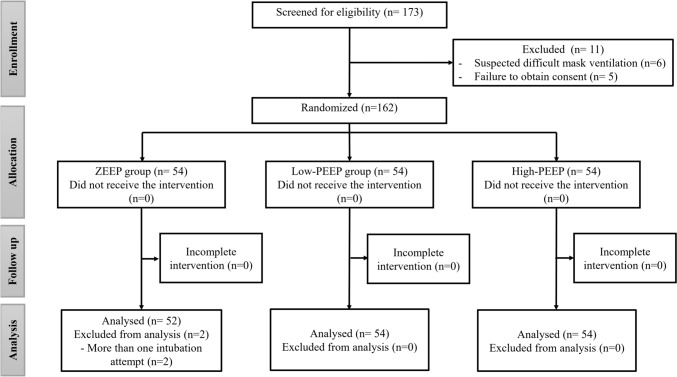 Figure 1
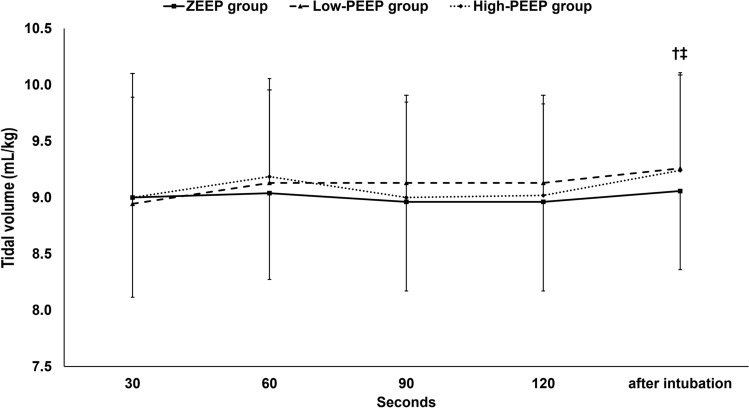 Figure 2
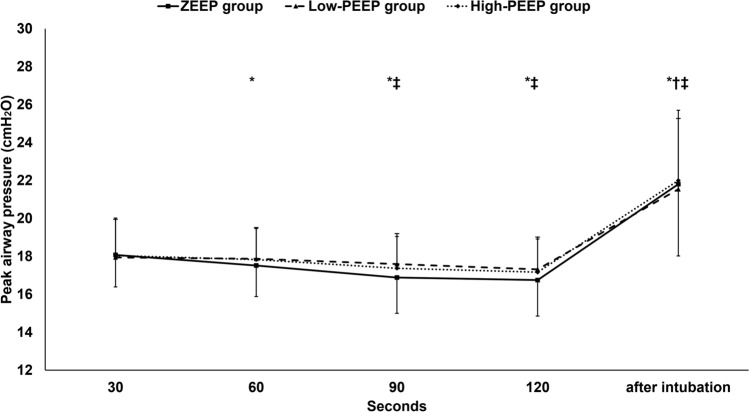 Figure 3
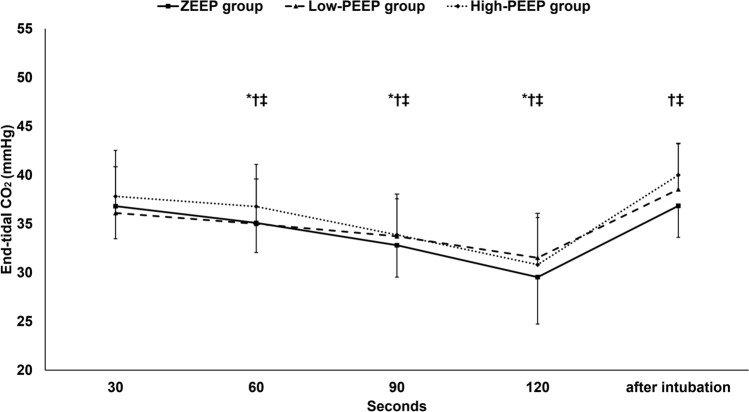 Figure 4
Peer Reviews
No public reviews on file for this paper yet. If you reviewed it on a platform where reviews are public (OpenReview, ICLR, NeurIPS, ICML), you can paste yours below so the community can read it here.
Videos
No videos yet. Explain this paper in a talk, walkthrough, or lecture? Add one.
Taxonomy
TopicsAirway Management and Intubation Techniques · Respiratory Support and Mechanisms · Tracheal and airway disorders