Zinc, copper, and magnesium in premenstrual disorders: a narrative review
Anna Julia Krupa, Magdalena Zybała-Pawłowska, Michał Kania, Justyna Turek, Bernadeta Szewczyk, Andreas M. Grabrucker, Marcin Siwek

TL;DR
This review explores how zinc, copper, and magnesium may influence premenstrual disorders and mood through their roles in brain signaling and hormone regulation.
Contribution
The paper reviews how zinc, copper, and magnesium may affect PMD through serotonin and GABA/glutamate pathways, linking them to mood regulation.
Findings
Zinc, copper, and magnesium levels are associated with premenstrual disorder symptoms.
Supplementation with these trace elements may alleviate PMD symptoms.
Current research suggests a link between trace element imbalances and mood dysregulation in PMD.
Abstract
Premenstrual disorders (PMD) are a prevalent health issue and often co-occur with mood disorders. The pathophysiology of PMD has not yet been thoroughly described. Two mechanisms appear to be crucial in PMD: (1) lower estrogen levels during the luteal phase, leading to a subsequent decrease in serotonin (5-HT) transmission, and (2) reduced sensitivity to allopregnanolone, resulting in an imbalance in γ-aminobutyric acid (GABA)/glutamate signaling and an increase in hypothalamic-pituitary-adrenal (HPA) activation. The roles of zinc (Zn), copper (Cu), and magnesium (Mg) in mood disorders are well-established, and they appear to be associated with PMD through similar pathways. Therefore, this narrative review provides background information on the roles of Zn, Cu, and Mg in mood regulation and discusses the impact of these trace elements on this process. The results presented, summarizing…
Genes, proteins, chemicals, diseases, species, mutations and cell lines named across the full text — each resolved to its canonical identifier and authoritative record.
Click any figure to enlarge with its caption.
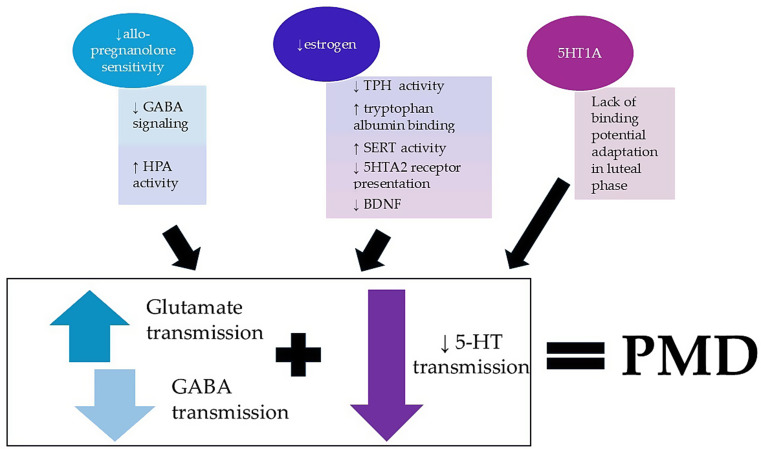 Figure 1
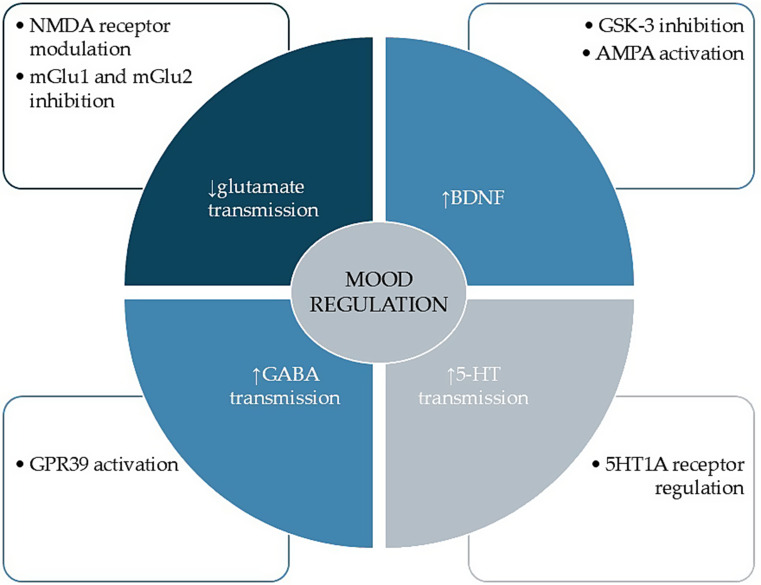 Figure 2
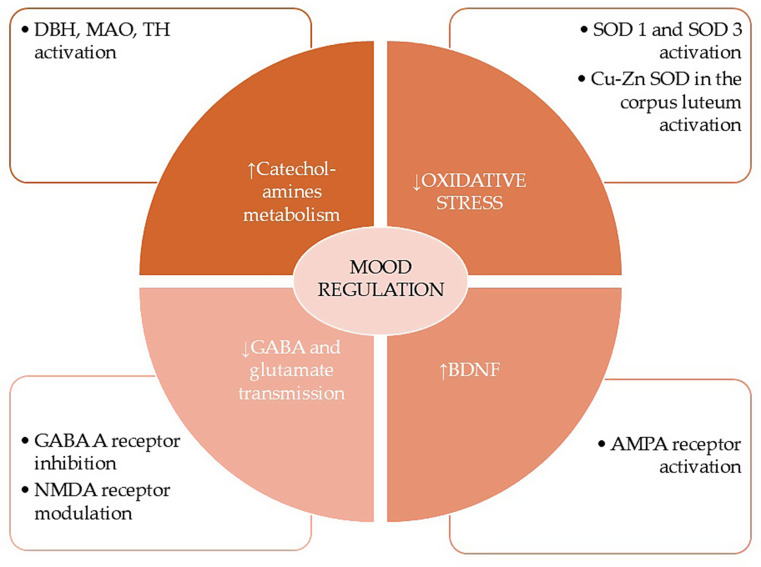 Figure 3
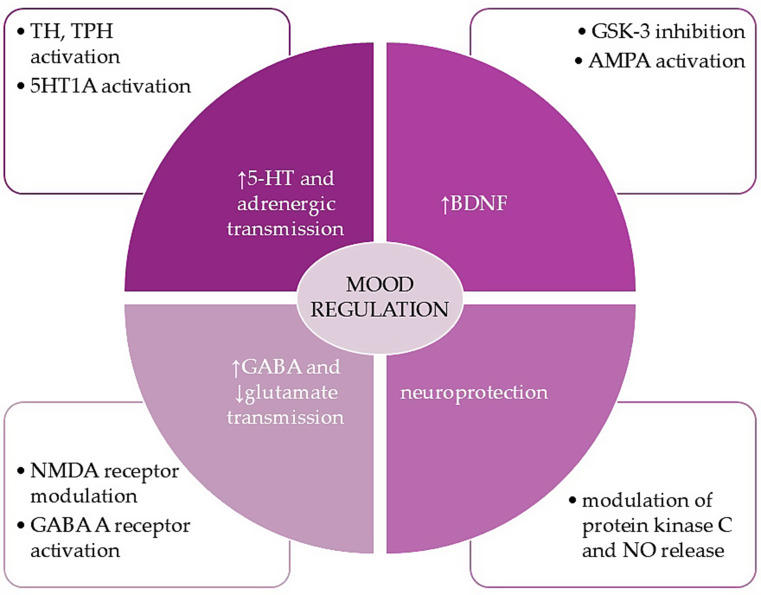 Figure 4
Peer Reviews
No public reviews on file for this paper yet. If you reviewed it on a platform where reviews are public (OpenReview, ICLR, NeurIPS, ICML), you can paste yours below so the community can read it here.
Videos
No videos yet. Explain this paper in a talk, walkthrough, or lecture? Add one.
Taxonomy
TopicsMenstrual Health and Disorders · Pregnancy-related medical research