Cancer-associated snaR-A noncoding RNA interacts with core splicing machinery and disrupts processing of mRNA subpopulations
Sihang Zhou, Simon Lizarazo, Sandip Chorghade, Leela Mouli, Ruiying Cheng, Rajendra K C, Auinash Kalsotra, Kevin Van Bortle

TL;DR
A cancer-related noncoding RNA called snaR-A disrupts mRNA splicing and promotes cell growth, potentially contributing to cancer progression.
Contribution
Identifies snaR-A as a novel splicing antagonist that may phenocopy U2 snRNP mutations in cancer.
Findings
snaR-A interacts with splicing factors like SF3B2 and localizes near splicing machinery foci.
snaR-A overexpression causes intron retention and inefficient splicing, while its depletion improves splicing and reduces proliferation.
snaR-A is linked to poor outcomes in cancer patients and may represent a non-mutational mechanism of splicing dysregulation.
Abstract
Expansion of RNA polymerase III (Pol III) activity in cancer can activate the transcription of typically silent small RNA genes, including snaR-A (small NF90-associated RNA isoform A), a hominid-specific noncoding RNA that promotes cell proliferation through unclear mechanisms. Here, we show that snaR-A interacts with mRNA splicing factors, including the U2 small nuclear ribonucleoprotein (snRNP) subunit SF3B2, and localizes near subnuclear foci enriched in splicing machinery. Overexpression of snaR-A increases intron retention, a hallmark of inefficient splicing, whereas its depletion enhances splicing of mRNAs characterized by high U2 snRNP occupancy and nuclear speckle proximity. These improvements in splicing coincide with reduced cell proliferation, consistent with tumor-level patterns linking snaR-A to growth in primary cancers. Together, these findings identify snaR-A as a…
Genes, proteins, chemicals, diseases, species, mutations and cell lines named across the full text — each resolved to its canonical identifier and authoritative record.
Click any figure to enlarge with its caption.
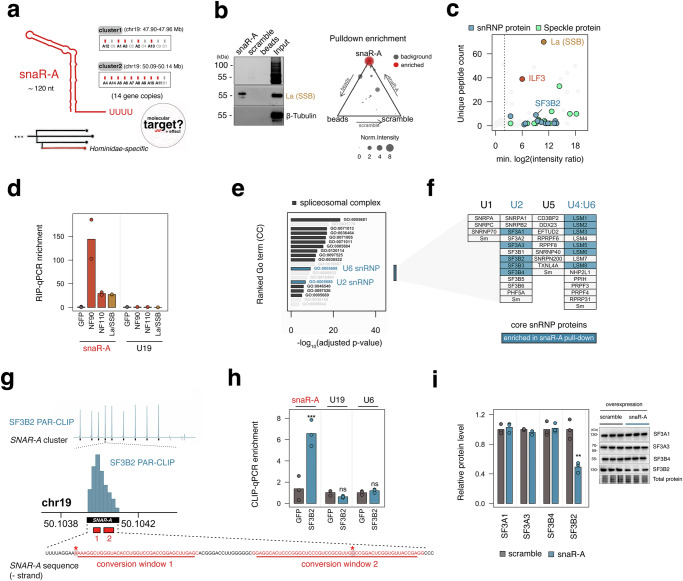 Figure 1
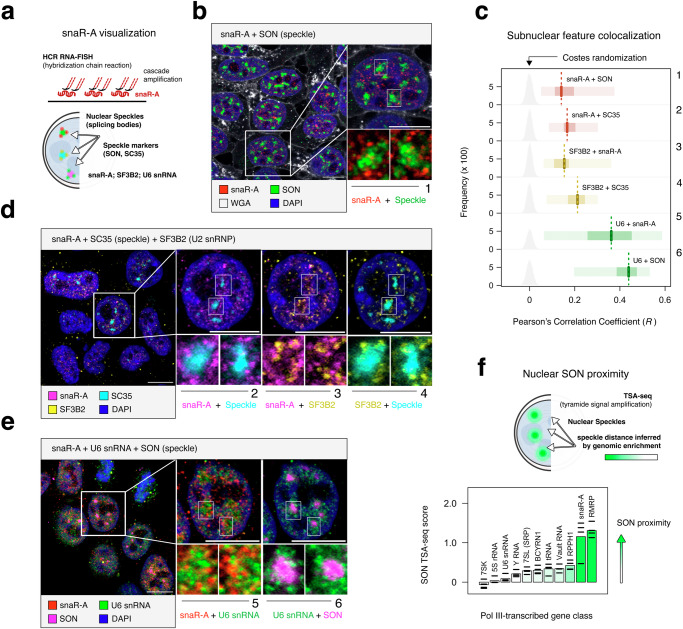 Figure 2
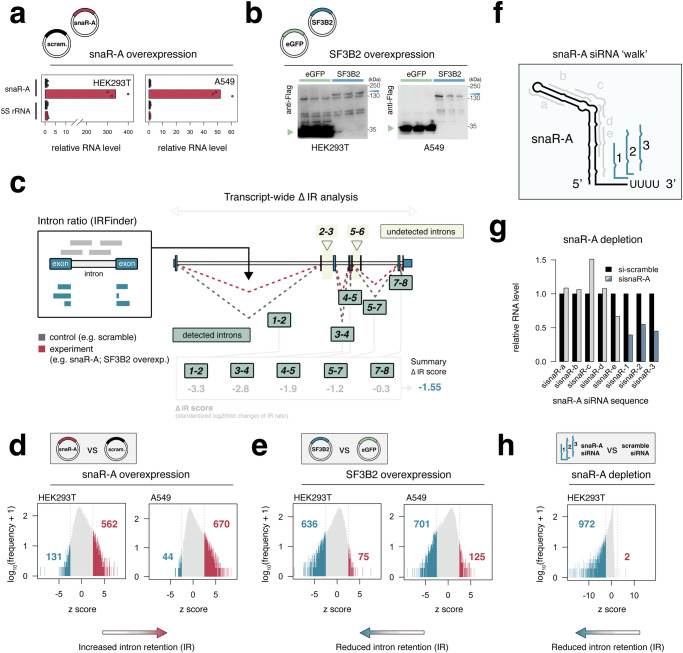 Figure 3
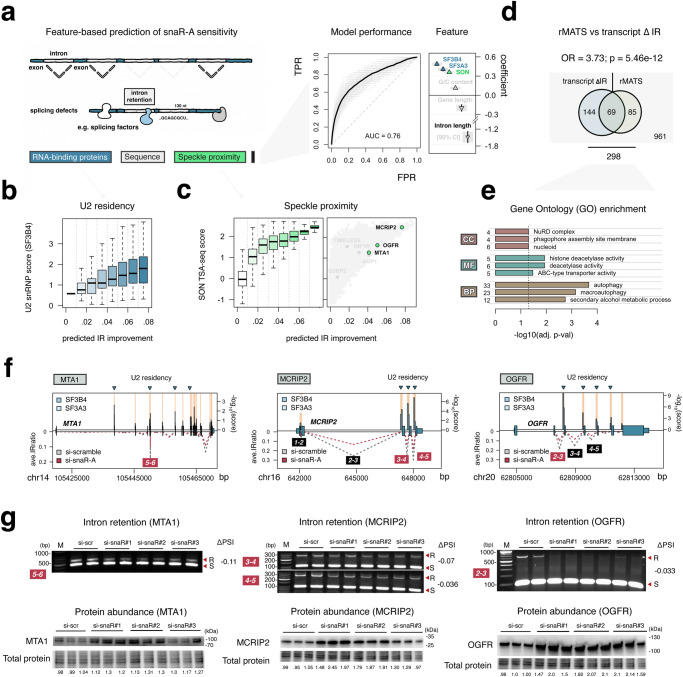 Figure 4
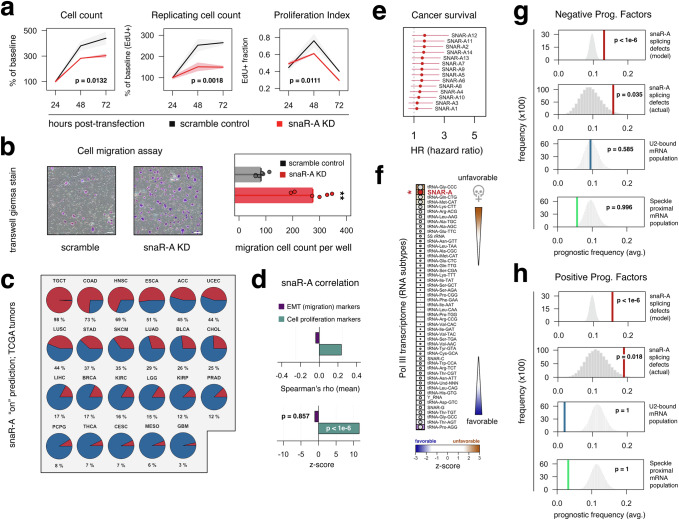 Figure 5
Peer Reviews
No public reviews on file for this paper yet. If you reviewed it on a platform where reviews are public (OpenReview, ICLR, NeurIPS, ICML), you can paste yours below so the community can read it here.
Videos
No videos yet. Explain this paper in a talk, walkthrough, or lecture? Add one.
Taxonomy
TopicsRNA regulation and disease · RNA Research and Splicing · Cancer-related molecular mechanisms research