The precision principle: driving biological self-organization
Raymond Roy, Kiranpreet Sidhu, Gabriel Byczynski, Amedeo D’Angiulli, Birgitta Dresp-Langley

TL;DR
The paper introduces the Precision Principle, a new framework explaining how biological systems self-organize through constraint-driven coherence.
Contribution
The Precision Principle is introduced as a novel integrative framework combining structural, functional, and evolutionary precision in biological systems.
Findings
Precision is defined as constraint-driven coherence, shaping nervous system architecture and function.
The Precision Coefficient formalizes the balance between network coherence and resource cost.
The framework aligns with Hebbian reinforcement and synaptic competition mechanisms.
Abstract
In this perspective, we introduce the Precision Principle as a unifying theoretical framework to explain self-organization across biological systems. Drawing from neurobiology, systems theory, and computational modeling, we propose that precision, understood as constraint-driven coherence, is the key force shaping the architecture, function, and evolution of nervous systems. We identify three interrelated domains: Structural Precision (efficient, modular wiring), Functional Precision (adaptive, context-sensitive circuit deployment), and Evolutionary Precision (selection-guided architectural refinement). Each domain is grounded in local operations such as spatial and temporal averaging, multiplicative co-activation, and threshold gating, which enable biological systems to achieve robust organization without centralized control. Within this framework, we introduce the Precision…
Genes, proteins, chemicals, diseases, species, mutations and cell lines named across the full text — each resolved to its canonical identifier and authoritative record.
Click any figure to enlarge with its caption.
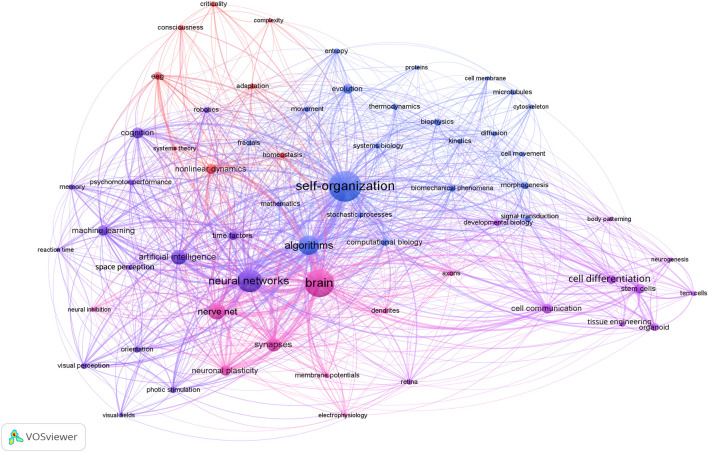 Figure 1
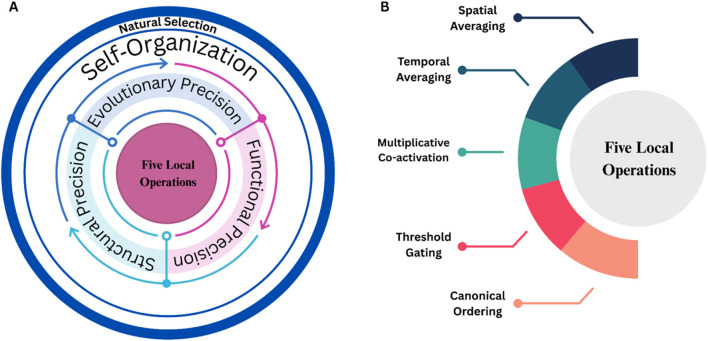 Figure 2
Peer Reviews
No public reviews on file for this paper yet. If you reviewed it on a platform where reviews are public (OpenReview, ICLR, NeurIPS, ICML), you can paste yours below so the community can read it here.
Videos
No videos yet. Explain this paper in a talk, walkthrough, or lecture? Add one.
Taxonomy
TopicsSlime Mold and Myxomycetes Research · Evolutionary Algorithms and Applications · Modular Robots and Swarm Intelligence