Diabetes and traditional remedies in Medieval Persia: a historical perspective
Fereshteh Safavi, Adolfo Andrade-Cetto, Sonia M. Escandón-Rivera

TL;DR
This paper explores how Medieval Persian medicine classified and treated diabetes using traditional remedies and temperament theory.
Contribution
The study systematically classifies traditional Persian diabetes into 'hot' and 'cold' types and identifies 208 plant species used in its treatment.
Findings
TPM classifies diabetes into 'hot' and 'cold' types, possibly corresponding to early and advanced stages of diabetes.
208 plant species from 81 botanical families were identified in traditional formulations for diabetes.
Traditional treatments aimed to rebalance temperament rather than just relieve symptoms.
Abstract
Traditional Persian Medicine (TPM) has long contributed to the diagnosis, prevention, and treatment of diabetes. Rooted in the theory of temperament, TPM classifies individuals and diseases according to four qualities: warm-dry, warm-wet, cold-wet, and cold-dry. In classical TPM literature, diabetes is referred to by various names—most notably “dhiabitos” and “dulāb”—and is consistently associated with dysfunction of the kidneys and liver. For this study, seminal TPM texts were systematically reviewed using targeted keywords to extract definitions, etiologies, symptoms, diagnostic criteria, and therapeutic strategies related to diabetes. These findings were supplemented with data from electronic databases, including ScienceDirect, PubMed, and Scopus. TPM classifies diabetes into two categories: hot and cold. Historical manuscripts detail a wide array of therapeutic preparations,…
Genes, proteins, chemicals, diseases, species, mutations and cell lines named across the full text — each resolved to its canonical identifier and authoritative record.
Click any figure to enlarge with its caption.
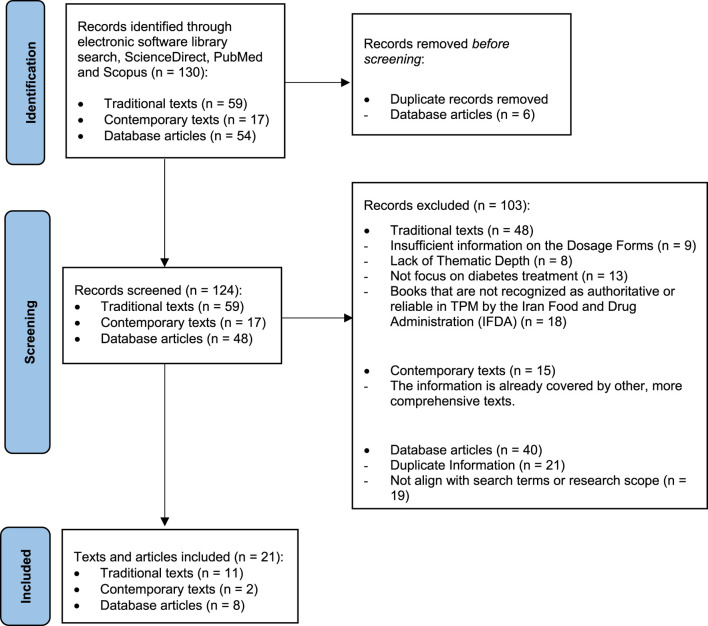 Figure 1
Peer Reviews
No public reviews on file for this paper yet. If you reviewed it on a platform where reviews are public (OpenReview, ICLR, NeurIPS, ICML), you can paste yours below so the community can read it here.
Videos
No videos yet. Explain this paper in a talk, walkthrough, or lecture? Add one.
Taxonomy
TopicsHistory of Medicine Studies · Eurasian Exchange Networks · Pharmacological Effects of Medicinal Plants