Third-child fertility intentions and influencing factors among female workers of reproductive age in Shandong under China's three-child policy
Yanxia Qi, Guiyun Wang, Jinke Kuang, Wenjing Xu, Yingxin Zhang, Xiuzhen Mu, Jinnan Xiao

TL;DR
This study explores why few female workers in Shandong, China, want a third child and what factors influence their decision.
Contribution
The study identifies specific factors influencing third-child fertility intentions among female workers in Shandong under China's three-child policy.
Findings
Only 10.3% of female workers in Shandong expressed intentions to have a third child.
Demographic, behavioral, and perceived control factors significantly influence third-child fertility intentions.
Subjective norms did not show statistically significant associations with fertility intentions.
Abstract
The persistent decline in global fertility rates, coupled with women's growing professionalization, has led to low third-child fertility intentions among female workers, a common challenge across low-fertility countries. This study examined third-child fertility intentions and their influencing factors among reproductive-age female workers in Shandong Province, China. Using snowball sampling, 1,358 female workers aged 20–49 years in Shandong Province, China were recruited through personal networks from April–May 2024 and referrals to ensure a diverse yet targeted sample. Based on the theory of planned behavior, we collected data on demographic characteristics, behavioral attitudes, subjective norms, and perceived control factors using a self-administered questionnaire distributed through a popular online survey platform. We used descriptive analysis, chi-squared tests, and binary…
Genes, proteins, chemicals, diseases, species, mutations and cell lines named across the full text — each resolved to its canonical identifier and authoritative record.
Click any figure to enlarge with its caption.
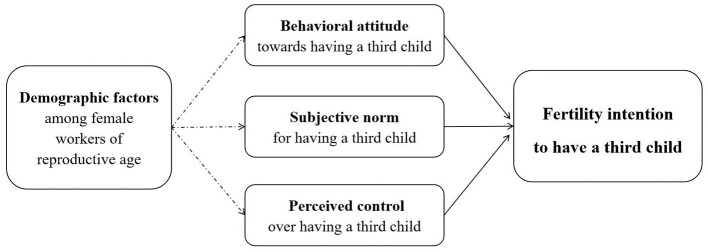 Figure 1
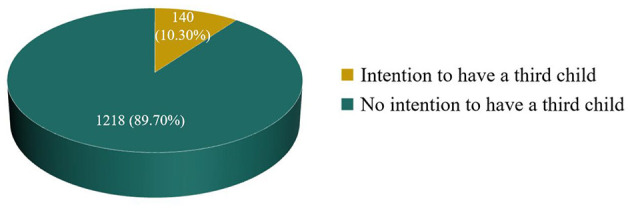 Figure 2
 Figure 3
Peer Reviews
No public reviews on file for this paper yet. If you reviewed it on a platform where reviews are public (OpenReview, ICLR, NeurIPS, ICML), you can paste yours below so the community can read it here.
Videos
No videos yet. Explain this paper in a talk, walkthrough, or lecture? Add one.
Taxonomy
TopicsDemographic Trends and Gender Preferences · Family Dynamics and Relationships · Intergenerational Family Dynamics and Caregiving