Case Report: Compound heterozygous KCTD7 variants in two siblings presenting with myoclonic epilepsy and ataxia
Jingjing Song, Wenlin Wu, Yang Tian, Luoxiao Qin, Shitao Wei, Bin Yu, Hao Su, Liping Huang, Wenhui Liu, Xiaoli Huang

TL;DR
Two siblings with myoclonic epilepsy and ataxia were found to have compound heterozygous KCTD7 gene variants, expanding the known genetic causes of this rare disorder.
Contribution
The report identifies a novel KCTD7 variant and expands the genetic and phenotypic spectrum of KCTD7-related progressive myoclonic epilepsy.
Findings
Compound heterozygous KCTD7 variants (c.334C > T and c.640C > T) were identified in two siblings with PME.
In silico analysis suggests both variants disrupt protein stability and function.
Immunotherapy showed partial clinical benefit in one patient despite persistent cognitive deficits.
Abstract
Biallelic variants in KCTD7 have been associated with progressive myoclonic epilepsy (PME), a rare autosomal recessive disorder characterized by early-onset epilepsy, cognitive decline, myoclonus, and ataxia. Whole-exome sequencing was first performed in the elder sister to identify candidate variants, followed by in silico pathogenicity prediction. Sanger sequencing was then used to validate the variants in both parents and the younger brother. We report two siblings with progressive myoclonic epilepsy (PME) carrying compound heterozygous KCTD7 variants: c.334C > T (p.Arg112Cys), a paternally inherited variant previously reported in homozygous form and currently classified as likely pathogenic, and c.640C > T (p.Arg214Trp), a novel maternally inherited variant currently classified as of uncertain significance. Both patients presented between 2 and 3 years of age with gait…
Genes, proteins, chemicals, diseases, species, mutations and cell lines named across the full text — each resolved to its canonical identifier and authoritative record.
Click any figure to enlarge with its caption.
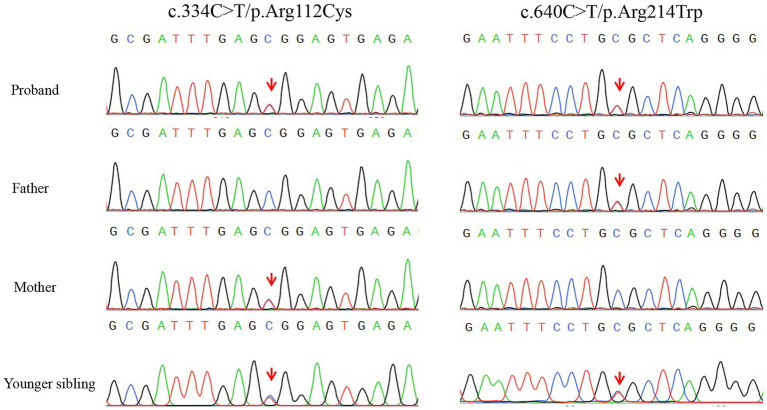 Figure 1
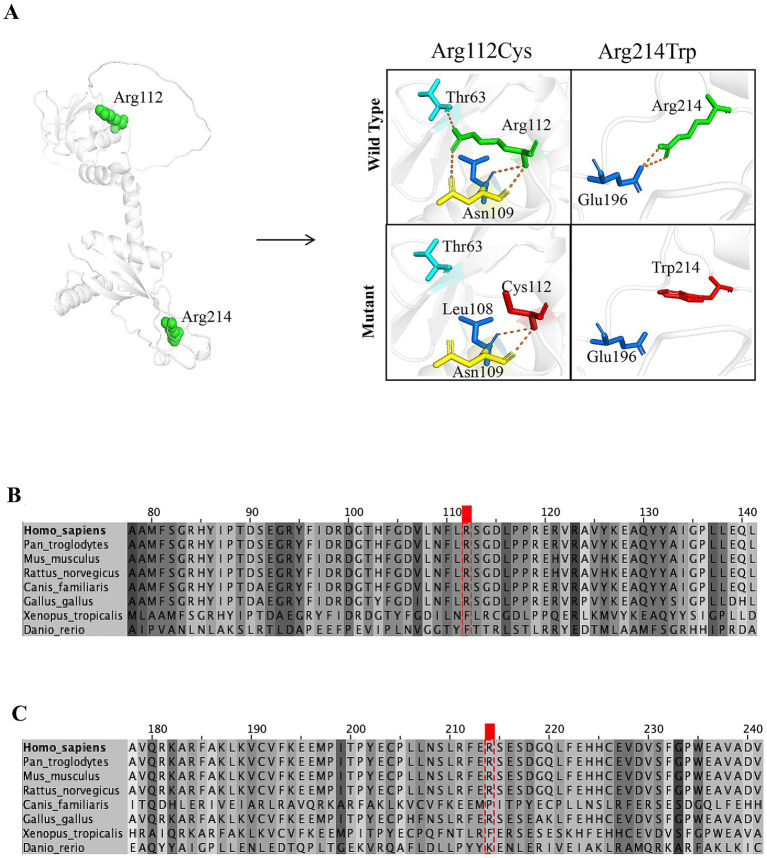 Figure 2
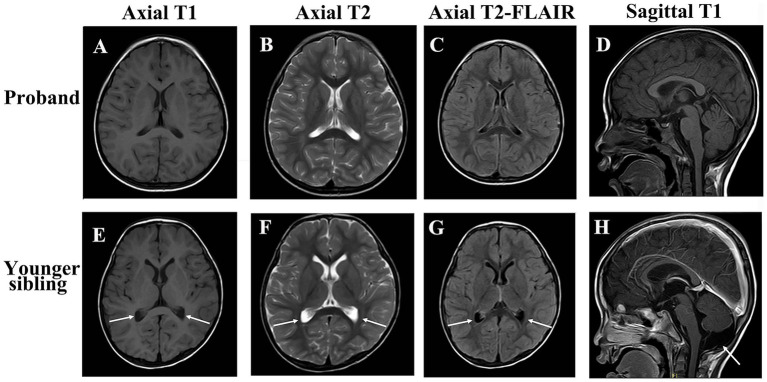 Figure 3
Peer Reviews
No public reviews on file for this paper yet. If you reviewed it on a platform where reviews are public (OpenReview, ICLR, NeurIPS, ICML), you can paste yours below so the community can read it here.
Videos
No videos yet. Explain this paper in a talk, walkthrough, or lecture? Add one.
Taxonomy
TopicsGlycogen Storage Diseases and Myoclonus · Genomics and Rare Diseases · Genetic Neurodegenerative Diseases