Tigecycline pharmacodynamics in the hollow fiber system of Mycobacterium avium-complex lung disease and the utility of MICs and time-kill studies in drug development
Devyani Deshpande, Shashikant Srivastava, Tawanda Gumbo

TL;DR
This study explores how tigecycline works against Mycobacterium avium-complex lung disease using lab models and virtual simulations to find effective treatment doses.
Contribution
The study introduces a more precise method for estimating drug effectiveness by using multiple MAC isolates in hollow fiber system models.
Findings
Tigecycline's EC50 for extracellular MAC was 174 AUC0–24/MIC, while for intracellular MAC it was 4.56.
Inhalational doses of 35–40 mg/day achieved the EC80 target in over 90% of virtual patients.
Using multiple MAC isolates in HFS-MAC improved the precision of pharmacodynamic parameter estimates.
Abstract
Guideline-based therapy (GBT) drugs for Mycobacterium avium-complex (MAC) lung disease (LD) were chosen in part because they have low minimum inhibitory concentrations (MICs). Despite these low MICs, GBT achieves 6-month sustained sputum culture conversion in only 43% of patients. First, we co-incubated tigecycline with MAC for 7 days in time-kill studies and calculated the exposure mediating 50% of maximal effect (Emax), or EC50. Next, we performed tigecycline exposure-effect studies in the hollow fiber system of MAC (HFS-MAC) inoculated with the reference ATCC#700898 isolate. Third, we performed an exposure-effect study in the HFS-MAC inoculated with five clinical isolates. Finally, the target exposure (EC80) was used to identify a clinical dose of inhaled tigecycline for MAC-LD in 10,000 virtual subject Monte Carlo experiments (MCE). In time-kill studies, the EC50 was 0–24 h area…
Genes, proteins, chemicals, diseases, species, mutations and cell lines named across the full text — each resolved to its canonical identifier and authoritative record.
Click any figure to enlarge with its caption.
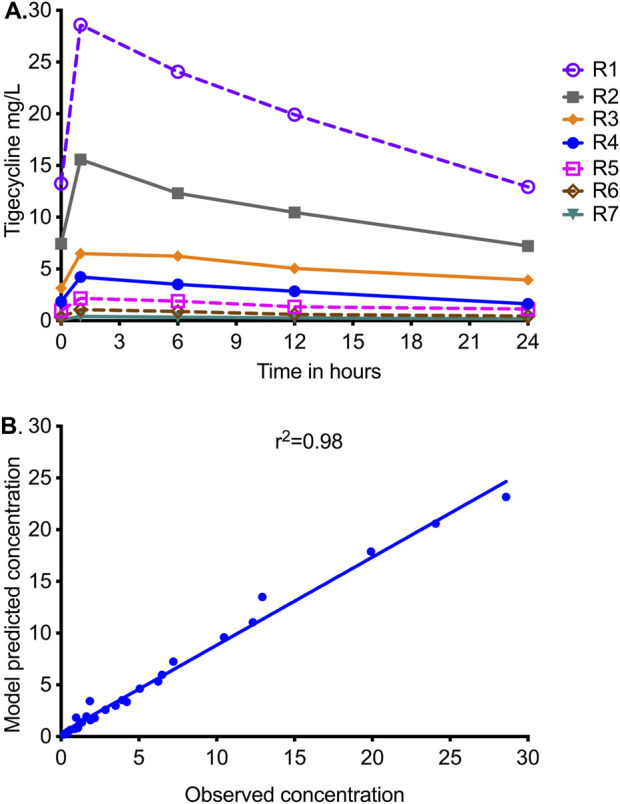 Figure 1
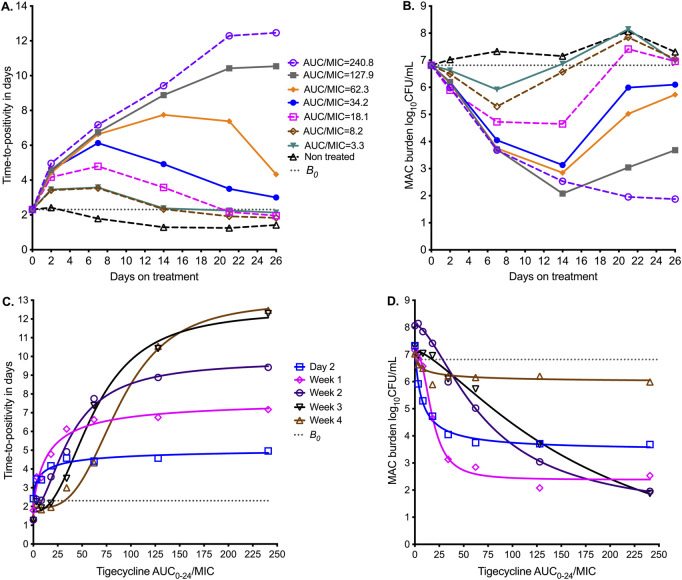 Figure 2
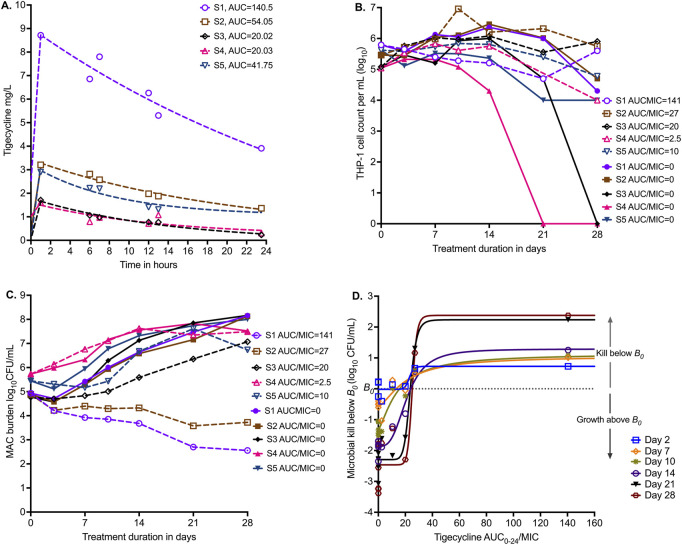 Figure 3
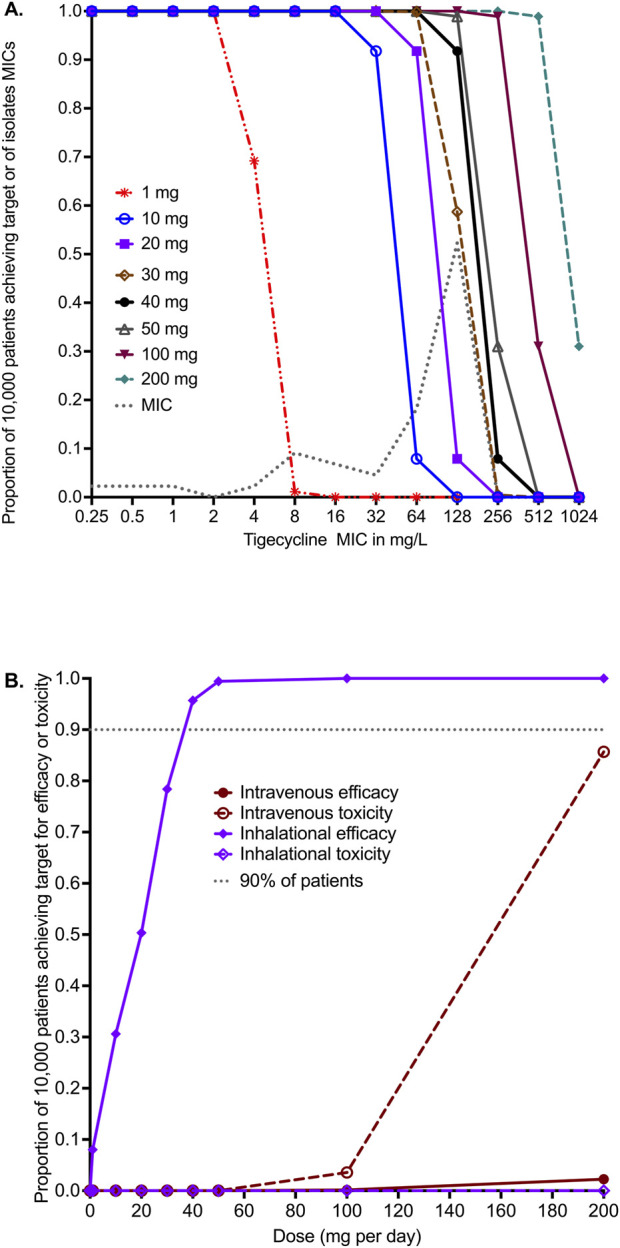 Figure 4
Peer Reviews
No public reviews on file for this paper yet. If you reviewed it on a platform where reviews are public (OpenReview, ICLR, NeurIPS, ICML), you can paste yours below so the community can read it here.
Videos
No videos yet. Explain this paper in a talk, walkthrough, or lecture? Add one.
Taxonomy
TopicsMycobacterium research and diagnosis · Tuberculosis Research and Epidemiology · Antibiotic Resistance in Bacteria