Mechanistic insights into pyrolysis temperature-dependent lead (Pb) stabilization in phytoremediation residue-derived biochar
Jin Liu, Yangyang Wang, Jun Pang, Jingao Wang, Tongtong Li, Lei Wang

TL;DR
This study shows that heating metal-rich plant waste at high temperatures can safely lock in lead, reducing its risk to the environment.
Contribution
The study identifies specific chemical mechanisms by which pyrolysis stabilizes lead in biochar at different temperatures.
Findings
Pyrolysis at 400°C stabilizes lead mainly through Pb2(P4O12) and PbCO3 formation.
At 500°C and above, Pb3(CO3)2(OH)2 and other compounds dominate lead immobilization.
Higher pyrolysis temperatures significantly reduce bioavailable lead fractions and ecological risk.
Abstract
The substantial generation of hazardous, metal-enriched biomass residues poses significant risks of secondary contamination, presenting a critical bottleneck to the broader implementation of phytoremediation that urgently requires effective treatment solutions. This study addressed this challenge by pyrolyzing Pb-enriched biomass (BMPb) across a temperature range (300 °C–700 °C) to produce Pb-enriched biochar (BCPb), evaluating its efficacy for safe residue management. The results demonstrated that pyrolysis effectively reduced the volume of BMPb, and the produced BCPb significantly enriched and immobilized Pb. Element analysis revealed distinct stabilization mechanisms: Pb2(P4O12) and PbCO3 precipitation dominated Pb immobilization at 400 °C, whereas Pb3(CO3)2(OH)2, Pb2(P4O12), and NaAlSiO4 became predominant at temperatures ≥500 °C. Sequential extraction of Pb (BCR) demonstrated a…
Genes, proteins, chemicals, diseases, species, mutations and cell lines named across the full text — each resolved to its canonical identifier and authoritative record.
Click any figure to enlarge with its caption.
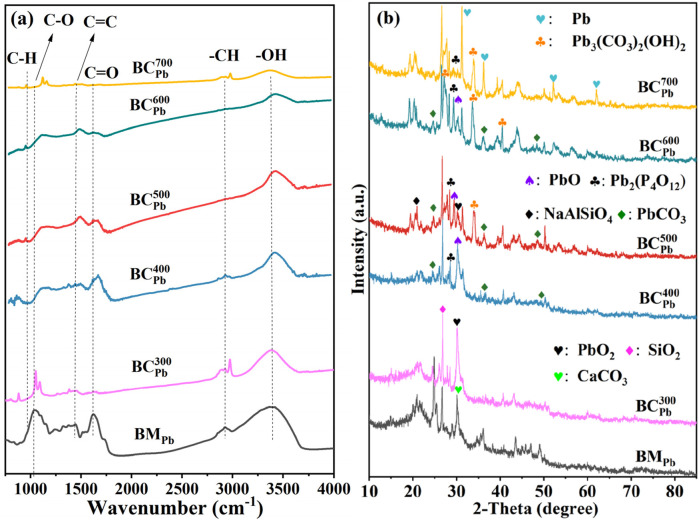 Figure 1
 Figure 2
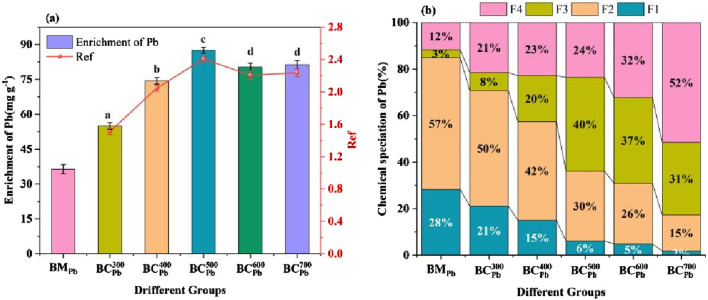 Figure 3
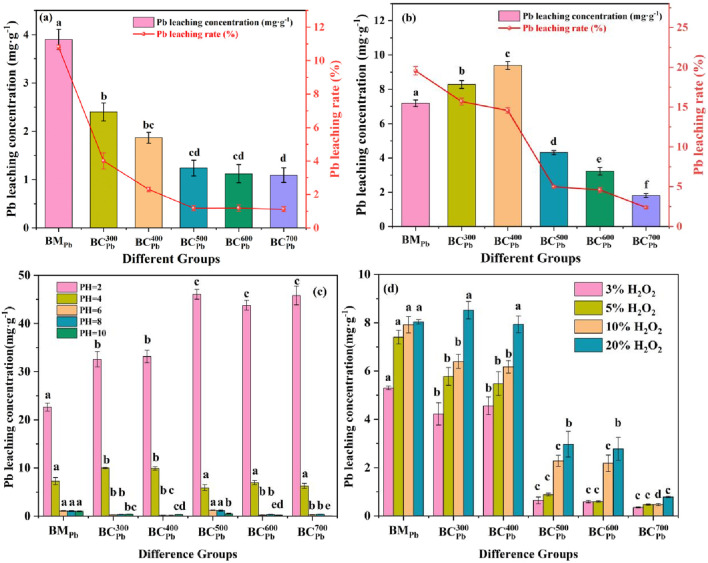 Figure 4
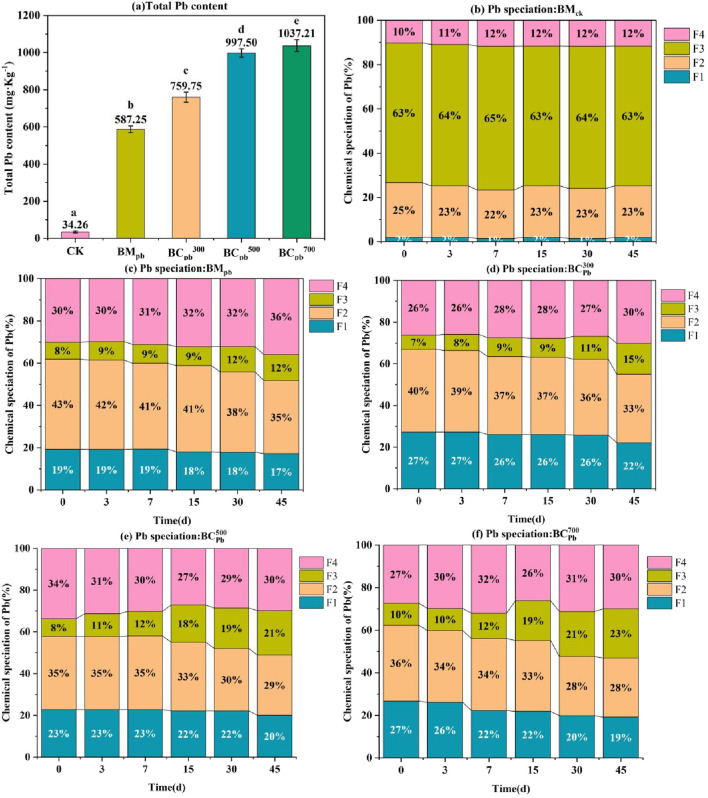 Figure 5
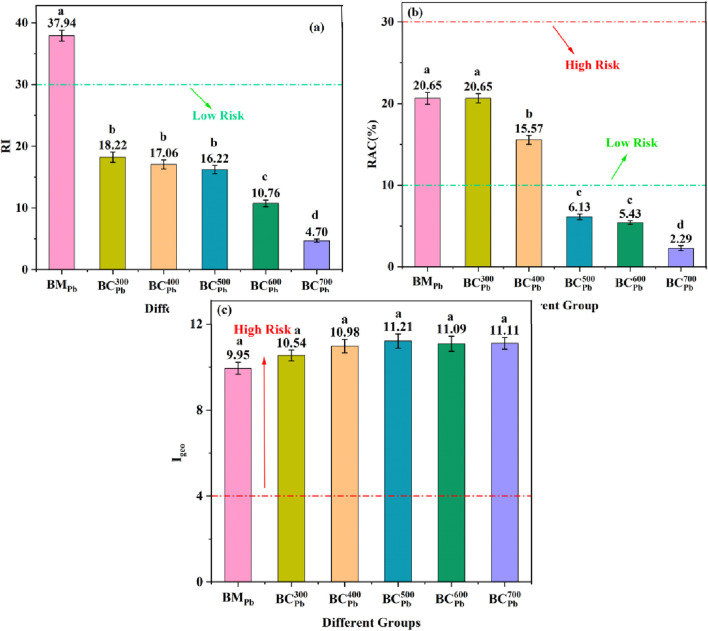 Figure 6
Peer Reviews
No public reviews on file for this paper yet. If you reviewed it on a platform where reviews are public (OpenReview, ICLR, NeurIPS, ICML), you can paste yours below so the community can read it here.
Videos
No videos yet. Explain this paper in a talk, walkthrough, or lecture? Add one.
Taxonomy
TopicsThermochemical Biomass Conversion Processes · Heavy metals in environment · Adsorption and biosorption for pollutant removal