TAAR9 knockout increases hippocampal serotonin and alters grooming behavior in rats
Ilya S. Zhukov, Inessa V. Karpova, Ramilya Z. Murtazina, Yazen Alnefeesi, Olga M. Korenkova, Ilia Yu. Tissen, Svetlana A. Palchikova, Lydia A. Tokareva, Sarng S. Pyurveev, Petr D. Shabanov, Larisa G. Kubarskaya, Mikhail A. Rozhko, Ekaterina B. Zernova

TL;DR
Deleting the TAAR9 gene in rats increases hippocampal serotonin and changes grooming behavior, suggesting a role in brain chemistry and behavior.
Contribution
This is the first study to show that TAAR9 regulates monoaminergic systems and subtle behavioral patterns in rats.
Findings
TAAR9-KO rats had increased hippocampal serotonin levels and altered dopamine turnover.
Changes in grooming behavior were observed, indicating subtle neurochemical effects.
No significant changes in anxiety-like behavior or systemic physiological parameters were found.
Abstract
Despite their association with brain disorders, the neurophysiological roles of the trace amine-associated receptors remain poorly understood. In humans, the genomic trace amine-associated receptor cluster comprises nine consecutive genes, six of which code for functional proteins (TAAR1, TAAR2, TAAR5, TAAR6, TAAR8, TAAR9). While homologues of the former three are known to regulate classical monoamines and neurogenesis, the functions of the latter three remain largely unknown. In this exploratory study, we demonstrate for the first time that TAAR9 plays a significant regulatory role in the monoaminergic systems of the rat. We used qPCR to measure TAAR9 mRNA expression throughout the rat brain. Serotonin, dopamine, and their metabolite levels were assessed by HPLC in brain tissues from TAAR9-KO and wild-type littermates. We applied fast-scan cyclic voltammetry to measure mesolimbic…
Genes, proteins, chemicals, diseases, species, mutations and cell lines named across the full text — each resolved to its canonical identifier and authoritative record.
Click any figure to enlarge with its caption.
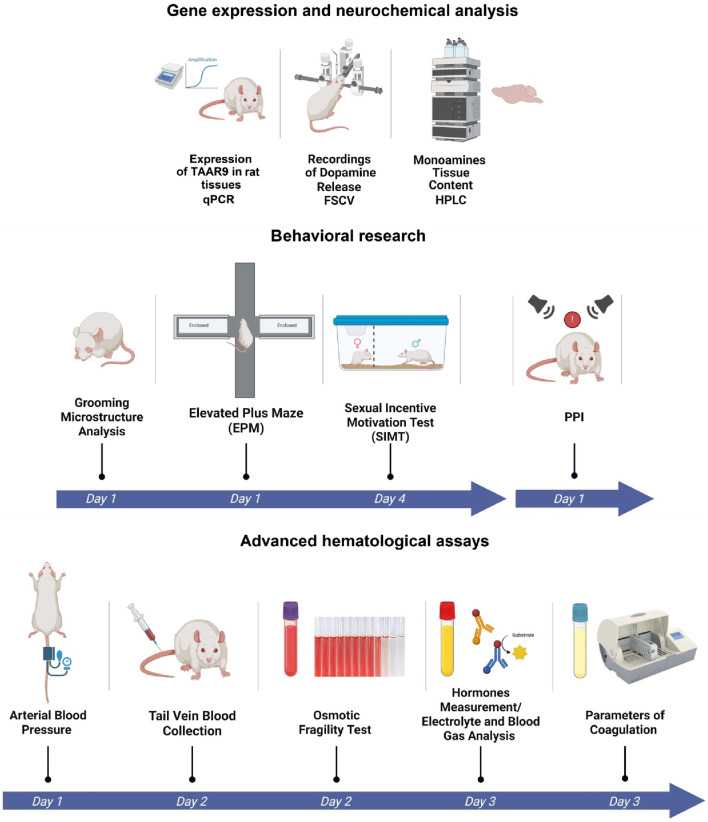 Figure 1
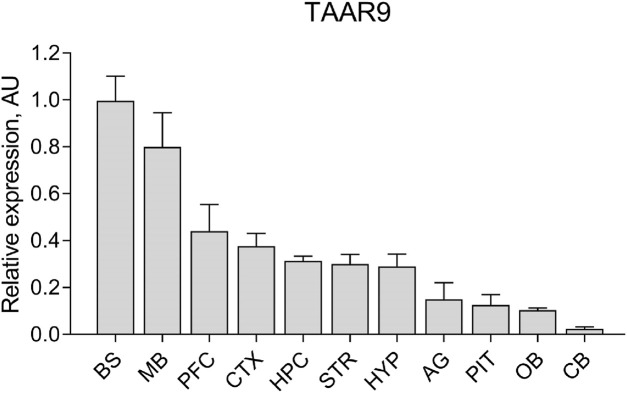 Figure 2
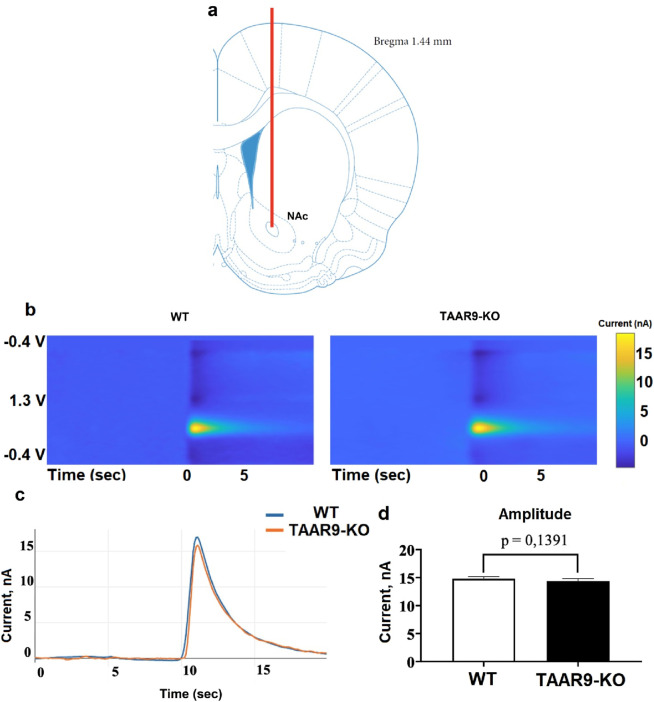 Figure 3
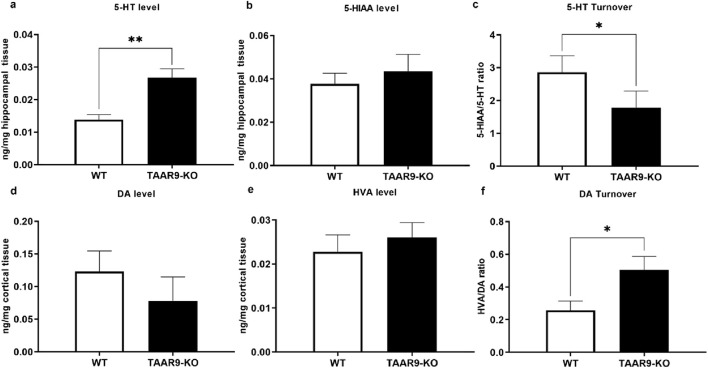 Figure 4
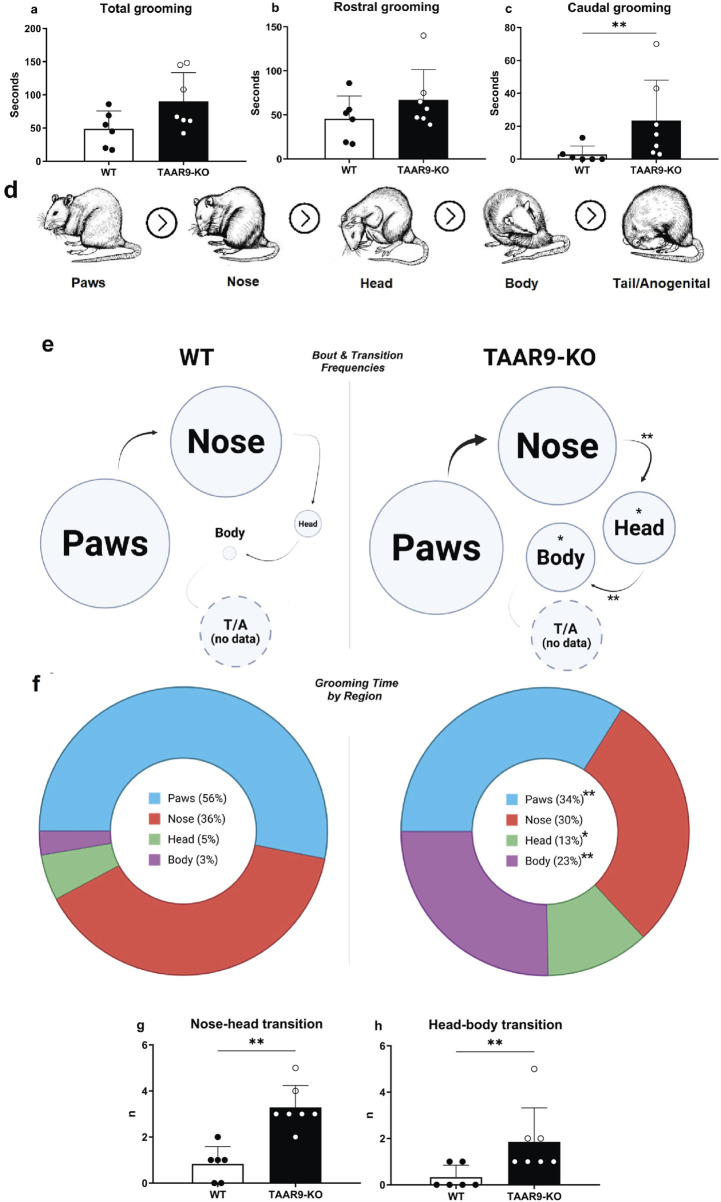 Figure 5
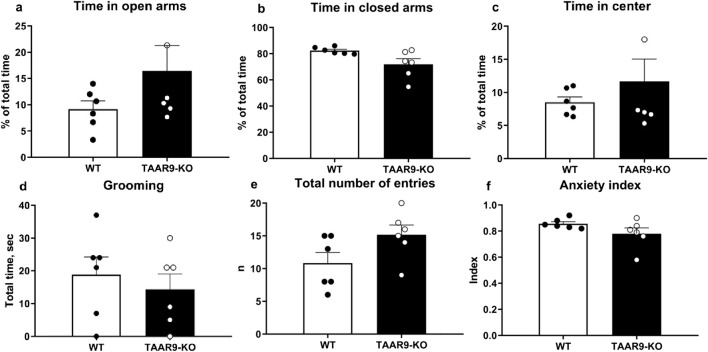 Figure 6
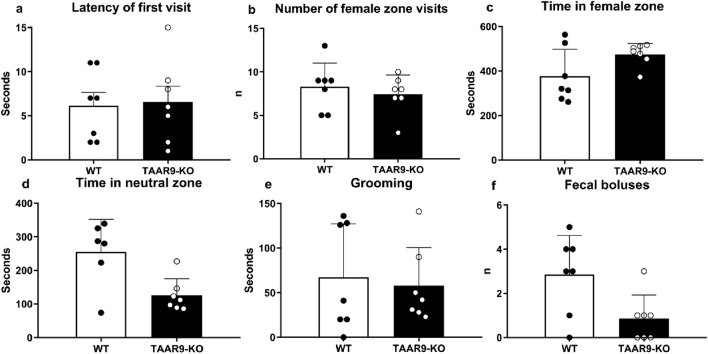 Figure 7
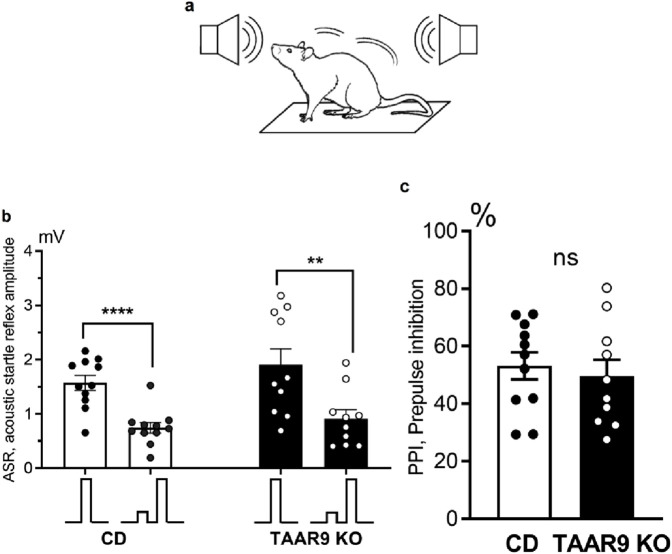 Figure 8
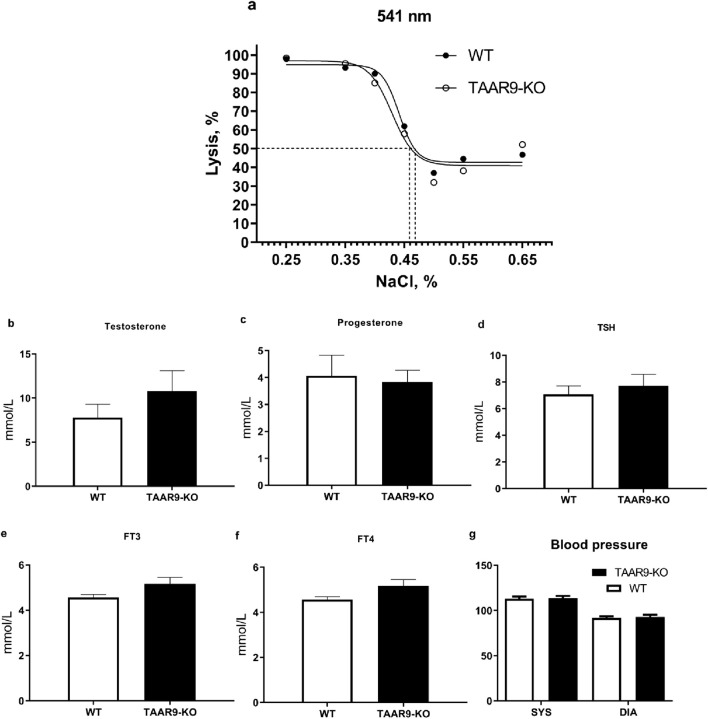 Figure 9
Peer Reviews
No public reviews on file for this paper yet. If you reviewed it on a platform where reviews are public (OpenReview, ICLR, NeurIPS, ICML), you can paste yours below so the community can read it here.
Videos
No videos yet. Explain this paper in a talk, walkthrough, or lecture? Add one.
Taxonomy
TopicsNeurotransmitter Receptor Influence on Behavior · Neuroscience and Neuropharmacology Research · Nuclear Receptors and Signaling