Case Report: Whispers of the serpent: exploring uncommon imaging features in primary hepatic malignant mesothelioma
Guoan Li, Shengqian Hong, Tao He, Jianbo Xu

TL;DR
This case report highlights a rare liver tumor with unique imaging features that could help diagnose it earlier.
Contribution
The report identifies serpiginous peripheral enhancement as a novel imaging clue for primary hepatic malignant mesothelioma.
Findings
A lobulated hepatic mass showed serpiginous peripheral enhancement on CT and MRI.
This imaging pattern may aid in the early detection and diagnosis of PHMM.
Recognizing this pattern can improve differential diagnosis and surgical decision-making.
Abstract
Primary hepatic malignant mesothelioma (PHMM) is an uncommon and aggressive neoplasm with vague clinical and radiological features, posing challenges for preoperative diagnosis. In our case, a lobulated hepatic mass demonstrated a serpiginous peripheral enhancement pattern on contrast-enhanced CT and MRI. This uncommon imaging manifestation has been sporadically documented in previous reports. By consolidating these findings, our report emphasizes serpiginous peripheral enhancement as a potential diagnostic clue for PHMM. Recognition of this pattern may aid earlier detection, improve differential diagnosis, and guide timely surgical decision-making in affected patients.
Genes, proteins, chemicals, diseases, species, mutations and cell lines named across the full text — each resolved to its canonical identifier and authoritative record.
Click any figure to enlarge with its caption.
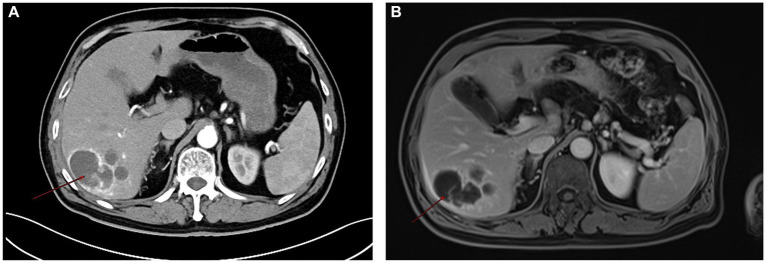 Figure 1
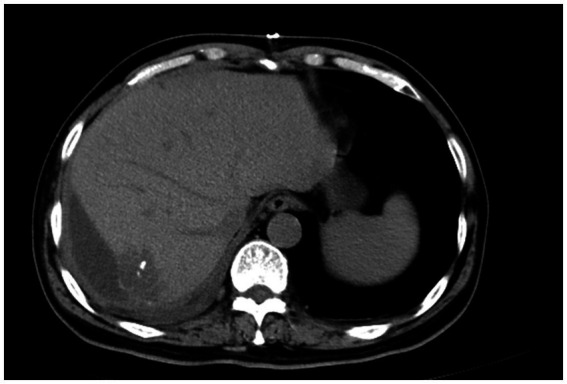 Figure 2
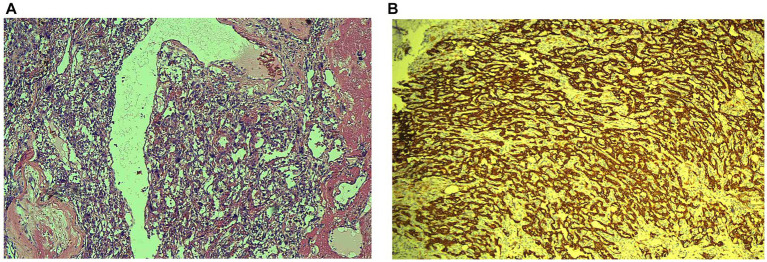 Figure 3
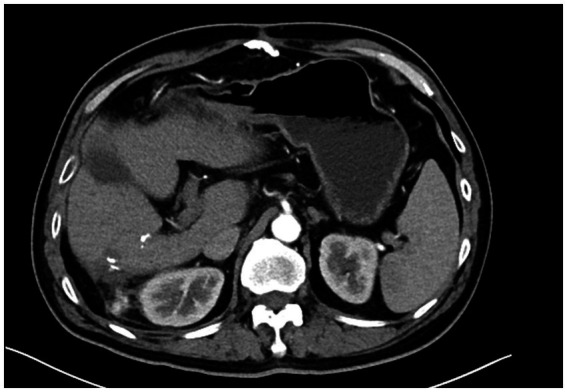 Figure 4
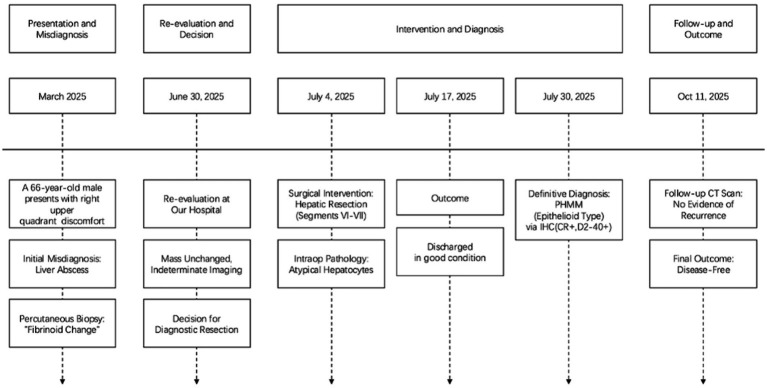 Figure 5
Peer Reviews
No public reviews on file for this paper yet. If you reviewed it on a platform where reviews are public (OpenReview, ICLR, NeurIPS, ICML), you can paste yours below so the community can read it here.
Videos
No videos yet. Explain this paper in a talk, walkthrough, or lecture? Add one.
Taxonomy
TopicsOccupational and environmental lung diseases · Medical Imaging and Pathology Studies · Pleural and Pulmonary Diseases