Association between occupational heat exposure and early renal dysfunction among Chinese petrochemical workers: a combined machine learning and WQS modeling study
Qingyu Li, Chuancheng Wu, Minhua Li, Yilin Zhang, Yifeng Chen, Shanshan Du, Rong Xu, Zihu Lv, Weimin Ye, Wei Zheng, Jianjun Xiang

TL;DR
This study finds that occupational heat exposure in Chinese petrochemical workers is linked to higher risk of hyperuricemia, suggesting early kidney issues.
Contribution
The study combines machine learning and WQS modeling to assess the combined effects of occupational heat exposure and other hazards on hyperuricemia in petrochemical workers.
Findings
Occupational heat exposure was significantly associated with increased hyperuricemia risk (OR = 1.68).
Heat exposure contributed nearly half (49.2%) of the overall effect in mixed occupational hazards.
Machine learning identified heat exposure, length of service, age, BMI, and gender as key predictors of hyperuricemia.
Abstract
To investigate the association between occupational heat exposure and hyperuricemia among petrochemical workers. We retrospectively analyzed the association between workplace heat exposure and hyperuricemia by using 10 years of occupational health examination records from 2,312 petrochemical workers in Fujian Province, China. Generalized linear models (GLMs) were employed to estimate the effects of individual exposures. Weighted quantile sum (WQS) regression model was used to evaluate the combined effects of multiple occupational exposures and to identify the relative contribution of each exposure factor. A hyperuricemia risk prediction model was developed using the LightGBM machine-learning algorithm, with feature importance assessed using SHAP (SHapley Additive exPlanations) values. Occupational heat exposure was significantly associated with an increased risk of hyperuricemia (OR =…
Genes, proteins, chemicals, diseases, species, mutations and cell lines named across the full text — each resolved to its canonical identifier and authoritative record.
Click any figure to enlarge with its caption.
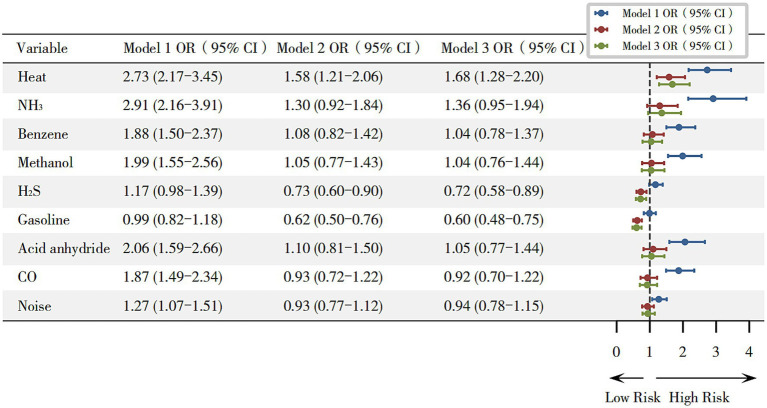 Figure 1
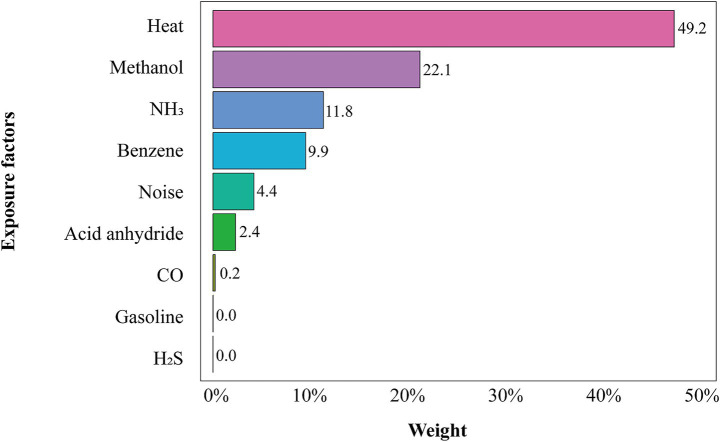 Figure 2
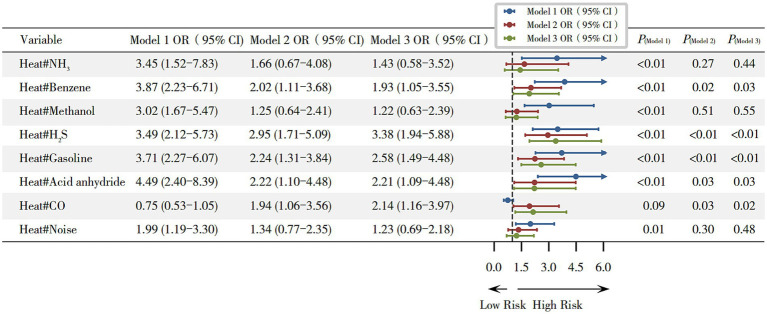 Figure 3
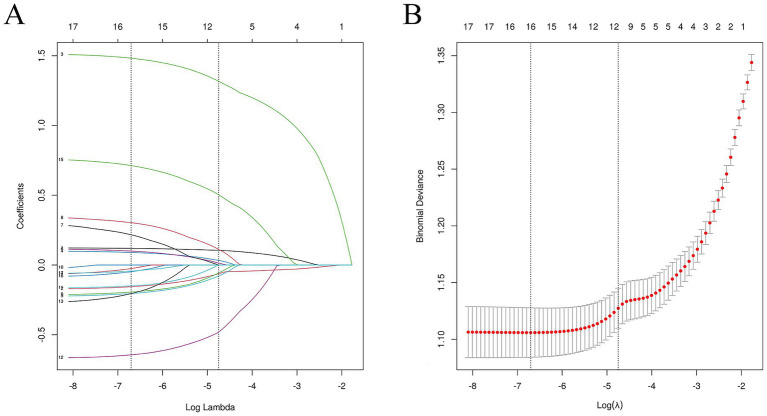 Figure 4
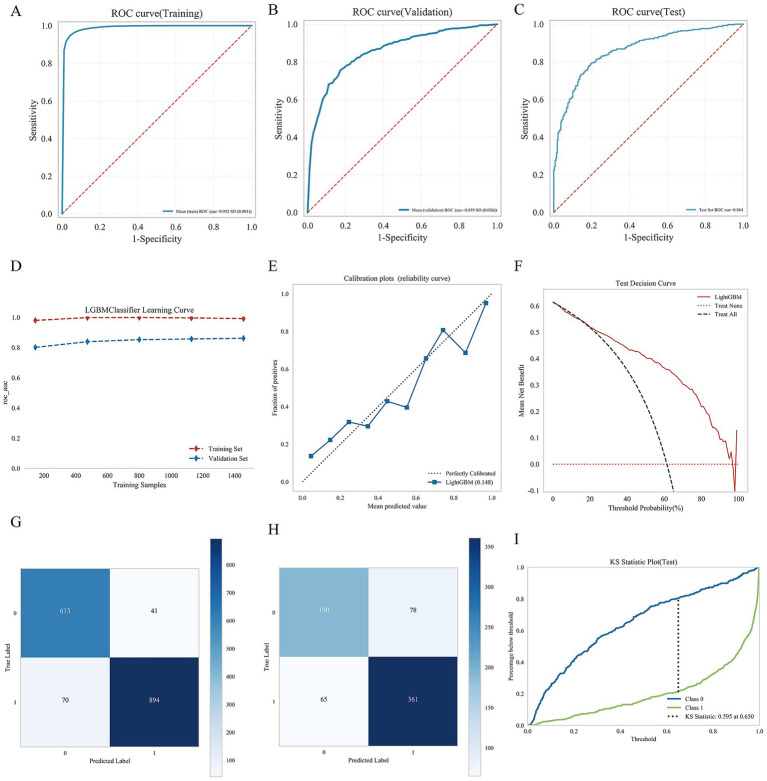 Figure 5
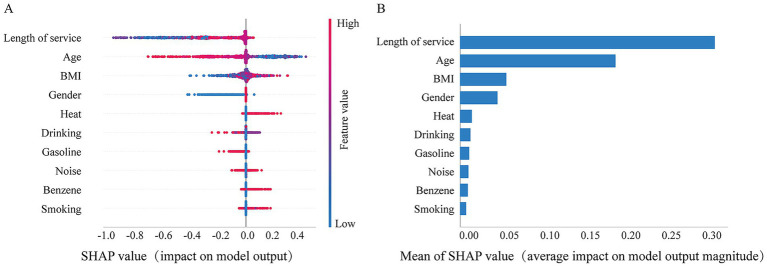 Figure 6
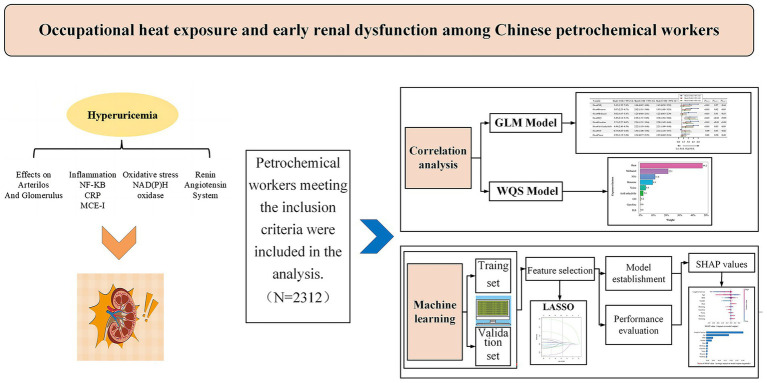 Figure 7
Peer Reviews
No public reviews on file for this paper yet. If you reviewed it on a platform where reviews are public (OpenReview, ICLR, NeurIPS, ICML), you can paste yours below so the community can read it here.
Videos
No videos yet. Explain this paper in a talk, walkthrough, or lecture? Add one.
Taxonomy
TopicsGout, Hyperuricemia, Uric Acid · Thermoregulation and physiological responses · Dialysis and Renal Disease Management