Nomogram-based prediction of continued axial elongation in children undergoing orthokeratology
Xiangxiang Fu, Quanyong Yi, XiaoLi Mao, Shuaili Zhen, Fangfang Han, Qianwei Zhu, Zhenni Du, Xuchong Pan, Yiran Hu, Jianing Ying, Xiang Li, Yeshuang Wu

TL;DR
This study created a predictive model to help determine how well orthokeratology lenses will control myopia in children, using factors like age and family history.
Contribution
A novel nomogram-based predictive model for orthokeratology outcomes in myopic children was developed and validated.
Findings
The model showed strong discrimination with an AUC of 0.831 in the training set and 0.820 in the test set.
Age, parental myopia, white-to-white distance, and spherical refraction were identified as significant predictors.
Calibration plots and decision curve analysis confirmed the model's clinical utility.
Abstract
Myopia is a growing health concern, especially among children, with Orthokeratology (OK) lenses showing promising results in myopia control. However, treatment outcomes vary significantly among individuals, highlighting the need for personalized approaches. This study aimed to develop and validate a predictive model for OK therapy outcomes in myopic children. This retrospective cohort study included 439 myopic patients fitted with OK lenses. Patients were randomly divided into training (n = 308) and test (n = 131) sets. Least absolute shrinkage and selection operator regression was used for variable selection, followed by logistic regression to construct the predictive model. A nomogram was developed to visualize individual risk predictions. Model performance was assessed using calibration plots, receiver operating characteristic (ROC) curves, and decision curve analysis (DCA). Four…
Genes, proteins, chemicals, diseases, species, mutations and cell lines named across the full text — each resolved to its canonical identifier and authoritative record.
Click any figure to enlarge with its caption.
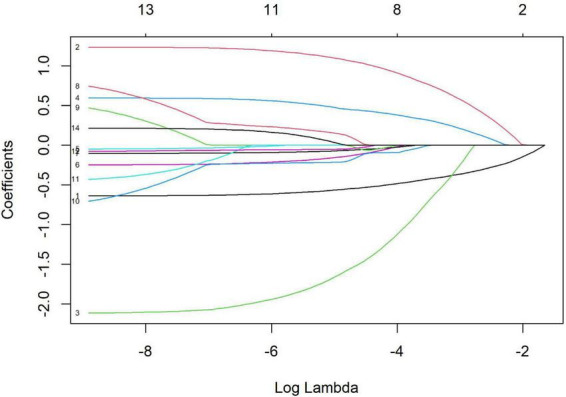 Figure 1
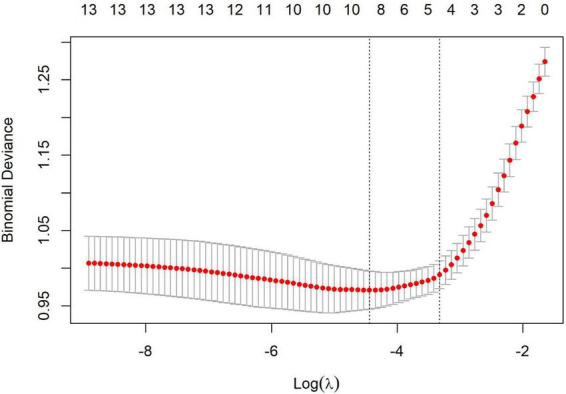 Figure 2
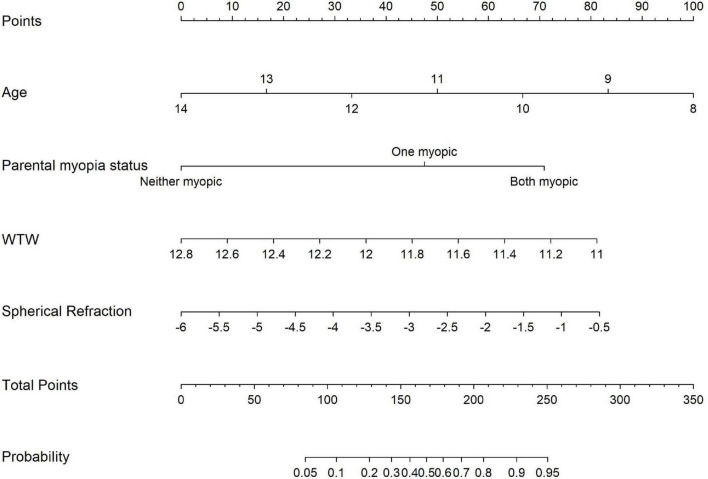 Figure 3
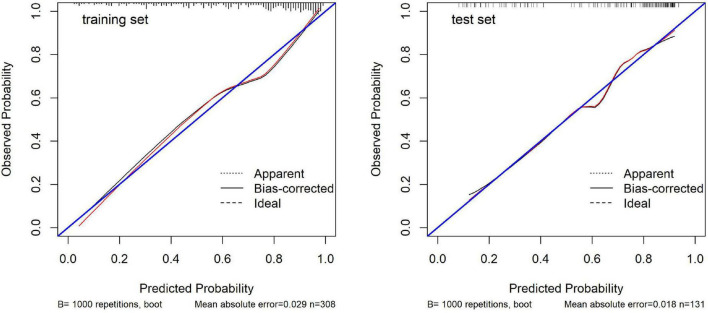 Figure 4
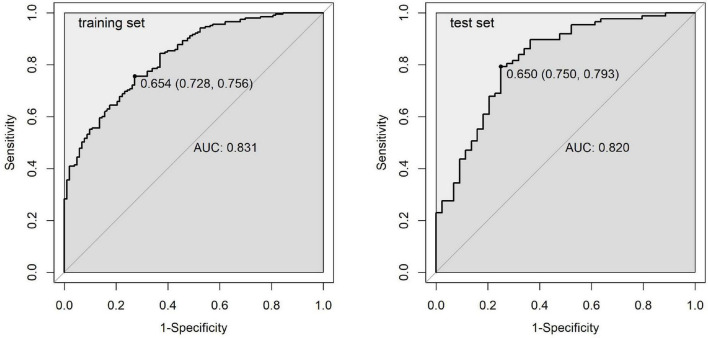 Figure 5
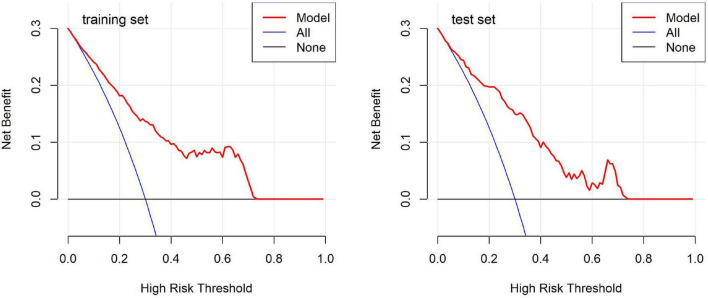 Figure 6
Peer Reviews
No public reviews on file for this paper yet. If you reviewed it on a platform where reviews are public (OpenReview, ICLR, NeurIPS, ICML), you can paste yours below so the community can read it here.
Videos
No videos yet. Explain this paper in a talk, walkthrough, or lecture? Add one.
Taxonomy
TopicsOphthalmology and Visual Impairment Studies · Scoliosis diagnosis and treatment · Corneal surgery and disorders