The visual impediment of cranial ornamentation in male Chrysolophus pheasants
Alexandra E. R. Lamond, Simon Potier, Laurent Fontaine, Graham R. Martin, Steven J. Portugal

TL;DR
Male golden and Lady Amherst’s pheasants have restricted vision due to their cranial feathers, a new example of a sexually selected trait causing a visual impediment.
Contribution
The first documentation of sex-based visual field differences in birds due to sexually selected cranial ornamentation.
Findings
Male golden and Lady Amherst’s pheasants have significantly restricted visual fields compared to females.
The vertical visual field difference between sexes is 30° and 40° in golden and Lady Amherst’s pheasants, respectively.
No sex-based visual field differences were found in silver and green pheasants.
Abstract
Sexually selected traits such as feather ornamentation of male birds can act as an impediment to movement and predator detection. Here, we report a previously undocumented example of an impediment derived from a sexually selected trait: the cranial feather ornamentation in male Chrysolophus pheasants restricting their visual field. Visual fields define the space around an animal from which visual information can be retrieved. Out of the 300 bird species studied to date, there have been no significant differences reported in the visual fields between sexes. Our findings reveal that the cranial feathers of male golden (C. pictus) and Lady Amherst’s (C. amherstiae) pheasants significantly restrict their visual field relative to females and may impede their ability to gather information from the world about them. This effect is most extreme in the vertical extent, where a 30° and 40°…
Genes, proteins, chemicals, diseases, species, mutations and cell lines named across the full text — each resolved to its canonical identifier and authoritative record.
Click any figure to enlarge with its caption.
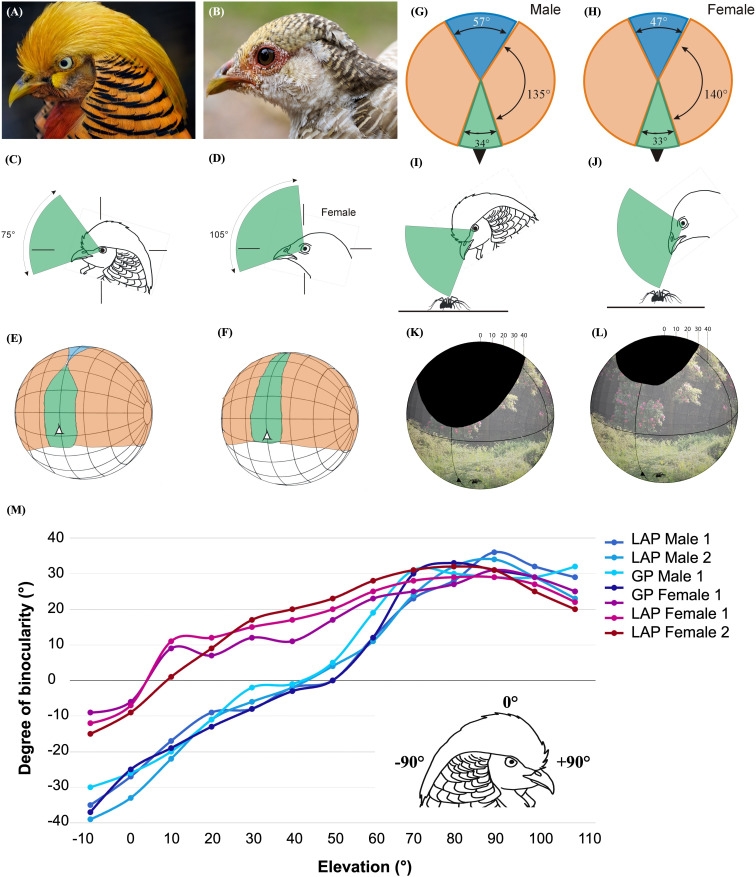 Figure 1
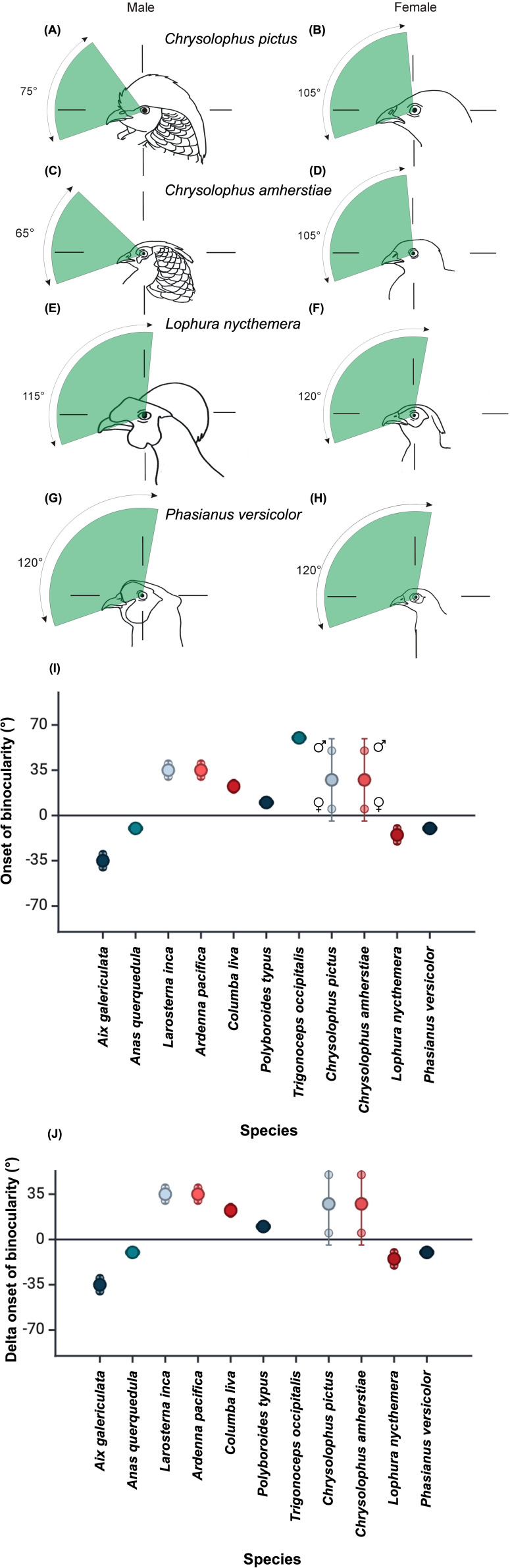 Figure 2
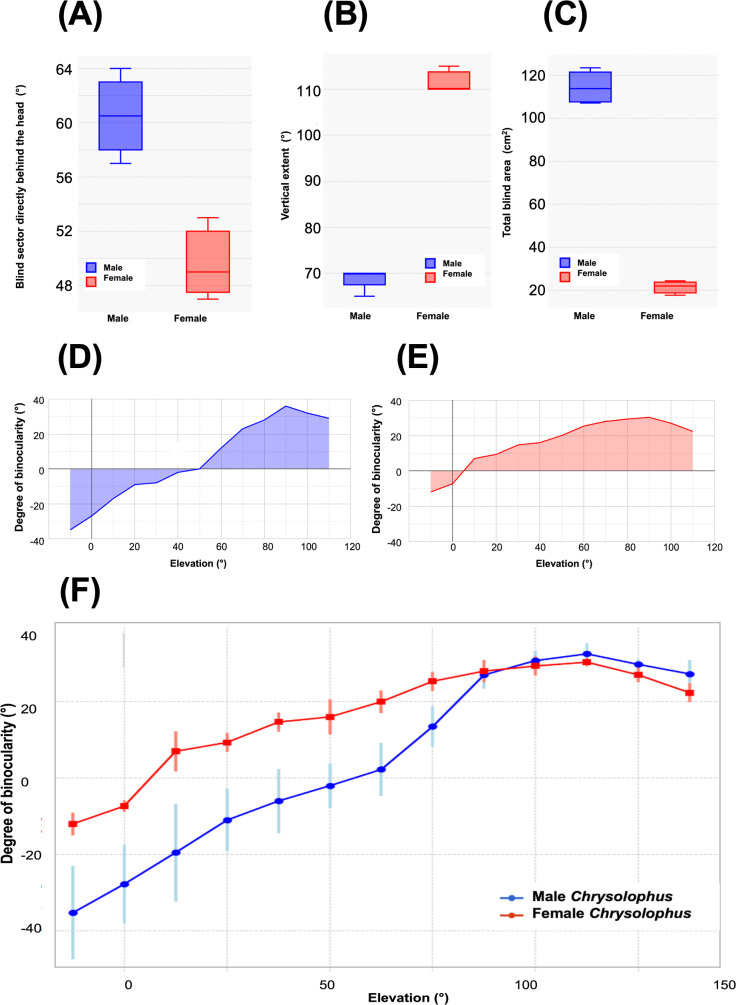 Figure 3
Peer Reviews
No public reviews on file for this paper yet. If you reviewed it on a platform where reviews are public (OpenReview, ICLR, NeurIPS, ICML), you can paste yours below so the community can read it here.
Videos
No videos yet. Explain this paper in a talk, walkthrough, or lecture? Add one.
Taxonomy
TopicsAnimal Behavior and Reproduction · Primate Behavior and Ecology · Animal Vocal Communication and Behavior