The role of spatiotemporal variation in resources in the diverse movement strategies of temperate ungulates
Justine A. Becker, Anna C. Ortega, Jeffrey Beck, Clay B. Buchanan, Thomas Bills, L. Embere Hall, Jacob D. Hennig, Pat Hnilicka, Katey Huggler, Matthew Kauffman, Arthur Middleton, Tony W. Mong, Kevin L. Monteith, Adele Reinking, Hall Sawyer, John Scasta, Brandon M. Scurlock

TL;DR
This study shows how resource availability over time and space influences the movement strategies of pronghorn and elk in Wyoming.
Contribution
The study provides empirical evidence on how spatiotemporal resource variation shapes movement strategies in temperate ungulates.
Findings
Three distinct movement strategies were identified in both pronghorn and elk.
Residents experienced less spatial and greater year-to-year variation in resources compared to migrants.
Climatic conditions, especially winter severity, influenced elk movement strategies.
Abstract
Animal movement strategies are thought to be determined by the spatiotemporal variation of resources in an environment. Observations of various species indicate that the occurrence of migratory versus resident movements depends on resource predictability and the associated costs and benefits of tracking resource availability versus remaining in a familiar range. Here, we use 21 years of GPS data from seven populations (n = 239) of pronghorn (Antilocapra americana) and 12 populations (n = 283) of elk (Cervus canadensis) across Wyoming, USA to test if resource-based hypotheses predict individual movement strategies within a common geographic range. We identified three distinct movement strategies in each species—residents, dual-range migrants and multi-range migrants. Spatiotemporal variation in resources did explain variation in strategies in both pronghorn and elk, with residents…
Genes, proteins, chemicals, diseases, species, mutations and cell lines named across the full text — each resolved to its canonical identifier and authoritative record.
Click any figure to enlarge with its caption.
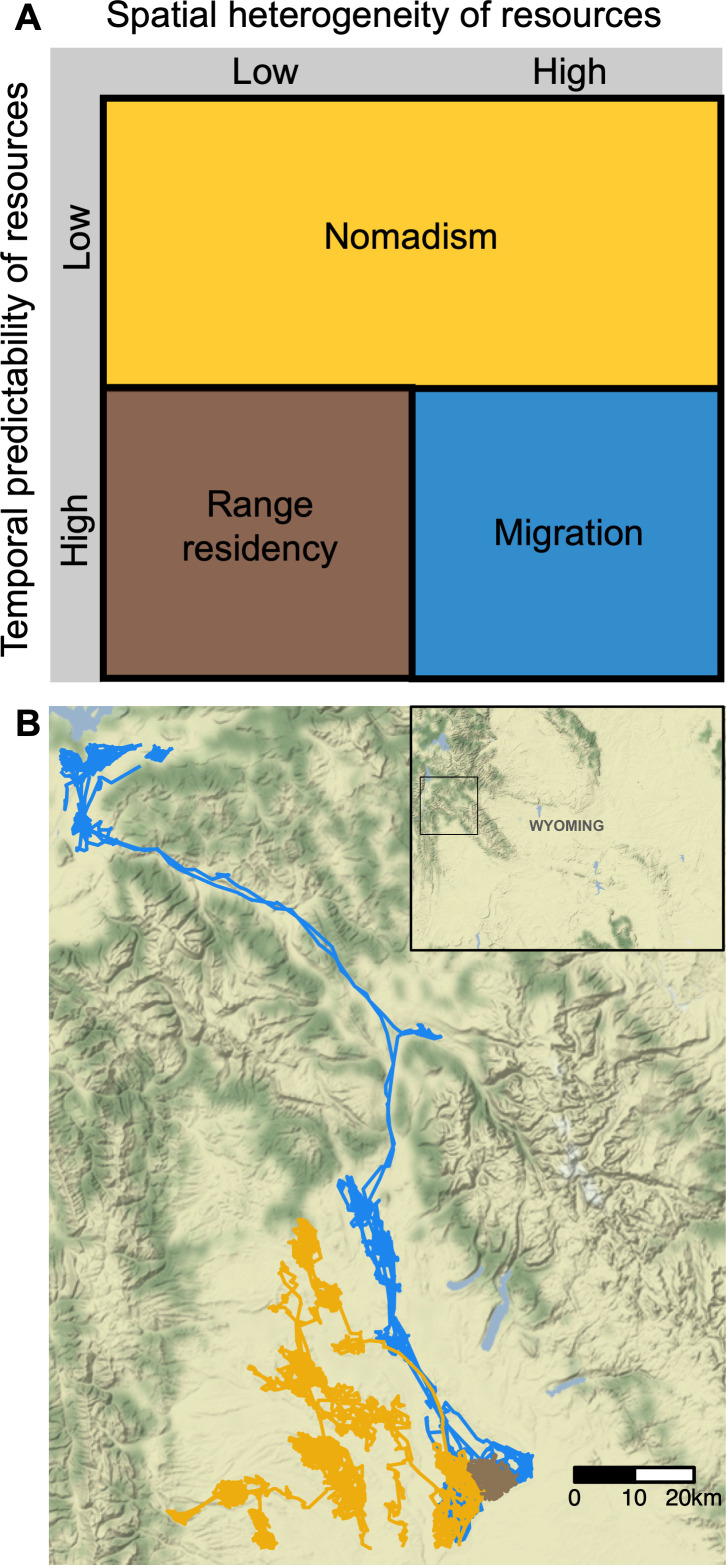 Figure 1
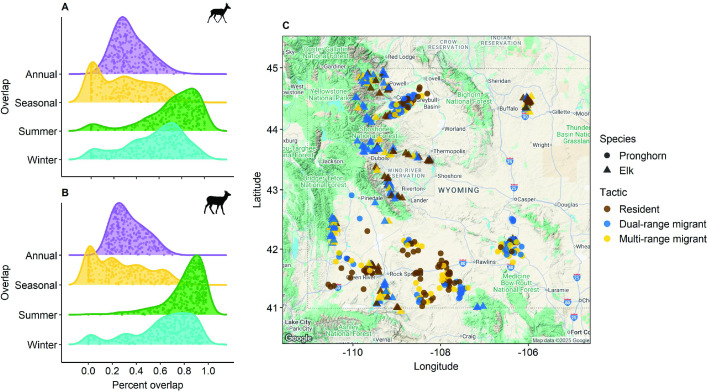 Figure 2
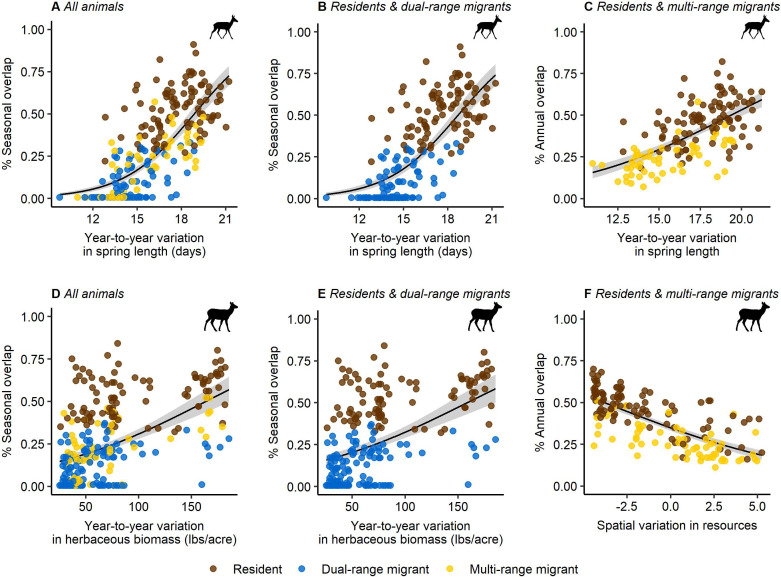 Figure 3
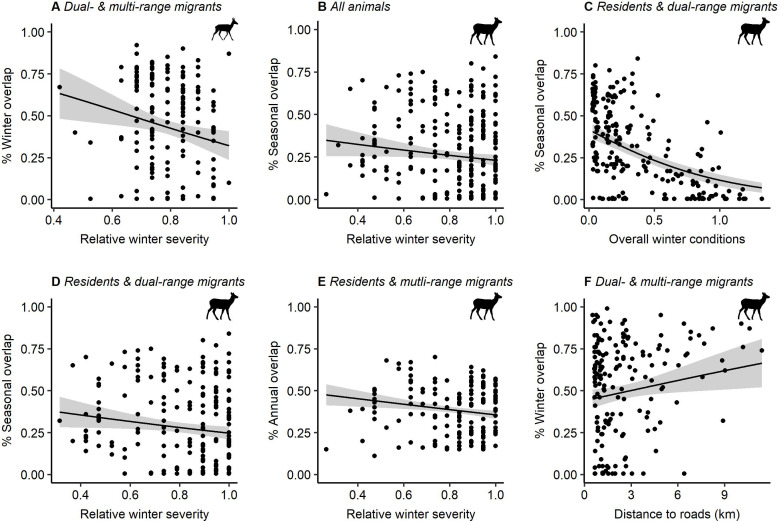 Figure 4
Peer Reviews
No public reviews on file for this paper yet. If you reviewed it on a platform where reviews are public (OpenReview, ICLR, NeurIPS, ICML), you can paste yours below so the community can read it here.
Videos
No videos yet. Explain this paper in a talk, walkthrough, or lecture? Add one.
Taxonomy
TopicsWildlife Ecology and Conservation · Wildlife-Road Interactions and Conservation · Primate Behavior and Ecology