First- and second-order social contact network structure in southern China
Claire Perrin Smith, Jonathan Michael Read, Steven Riley, Derek Cummings, Kin On Kwok, Chao Qiang Jiang, Justin Lessler

TL;DR
This study examines how social contact patterns in southern China vary by age and population density, revealing insights into network structures important for understanding disease spread.
Contribution
The study provides novel empirical data on first- and second-order social contact network structures in a representative Chinese population.
Findings
Young adults (16–25) and older adults have fewer daily contacts compared to other age groups.
Contact networks in high-density areas show more non-home contacts and less local clustering.
Population density remains strongly associated with contact patterns after adjusting for other factors.
Abstract
The contact network structure resulting from social interaction between people is a key aspect of epidemic dynamics and control. While many studies have measured first-order network characteristics such as degree, measuring higher order properties of these networks, such as clustering, remains a challenge. Here, we present the results of a study of first- and second-order network structure from a representative cohort of individuals in Guangdong province, China. The number of reported daily contacts is similar across individuals aged 2 to 55 years, except for young adults (ages 16–25) who have relatively fewer daily contacts, while the number of contacts declines with age above 55 years old. The association between age and contact rate persisted after adjusting for mediating factors. Individuals living in higher population density areas made more contacts outside the home than…
Genes, proteins, chemicals, diseases, species, mutations and cell lines named across the full text — each resolved to its canonical identifier and authoritative record.
Click any figure to enlarge with its caption.
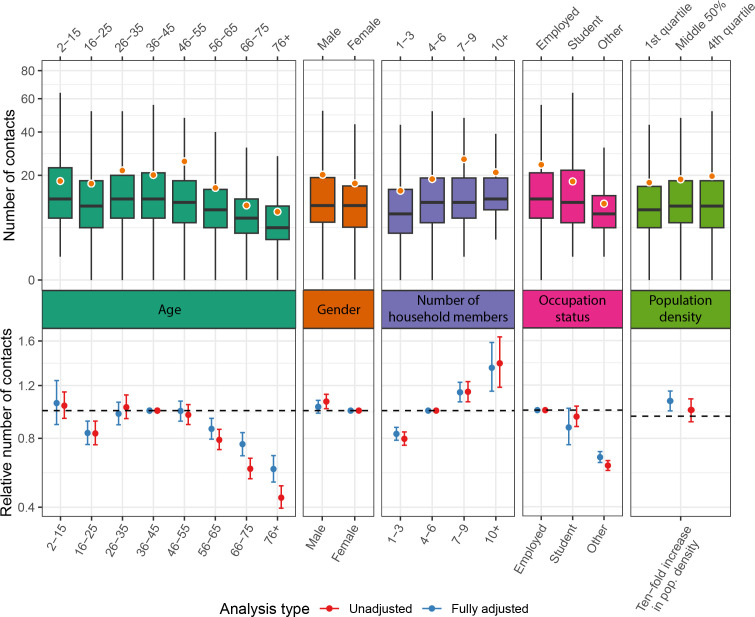 Figure 1
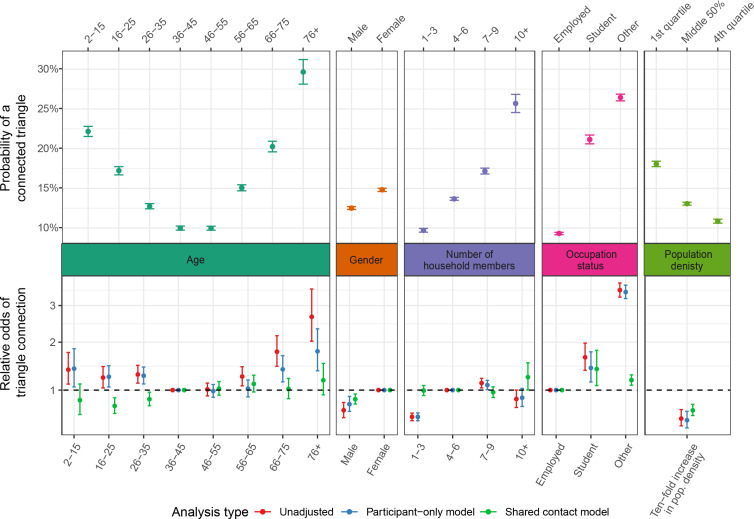 Figure 2
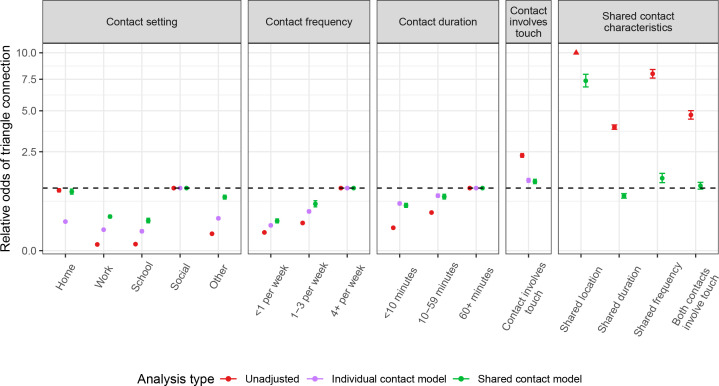 Figure 3
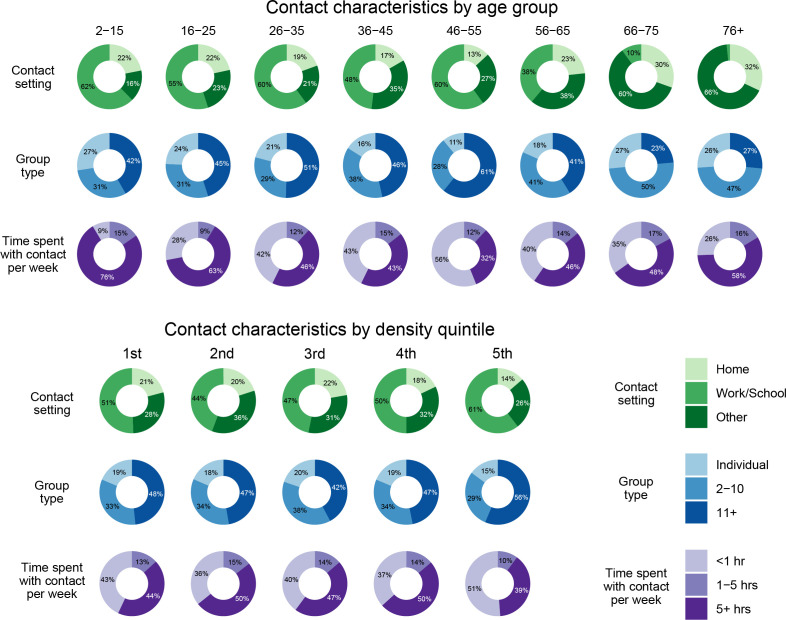 Figure 4
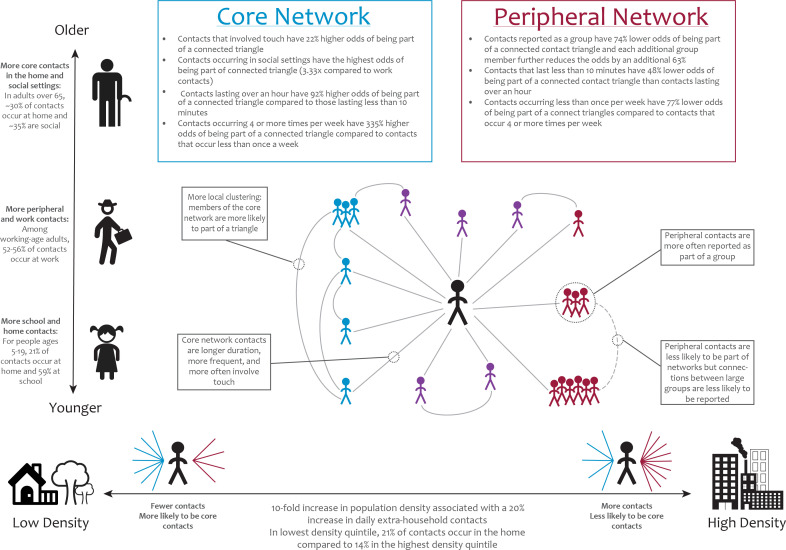 Figure 5
Peer Reviews
No public reviews on file for this paper yet. If you reviewed it on a platform where reviews are public (OpenReview, ICLR, NeurIPS, ICML), you can paste yours below so the community can read it here.
Videos
No videos yet. Explain this paper in a talk, walkthrough, or lecture? Add one.
Taxonomy
TopicsComplex Network Analysis Techniques · COVID-19 epidemiological studies · Mental Health Research Topics