People are less likely to selfishly deceive those who achieved status through virtue rather than dominance or competence
Sarah Boukarras, Valerio Placidi, Michael Schepisi, Vanessa Era, Maria Serena Panasiti, Matteo Candidi

TL;DR
People are less likely to lie for their own benefit when the person they are interacting with has earned high status through virtue rather than dominance or competence.
Contribution
This study shows that moral behavior is influenced by how someone achieves high social status, with virtue-based status reducing selfish deception.
Findings
Participants were less likely to lie for self-gain when facing high-status individuals who achieved status through virtue.
Dominance-based high-status individuals triggered negative emotions like anger and disgust.
Virtuous and competent high-status individuals inspired admiration and respect.
Abstract
Moral behaviour varies across contexts, yet the influence of the recipient’s social status—the person towards whom the behaviour is directed—remains largely underexplored. The strategies used to achieve status can vary substantially and play a crucial role in shaping social perception and behaviour. For instance, dominance-based status triggers negative evaluations, whereas people who attain status through competence or virtue often gain respect and admiration. This preregistered study (n = 151) investigated how an opponent’s social status (high, middle or low) and the strategies used to achieve it (dominance, competence or virtue) influenced participants’ tendency to lie for self-gain during a card game. Results indicate that participants were significantly less likely to lie for self-gain to virtuous high-status opponents compared to dominant or competent ones. Dominance-based…
Genes, proteins, chemicals, diseases, species, mutations and cell lines named across the full text — each resolved to its canonical identifier and authoritative record.
Click any figure to enlarge with its caption.
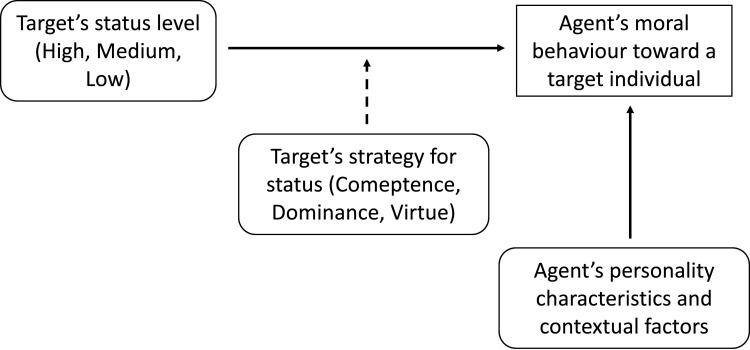 Figure 1
 Figure 2
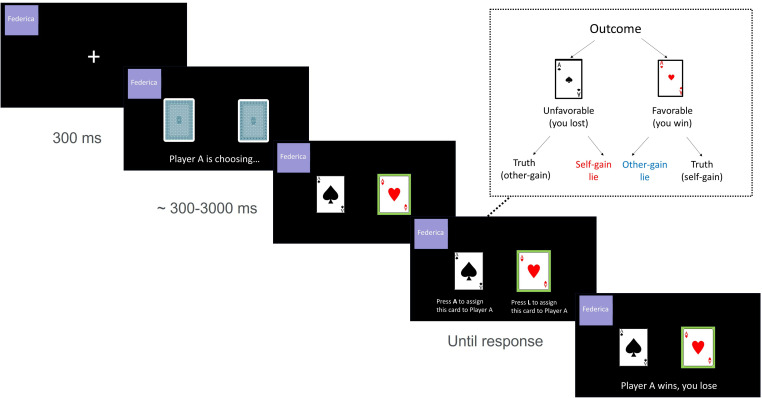 Figure 3
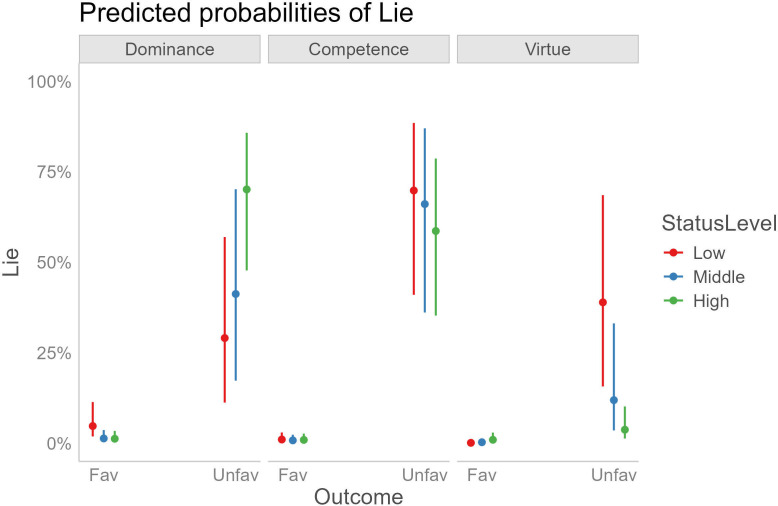 Figure 4
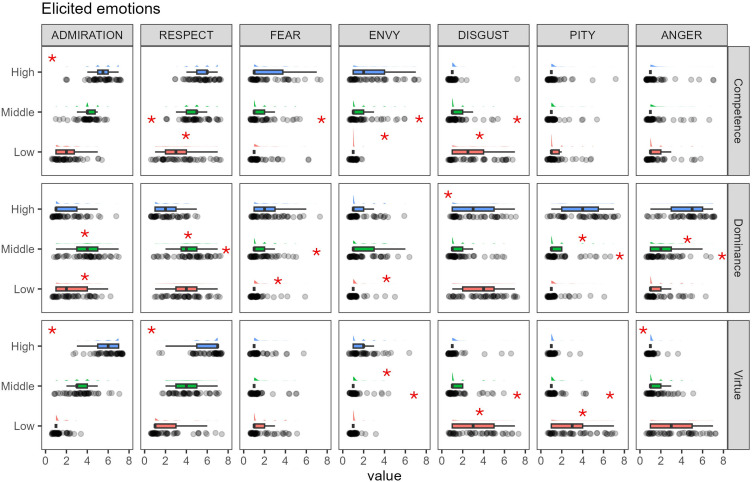 Figure 5
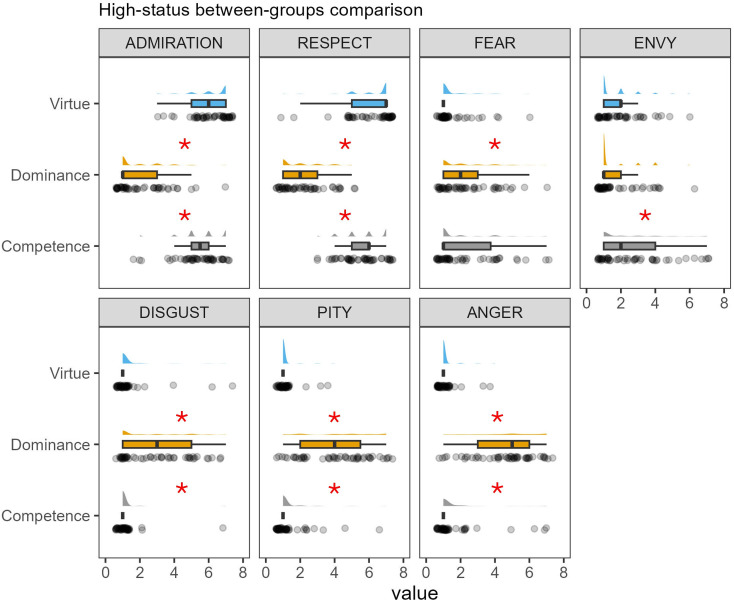 Figure 6
 Figure 7
 Figure 8
 Figure 9
 Figure 10
 Figure 11
 Figure 12
 Figure 13
 Figure 14
 Figure 15
 Figure 16
 Figure 17
 Figure 18
 Figure 19
 Figure 20
Peer Reviews
No public reviews on file for this paper yet. If you reviewed it on a platform where reviews are public (OpenReview, ICLR, NeurIPS, ICML), you can paste yours below so the community can read it here.
Videos
No videos yet. Explain this paper in a talk, walkthrough, or lecture? Add one.
Taxonomy
TopicsPsychology of Moral and Emotional Judgment · Experimental Behavioral Economics Studies · Social and Intergroup Psychology